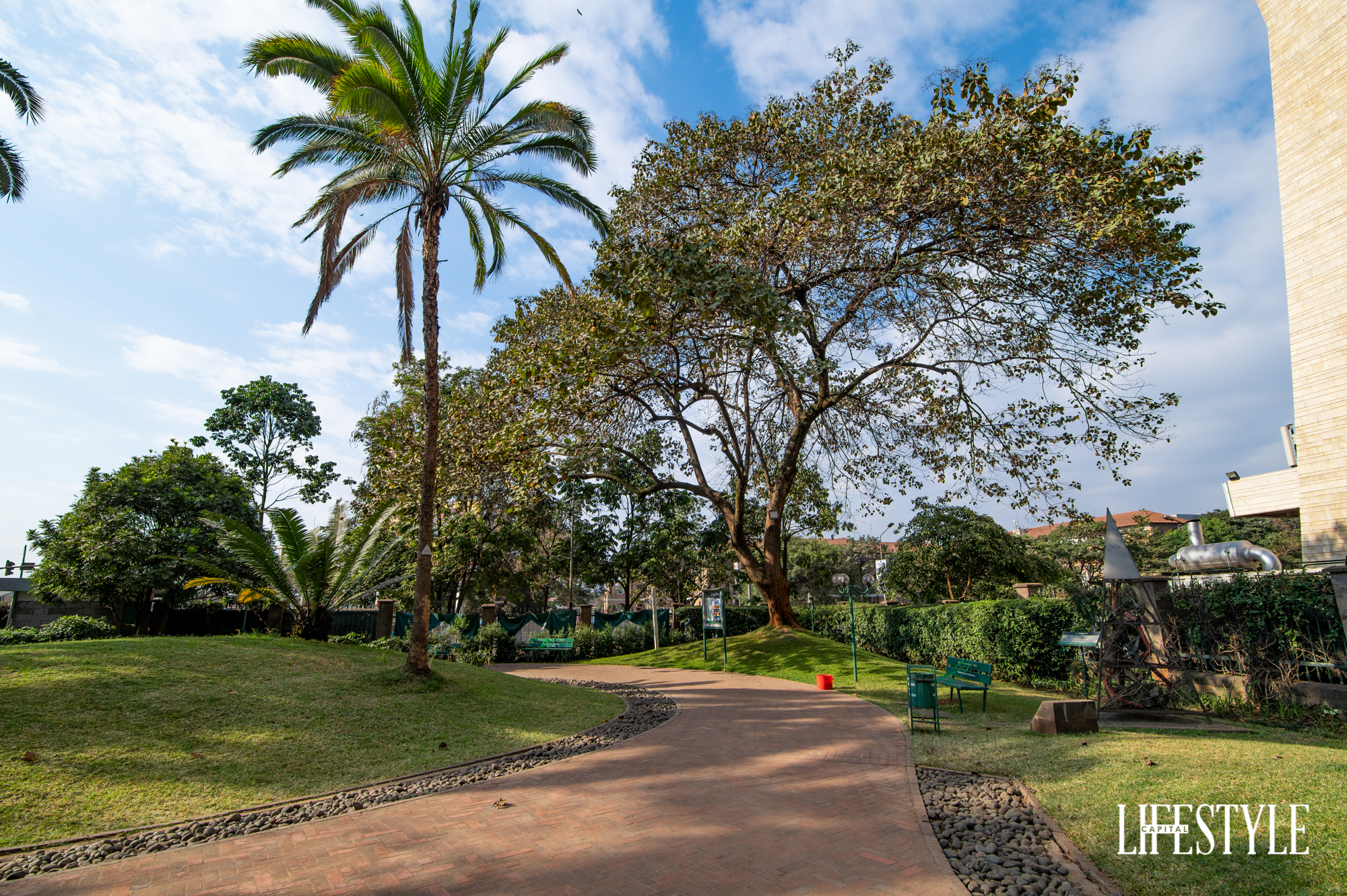
It is often said that green spaces in our towns and cities not only provide people with a place to relax and unwind, but also play a vital role in climate mitigation by reducing the urban heat island effect in an increasingly polluted world. National parks, sports fields, gardens, and forests in major cities offer refuge not only for people but also for birds and other wildlife.
As Covid-19 lockdowns eased in many parts of the world, statistics from Google showed a sharp rise in park attendance globally, as people discovered green spaces—where available—as unexpected sources of peace, calm, and joy. Simply put, being in nature makes us feel good.

One of Nairobi’s unique and serene green spaces with a history that is forever etched in our hearts, is The August 7th Memorial Park. Located at the intersection of Moi Avenue and Haile Selassie Avenue, it marks the site of the 1998 U.S. Embassy bombing, a tragic event that claimed hundreds of lives and injured thousands more. The blast left a trail of destruction, damaging buildings within and beyond the former U.S. Embassy compound.
In 1999, the site was donated to the August 7th Memorial Trust, a local non-profit organization tasked with transforming it into a memorial park in honor of the victims. Today, this solemn yet beautiful space features landscaped gardens, a Peace Centre and museum, a memorial wall inscribed with the names of those who lost their lives, a sculpture made from debris collected after the attack, and a Visitors’ Centre.
The park also serves as a place of remembrance and education—telling the stories of survivors and those whose lives were forever changed. The exhibits and images displayed in the Visitors’ Centre are designed to educate the public about the devastating consequences of terrorism and to promote peace, tolerance, and reconciliation.


Over the past 20 years, the Memorial Park has become a powerful symbol of peaceful coexistence, attracting approximately 12,000 visitors every month. It has evolved into one of Nairobi’s most beautiful and significant green spaces, playing a vital role in promoting both physical and mental well-being, while offering a tranquil escape from the stresses of modern urban life.
In many ways, it embodies the kind of green spaces that should exist in all major towns and cities across the country. The park is open daily—365 days a year—from 7:00 am to 6:00 pm. A modest entrance fee of just Kshs 30 is charged, which goes directly toward the park’s maintenance.


For a city increasingly resembling a concrete and brick jungle, the August 7th Memorial Park is truly a breath of fresh air. Recent studies show that cities with more green spaces foster stronger social cohesion, as these areas serve as communal meeting points where people connect, share, and build relationships.
As you walk through the gates of the park, you’re immediately greeted by a lush garden filled with indigenous plants—carefully selected from different regions of Kenya to symbolize that every corner of the nation was affected by the 1998 blast. Even the rock beds lining the walkway were collected from riverbeds across the country, a thoughtful design choice underscoring the same message of nationwide unity and remembrance.

From the gentle scent of blooming flowers to the joy of spotting familiar native plants, nature here offers more than beauty—it nurtures a sense of inner calm. As you sit on one of the many benches scattered throughout the park, soaking in the peaceful surroundings, you feel momentarily removed from the chaos of the city.
According to the World Health Organization (WHO), urban green spaces are essential to human well-being—both physical and emotional. Simply put, those living in cities with ample parks and gardens enjoy a higher quality of life compared to those surrounded by high levels of pollution and unrelenting urban sprawl.
At the heart of the park stands a fountain shaped in the iconic yin-yang symbol—a powerful representation of balance and calm. The gentle bubbling of water, its endless flow both seen and heard, creates a soothing, almost meditative atmosphere. It’s a centerpiece that invites stillness amid the hum of the city beyond.


At the far end of the park, a striking sculpture rises—crafted from debris salvaged from the 1998 blast. Alongside it stands the memorial wall, where the names of the 218 people who lost their lives are carefully inscribed. Together, these elements serve as enduring symbols of remembrance and resilience, ensuring that every life lost is honoured, every name never forgotten.
The August 7th Memorial Park is more than just a green space—it is a living tribute, a place of healing, and a symbol of unity. It reminds us of the fragility of life, the resilience of the human spirit, and the importance of peace in a world that often feels chaotic. In a city defined by fast-paced development and encroaching concrete, this park offers a rare and precious pause. It urges us to remember, to reflect, and to reconnect—with nature, with history, and with one another.
(The August 7th Memorial Park is owned and managed by the August 7th Memorial Trust, a local non-profit organization, constituted of a group of volunteer trustees.)