WASHINGTON, July 3 (Xinhua) — U.S. job growth cooled in June, according to data released Thursday from the Bureau of Labor Statistics.
Nonfarm payrolls for the month rose by a seasonally adjusted 57,000, fewer than May’s 129,000 jobs added and short of than economists’ forecasts of 115,000.
The jobless rate dropped to 4.2 percent from 4.3 percent a month prior.
The drop in the labor force participation rate, which slumped 0.3 points to 61.5 percent — the lowest since March 2021 — contributed to the decline in the unemployment rate.
The labor force participation rate is the percentage of the working-age population that is either currently employed or actively looking for work. In layman’s terms, it’s a sign that many workers have given up looking for work.
Average hourly wages increased 0.3 percent month on month and 3.5 percent from a year prior, both in line with economists’ forecasts.
Some economists, however, said the wage situation underscores a weaker labor market.
Dean Baker, co-founder of the Center for Economic and Policy Research, said hourly wages are “presumably reflecting a weaker labor market.”
Hourly wages are “not keeping pace with recent inflation, although that story is likely to improve with the declines in gas prices in June,” Baker said.
“There is a notable slowing in wage growth, even as inflation has accelerated,” Baker noted.
Business and professional services contributed to most of the month’s gains, at 36,000. Social assistance saw an increase of 25,000 jobs and health care positions rose by 22,000.
At the same time, leisure and hospitality shed 61,000 jobs, which highlighted that seasonal hiring was slower than usual.
Some economists said they expect higher unemployment over the next year, but contended it would be moderate.
When asked where he sees jobless rates headed in the next 12 months, Gary Hufbauer, a nonresident senior fellow at the Peterson Institute for International Economics, forecast that “rate trends higher, but to a very moderate extent.”
“I do see weakness in manufacturing employment,” Hufbauer said.
Other employment reports showed trends similar to those pointed out in the government report.
According to data released Wednesday from private payroll firm ADP, U.S. firms added fewer employees than forecast in June.
Private sector jobs rose by 98,000 from the previous month, a drop from May’s 122,000 and slightly less than economists’ predictions of 110,000, according to ADP.
Nela Richardson, ADP’s head economist, said, “The pace of hiring is telling a story of both supply and demand. We know it’s taking people longer to find work, but there also are signs of labor supply constraints in certain industries. For now, the overall effect is a slowdown in job creation.”
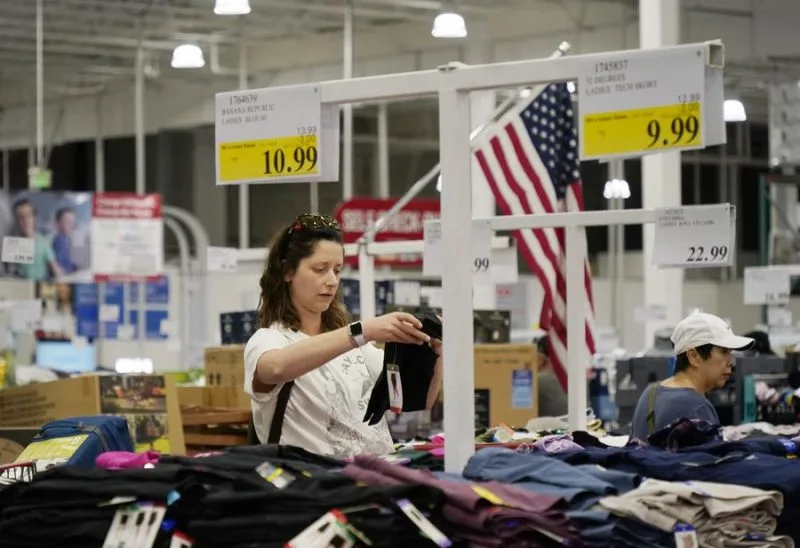
Meanwhile, experts said high living costs remain an issue for Americans, and that could well impact Republicans’ prospects in November’s midterm elections.
Brookings Institution Senior Fellow Darrell West said, “The high cost of living remains a big problem for many Americans. It is hard for people to pay for food, gas, housing, and healthcare.”
“A number struggle with these expenses and they have to live paycheck to paycheck. Overcoming people’s financial challenges will be a big problem for Republicans in the midterm elections,” West said.