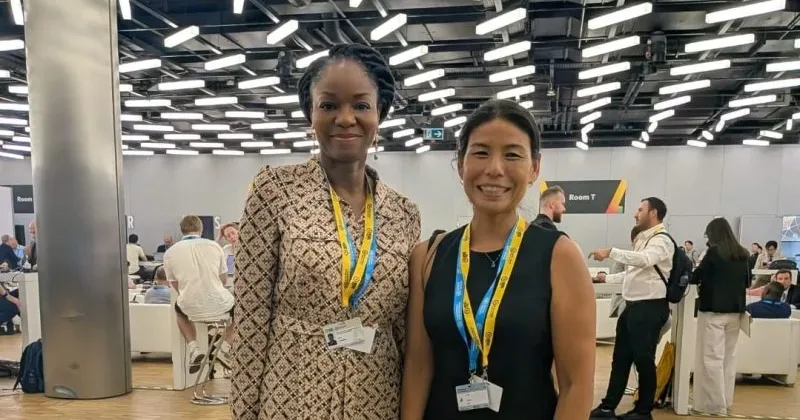
NAIROBI, Kenya, July 8 – The government of Togo has launched a national initiative to develop artificial intelligence models for its 50 national languages, seeking to improve access to digital public services and address the chronic underrepresentation of African languages in AI systems.
The project, announced on Wednesday at the AI for Good Global Summit in Geneva, brings together Togo AI Lab, African AI platform Zindi and Togolese technology firm Umbaji. It forms part of Togo’s National AI Strategy to expand digital inclusion through AI services that can understand and communicate in local languages.
The partners will build an open-source platform to collect speech and text data from communities across the country, with a target of gathering at least 50 hours of validated speech and 6,000 translated sentence pairs for each of Togo’s 50 national languages.
The datasets will underpin four open AI competitions on Zindi’s platform to develop open-source automatic speech recognition, text-to-speech and machine translation models. The competitions will offer a combined $40,000 in prize money.
The initiative comes as governments and technology companies race to expand AI beyond dominant languages such as English and Mandarin. According to UNESCO, more than 2,000 African languages remain severely underrepresented in digital datasets used to train AI models, limiting access to AI-powered services for millions of people.
The project builds on a 2024 AI competition run by Togo’s digital ministry and Zindi that used demographic and geospatial data to predict demand for fibre-optic infrastructure. Several top participants were later recruited by Togo AI Lab.
“We view language models as essential public infrastructure for the digital age,” Digital Transformation Minister Cina Lawson said. “By collecting local audio and text data and leveraging Zindi’s community, we are creating sovereign, safe, and inclusive AI tools” that will help government deliver services more effectively.
Zindi Chief Executive Celina Lee said African languages remained largely absent from the datasets shaping today’s AI models.
“Too many African languages remain underrepresented,” Lee said. “By bringing together local communities, open data, and a global network of AI practitioners, this initiative ensures that Togo’s linguistic diversity is reflected in the next generation of African AI technologies.”
Founded in 2018, Zindi says it has a community of more than 100,000 AI practitioners across more than 180 countries. Umbaji has previously deployed multilingual data collection projects covering 11 African languages in six countries.