NAIROBI, Kenya, Nov 16 – President William Ruto has called for sweeping reforms to the international financial system, saying Africa must secure affordable, long-term financing to unlock its agricultural potential and reduce its annual food import bill of more than $100 billion.
Ruto said the continent had sufficient land, human resources and agricultural potential to become a major global food producer but continued to grapple with inadequate irrigation, limited access to affordable credit, poor storage facilities, low processing capacity and fragmented markets.
He argued that the continued dependence on imported food, despite Africa’s vast agricultural resources, exposed the continent’s failure to invest adequately in production and value addition.
“Our continent spends more than $100 billion annually importing food, loses a substantial share of its harvest after production and directs only a small fraction of commercial lending to agriculture,” he said.
“We cannot continue to import what we have the capacity to produce, export raw agricultural commodities while importing processed products, or leave our young people without opportunity in a continent endowed with such extraordinary productive capacity.”
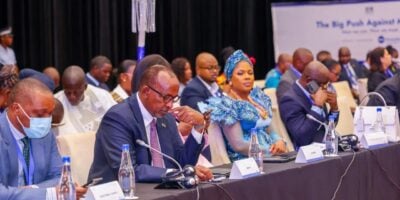
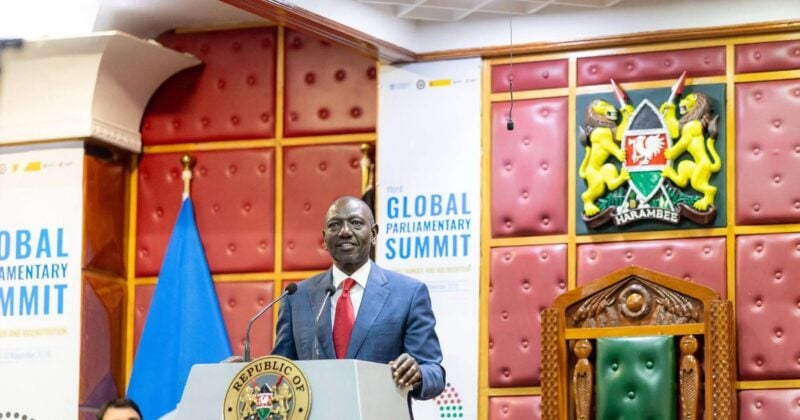
The President was speaking on Monday during the opening of the Third Global Parliamentary Summit Against Hunger and Malnutrition at Parliament Buildings in Nairobi, where he challenged African governments to prioritise domestic food production, strengthen regional trade and invest in agricultural infrastructure.
He said the African Continental Free Trade Area (AfCFTA) presented an opportunity to establish an integrated agricultural market that would enable farmers to access wider markets, encourage local processing and retain more value within the continent.
“Through the African Continental Free Trade Area, we have an opportunity to build an integrated agricultural market in which African farmers feed African consumers, African enterprises process African produce, and African trade creates African prosperity,” he said.
Ruto urged parliamentarians to use their legislative powers to eliminate unnecessary trade barriers, harmonise regulations, facilitate cross-border investments and support infrastructure linking farmers and producers to regional markets.
He also cited the Kampala Declaration, which entered into force in January 2026, as a continental framework for transforming Africa’s agri-food systems.
The declaration sets targets of increasing agricultural output by 45 per cent by 2035, reducing post-harvest losses by 50 per cent, tripling intra-African agri-food trade and mobilising $100 billion in investment.
However, Ruto warned that the commitments would amount to little without adequate budgetary allocations and effective parliamentary oversight.
“But declarations do not appropriate money. Parliaments do. The Kampala Declaration will succeed or fail not only in summit halls, but in the laws you enact, the budgets you approve and the accountability you demand long after these meetings have ended,” he told delegates.
The President further linked Africa’s food security challenges to the high cost of financing, arguing that expensive borrowing and growing debt-servicing obligations were limiting governments’ ability to invest in agriculture, infrastructure and climate resilience.
He noted that despite the continent’s significant renewable energy potential, Africa attracted less than three per cent of global energy investment, highlighting what he described as persistent inequalities in international financing arrangements.
“This is why reform of the international financial architecture is essential to the fight against hunger and climate change. We need multilateral development banks that lend more and lend longer, fairer assessments of sovereign risk, affordable development and climate finance, and instruments that mobilise private investment at scale,” he said.
Ruto said African countries must also strengthen their own development finance institutions and mobilise domestic savings to support productive sectors rather than rely solely on external financing.
“But Africa must also mobilise more of its own capital, strengthen its development finance institutions and direct domestic savings and international investment towards productive sectors. Africa seeks not charity, but fair access to capital and the opportunity to turn its vast resources into shared prosperity,” he said.
He challenged parliamentarians to deploy their legislative authority, budgetary oversight and international diplomatic networks to push for reforms that would give African countries fairer access to development financing while strengthening regional economic integration.
The President said Africa should engage the international community as an equal partner in development rather than remain dependent on assistance.
“Africa has the resources. Africa has the people. Africa has the potential. What we must now demonstrate is the political will to turn that potential into production, production into prosperity, and prosperity into freedom from hunger,” he said.