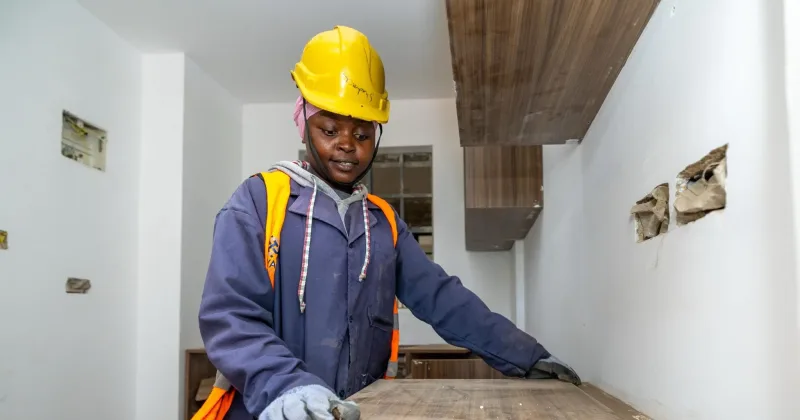
NAIROBI, Kenya, Sept 14 – The Ruring’u Affordable Housing Project is providing a practical link between technical training and employment, giving young TVET graduates an opportunity to apply classroom skills on an active construction site while gaining experience demanded by the industry.
The opportunity reflects wider reforms in Kenya’s Technical and Vocational Education and Training (TVET) sector, including the adoption of Competency-Based Education and Training (CBET), which places greater emphasis on practical, outcome-based learning and the acquisition of skills that respond to workplace requirements.
The reforms, alongside investments to modernise vocational institutions and strengthen Science, Technology, Engineering and Mathematics (STEM) training, are positioning TVET as an important pathway into technical careers.
At the Ruring’u housing project, these interventions are translating into practical work experience for young professionals.
Mercy Gitonga, a Diploma in Civil Engineering graduate from The Michuki National Polytechnic, joined the project as an intern shortly after completing her studies.
She has since progressed to the position of assistant surveyor.
Gitonga said her training provided the theoretical foundation needed to enter the engineering field, while working on the construction site gave her an opportunity to develop practical skills and understand the demands of the profession.
Her experience illustrates how large-scale public construction projects can provide an important transition point for TVET graduates, allowing them to gain workplace experience, build professional confidence and apply technical knowledge in real-world settings.
For young people pursuing technical careers, the Ruring’u project is therefore serving not only as a construction site, but also as a platform for skills development and entry into the formal workforce.
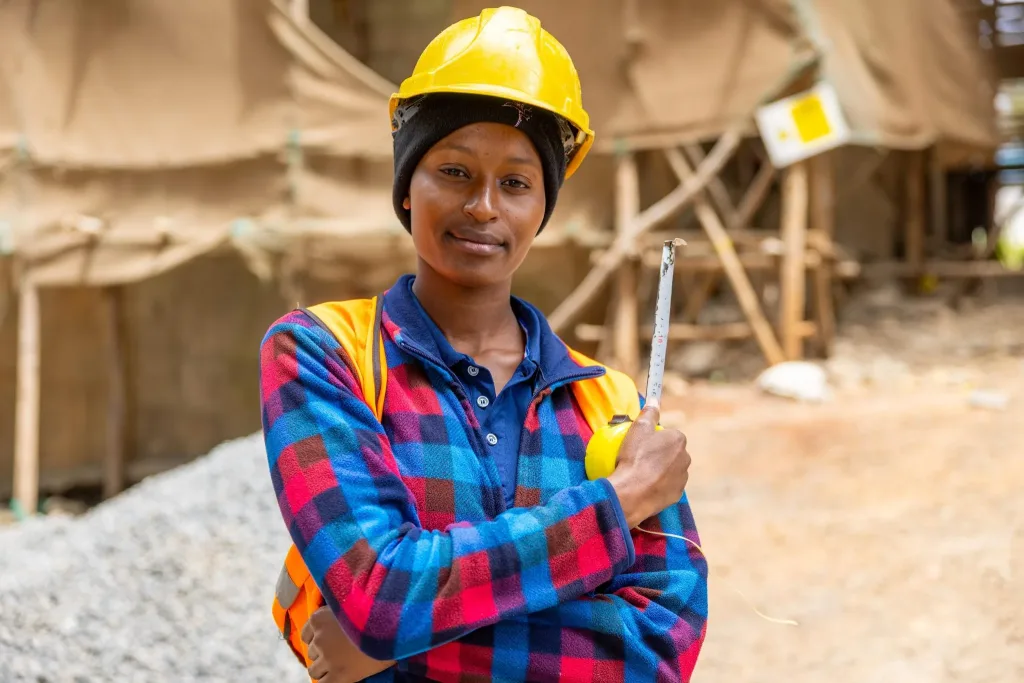
“Such government projects really help students and graduates gain hands-on experience of how work is done in the real world and how to apply the theory learnt earlier,” she noted.
Similarly, Julieta Mumbi, a Mechanical Engineering graduate from Nyeri National Polytechnic, has spent the past one year and nine months working at the Ruring’u site.
Mumbi started as a steel fixer and has since expanded her skills to include welding and carpentry.
She said the site environment has enabled workers to learn across different departments, giving them an opportunity to broaden their technical skills through practical experience.
“In this project, they have allowed and helped us every day to learn skills from the different departments on the site,” she said.
“As we work every day, we learn something new as well,” Mumbi added.
Beyond skills development, the employment opportunities provided by the project are also giving young people a source of income and greater financial independence.
Mumbi said steady employment has enabled young workers to support themselves without relying on their families.
The experiences of the young workers also challenge the perception that construction work is simply manual labour, highlighting the technical skills, professional growth and career opportunities available within the sector.
As construction progresses, the Ruring’u Affordable Housing Project is providing a practical workplace for young technical professionals to translate classroom training into industry experience while earning an income and building their careers.