NAIROBI, Kenya, Oct 24 – About 86,000 school-going children in Kenya suffer from uncorrected vision problems such as short-sightedness, long-sightedness, and astigmatism, hindering their ability to read books and see blackboards, a new global report has revealed.
The study by the International Agency for the Prevention of Blindness (IAPB) and the Seva Foundation, titled “Better Education in Sight,” estimates that Kenyan children lose nearly 25,000 years of schooling annually due to poor vision. It further notes that children could learn twice as much if their vision were corrected.
Released ahead of World Sight Day 2024, the report—supported by the Optometrists Association of Kenya (OAK)—shows that improving child eye health could add over Sh14.7 billion in annual earnings to Kenya’s economy.
OAK President Dr. Victor Opiyo said good eye health directly impacts lifetime income.
“A five-year-old who gets glasses and wears them until adulthood could earn 125 percent more over their lifetime than someone who never had their vision corrected,” he said.
IAPB Chief Executive Officer Peter Holland added that most refractive errors remain uncorrected because they go undetected. He urged health and education stakeholders to increase access to eye tests and affordable eyeglasses in schools.
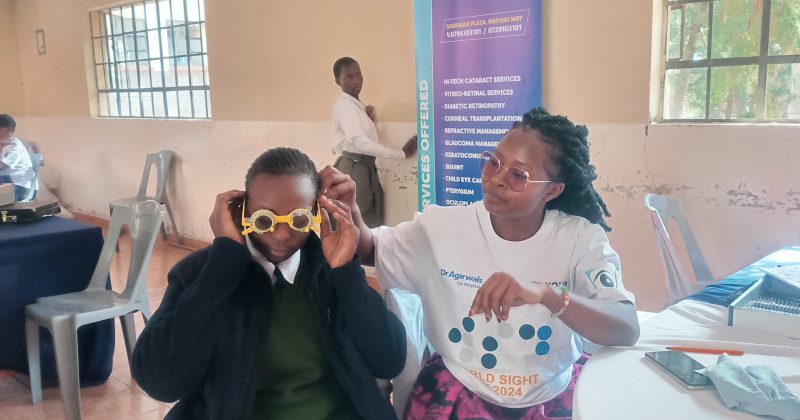
Ahead of World Sight Day, OAK carried out free eye screenings in six schools within Nairobi’s Mukuru informal settlement and provided eyeglasses to children in need.