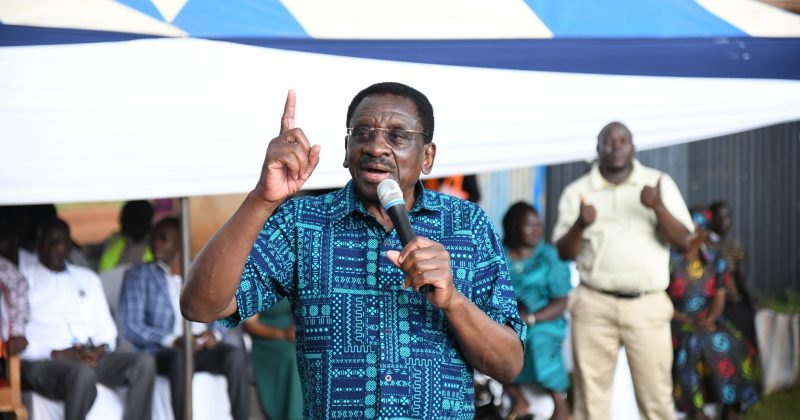
NAIROBI, Kenya, June 16 – Siaya Governor James Orengo has sharply criticised the government’s proposed KSh2 billion reparations programme for victims of protests-related violence, saying it risks reducing human life and constitutional rights into a predetermined monetary figure.
In a statement, Orengo accused President William Ruto’s administration of attempting to manage public outrage over deaths and injuries linked to demonstrations through compensation rather than accountability.
He argued that the proposed framework, reportedly setting a minimum payout of KSh2.5 million for each life lost, amounts to pricing human life and could normalize excessive use of force against protestors.
“A constitutional democracy cannot operate on the basis that rights may be violated today and compensated tomorrow. Rights are intended to be protected, not priced. The most disturbing aspect of the proposal is the recommendation that a life lost during demonstrations be compensated at a minimum of Kshs. 2.5 million,” Orengo noted.
In the new framework unveiled by the Kenya National Commission on Human Rights (KNCHR), victims of police brutality, torture, enforced disappearances and deaths during demonstrations could receive compensation of up to Sh2.5 million
Orengo warned that the initiative risks sending a dangerous signal that constitutional violations under Article 37 on the right to assemble can be resolved after the fact through financial settlements.
According to the statement, the rapid rollout of the reparations programme appears timed to ease tensions following recent protest-related fatalities and injuries, rather than addressing what Orengo described as the root causes of rights violations.
He cautioned that without independent investigations, prosecutions of perpetrators, and institutional reforms, compensation alone could create a shoot, kill, compensate, move on” precedent.
“That is not justice. It is merely accounting. Compensation is one aspect of justice, not justice itself. Before any award is made, there must be proper investigations, identification of perpetrators, prosecution where criminal conduct is established and institutional reforms to prevent recurrence,” the Siaya Governor noted.
Orengo further warned that setting standard compensation amounts risks transforming constitutional breaches into administrative liabilities rather than criminal and institutional failures requiring corrective action.
“Kenyans do not demand compensation in place of rights; they demand protection of those rights in the first instance,” he noted.
“Rights are not for sale, human life is not a budget item and constitutional freedoms must never be reduced to a compensation schedule,” Orengo added.
The proposed reparations model seeks to establish a structured compensation system for victims of human rights violations, while strengthening accountability and ensuring those affected receive recognition, justice and restitution.
Under the framework, violations involving the right to life would attract the highest payouts.
Victims of fatal police shootings, deaths in custody and deaths during demonstrations would be entitled to a minimum compensation of Sh2.5 million, in addition to medical expenses incurred before death.
Victims of enforced disappearances would receive at least Sh1.5 million plus medical expenses, while survivors of torture would be compensated a minimum of Sh2 million alongside reimbursement of treatment costs.
The commission has also proposed compensation for violations involving the right to freedom and security.
Victims who suffer severe physical injuries would receive a minimum of Sh1 million plus medical expenses, while those with moderate injuries would be awarded at least Sh500,000 and medical costs.
For minor injuries, the proposed minimum compensation is Sh50,000 in addition to medical expenses.
Victims of arbitrary arrest and detention would also be entitled to a minimum of Sh50,000.
Sexual violence survivors would receive significant compensation under the framework.
Victims of aggravated sexual violence would qualify for at least Sh2 million plus medical expenses, while survivors of rape, defilement and sexual assault would receive a minimum of Sh750,000 alongside treatment costs.
The proposals also seek to cushion victims who suffer economic losses due to human rights violations.
Individuals whose businesses are disrupted or destroyed would be entitled to a minimum compensation of Sh100,000.
According to KNCHR, the compensation schedule is intended to create clear standards for redress, guarantee adequate restitution and reinforce the principle that human rights violations carry legal and financial consequences.
The recommendations come amid growing calls for justice for victims of police brutality, enforced disappearances, torture and abuses linked to demonstrations and security operations.