NAKURU, Kenya Oct 5 – An international forest restoration organisation has partnered with communities to restore degraded indigenous forests within the Mau Forest Complex, targeting areas affected by wildfires and human activities.
One Tree Planted, a US-based global forest restoration organisation, is working with Wezesha Community Based Organisation (CBO) to restore native vegetation, protect biodiversity and strengthen the resilience of the Mau ecosystem to climate change.
The project also seeks to protect water resources and provide a safer habitat for endangered animal and bird species within the forest complex.
One Tree Planted Project Manager for Africa John Ngahu said the organisation was working with local communities to plant indigenous tree species, restore degraded areas and establish and support community-managed tree nurseries.
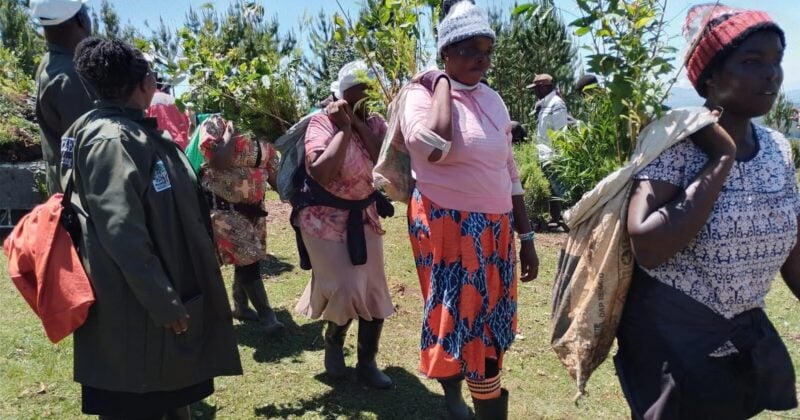
Speaking during a tree planting exercise in Dundori Forest, Ngahu said local volunteers were also being trained to monitor tree growth, prevent forest fires and protect young trees from illegal logging and grazing.
“The project goes beyond biodiversity and restoration to support livelihoods and build capacity among the locals so that there can be conservation champions who educate other members of the community,” he said.
The project is also providing communities with training on income-generating activities, including seed collection and tree production.
Ngahu said some residents were also benefiting from farming opportunities under the Shamba System, noting that newly planted trees require care for up to three years before communities can vacate the restoration sites.
He stressed that successful forest restoration required more than planting trees, saying monitoring, reporting and verification of tree growth were equally important.
“Planting trees is one thing and easy while monitoring, reporting and verification of tree growing is another thing altogether,” Ngahu said.
He said involving communities was critical because residents depend on surrounding forests for water, food and other resources.
Ngahu said the restoration programme would continue over the coming years, with its success measured through the survival of planted trees, recovery of native vegetation and sustained participation by local communities.
He described the Mau Forest Complex as the largest closed-canopy forest in East and Central Africa and said extensive sections had been degraded over the years.
“Mau Forest Complex, which is the largest closed canopy forest in East and Central Africa, has been facing major challenges. Large sections had been completely degraded and that is why One Tree Planted has been working on restoring it, capacity building the communities around it and creating awareness on conservation,” he said.
The Mau Forest Complex is Kenya’s largest water tower and comprises 22 forest blocks spread across five counties. Menengai and Dundori forests are also considered part of the wider Mau Forest catchment area.
Ngahu, who was accompanied by One Tree Planted financiers from Switzerland and Wezesha CBO Chief Executive Officer Dr Redempta Mutisya, said the organisation was targeting the planting of 150 trees representing more than 13 native species in Dundori Forest.
He stressed the importance of applying scientific knowledge to forest restoration by selecting the right tree species for specific sites.
Dr Mutisya said communities must remain at the centre of forest restoration efforts to create a sense of ownership and ensure sustainability beyond the lifespan of conservation projects.
She said local communities were the primary custodians of forest resources and should therefore be equipped with the skills needed to protect and restore degraded areas.
“The immediate threat to Dundori Forest is illegal grazing, charcoal burning and generally logging. We need to leave a community that can take care of the forest once the project is over and that is why a section of locals have been trained to be conservation champions,” she said.
Nikin Nothing Co-Founder and Chief Executive Officer Nicholas Haenny of Switzerland welcomed the community-led approach to forest restoration.
Haenny also commended the Kenyan Government’s 15 billion tree-growing agenda and pledged continued support for conservation efforts.
Community leaders said the restoration initiative had increased awareness of forest protection and encouraged residents to take greater responsibility for degraded areas.
Dundori Community Forest Association Vice Chairperson Peter Kimani said 14 partners were currently working with local communities to restore the forest.
Kimani said although grazing was recognised as one of the community’s user rights, herding was strictly prohibited in indigenous forest patches within Dundori.
The partners said sustained community participation, monitoring and protection of restored areas would be critical to ensuring that newly planted native forests survive and contribute to the recovery of the Mau ecosystem.