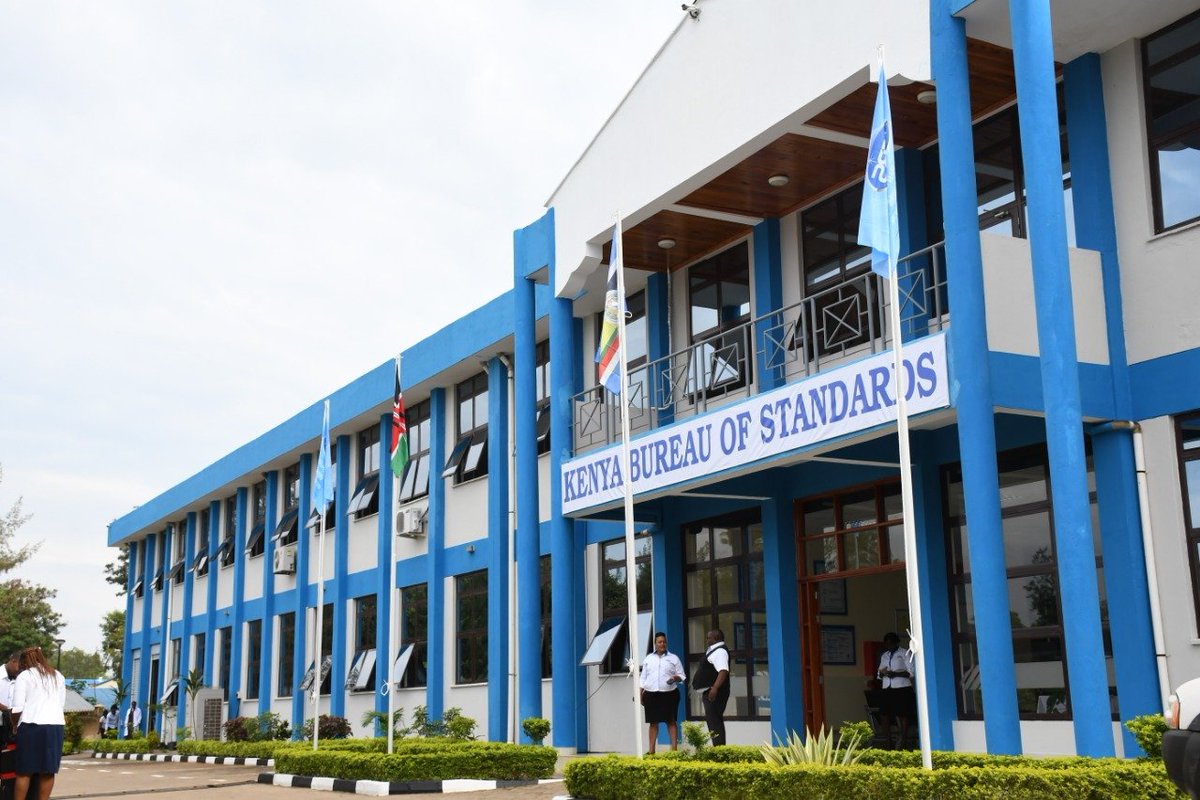
NAIROBI, Kenya, Nov 4 – The Kenya Bureau of Standards (KEBS) has invited manufacturers to submit feedback on a proposed 0.2 percent levy on all locally manufactured goods, following the gazettement of the Standards (Standards Levy) Order, 2025.
According to the notice published under Legal Notice No. 136 of August 8, 2025, manufacturers will be required to remit a standards levy equivalent to 0.2 percent of their monthly turnover, net of Value Added Tax (VAT), excise duty, and discounts.
“The levy shall be payable by all manufacturers at the rate of zero-point two percent (0.2%) of the customs value of the goods manufactured or services offered for sale in each month, net of VAT, Excise Duty and discounts,” the Order states.
Payments will be made through the Kenya Revenue Authority (KRA) on or before the 20th day of the succeeding month, KEBS said.
However, manufacturers with annual turnover below Sh5 million will be exempted from the levy, while the maximum annual levy payable will be capped at Sh4 million for the first five years and Sh6 million thereafter.
KEBS has urged all manufacturers, spanning sectors such as food processing, textiles, mechanical and electrical engineering, and construction materials, to familiarize themselves with the new law and register with the Bureau by filling out Form SL/1, available at KEBS offices and on its website.
“All persons who manufacture or intend to manufacture are required to notify the Managing Director, Kenya Bureau of Standards, by filling registration forms SL/1 available at the Bureau’s offices. Failure to comply constitutes an offence under the Standards Act, Cap 496,” KEBS said.
The Bureau said the levy, introduced under the revised Standards Act (Cap 496), seeks to strengthen regulatory capacity, enhance market surveillance, and improve product testing in line with KEBS’ consumer protection and fair trade mandate.
KEBS plans to use the levy to establish a sustainable internal revenue stream for product standardization, laboratory testing, and quality audits, reducing its dependence on government funding and inspection fees.
Analysts, however, warn that the new levy could raise production costs for mid-sized manufacturers, those with annual turnover between Sh5 million and Sh500 million, who will pay the full 0.2 percent without reaching the cap.