Malaysia slaps anti-dumping duties on Japanese steel products

Malaysia slaps anti-dumping duties on Japanese steel products
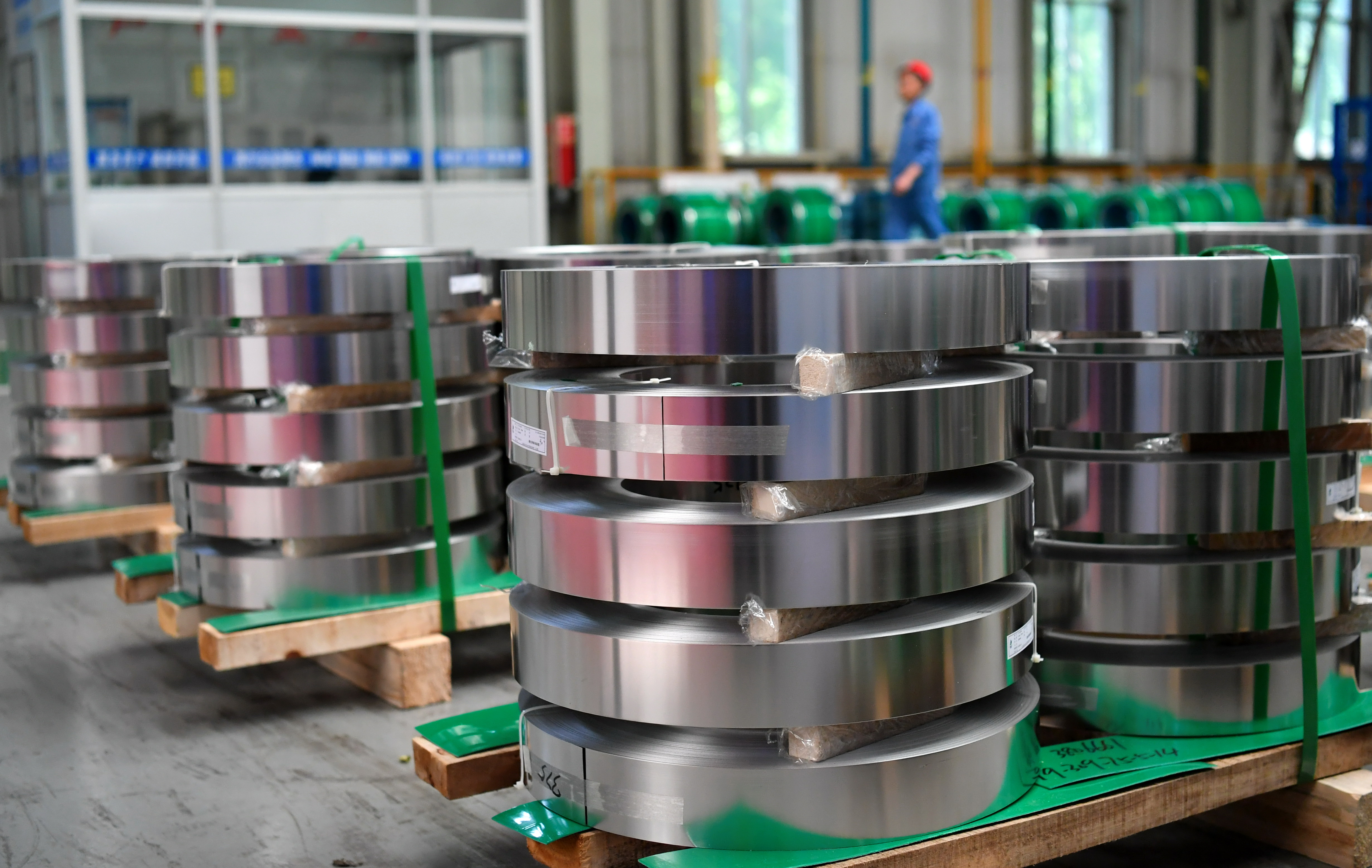
(190604) -- TAIYUAN, June 4, 2019 (Xinhua) -- Photo taken on May 24, 2019 shows ultra-thin stainless steel strips made by Taiyuan Iron and Steel (Group), or TISCO, in Taiyuan, north China's Shanxi Province, May 24, 2019. As a leading stainless steel maker, TISCO boasted research and development of high-tech stainless steel products by large efforts on innovation. So far TISCO possesses over 2,700 authorized patents, including 772 patents for invention. (Xinhua/Cao Yang)

KUALA LUMPUR, Sept. 29 (Xinhua) — Malaysia has imposed anti-dumping duties on Japanese cold rolled coils following the completion of its investigations, which began earlier this year, the Ministry of Investment, Trade and Industry (MITI) said on Friday.

The final determination had been made to impose anti-dumping duties on cold rolled coils of alloy or non-alloy steel of a thickness between 0.20 mm to 2.60 mm and width between 700 mm to 1,300 mm, it said in a statement.

It said a 9.03 percent duty was imposed on products from the Nippon Steel Corporation, while other manufacturers were slapped with a 22.62 percent duty.

“The imposition of anti-dumping duties on exports of subject merchandise from Japan is expected to address the unfair trade practices,” it said.

However, it has excluded tin mill black plate or cold rolled coils imported for automotive or electric and electronic end-usages originating or exported from Japan.

The investigation had been prompted by a petition filed by Malaysian steel producer Mycron Steel CRC, which had alleged that imports of the subject merchandise originating or exported from Japan were sold at a price much lower than their domestic selling price in Japan (dumped price).


XINHUA

Xinhua News Agency, founded on November 7, 1931, is China’s national news agency as well as a global news and information network. Xinhua has set up a global news and information gathering network, with headquarters in Beijing, 33 domestic bureaus in provinces, autonomous regions and municipalities plus the special administrative regions of Hong Kong and Macao, as well as 140 bureaus in the rest of the world. Xinhua is yet to set up a bureau in Taiwan, where it has posted resident correspondents. Xinhua provides its worldwide subscribers with news and financial information products in the forms of text, photo, graphics, audio, video, and mobile phone text messages 24 hours a day in eight languages: Chinese, English, French, Russian, Spanish, Arabic, Portuguese and Japanese.