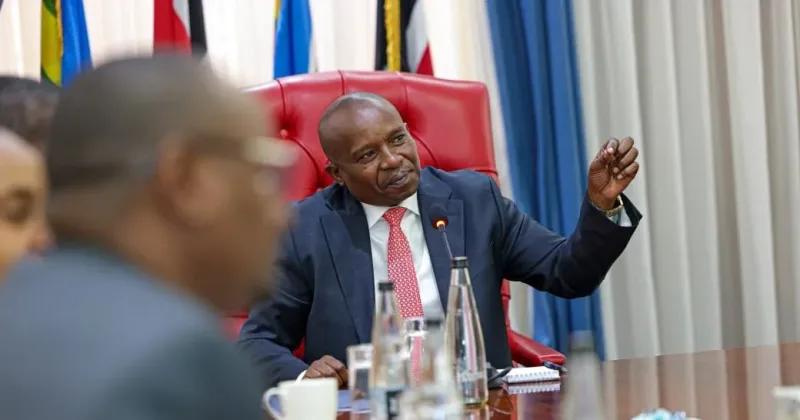
NAIROBI, Kenya, Jul 24 – Deputy President Kithure Kindiki has assured Kenyans that the government is implementing extensive measures to cushion farmers and safeguard national food security following below-average rainfall that has affected crop production in several key agricultural regions.
Speaking after chairing a high-level meeting with Cabinet Secretaries and Principal Secretaries at his official Karen residence on Friday, Kindiki said the government is closely monitoring the evolving weather situation and coordinating interventions to address both the current dry spell and the anticipated El Niño rains later this year.
He said the administration is determined to ensure that no Kenyan suffers from food shortages despite the challenging weather conditions.
“I assure the country that the government is seized of the matter of what has happened this season and what is projected to happen later this year. We are taking all possible measures to prevent any part of Kenya or any citizen from suffering from lack of food, famine and support farmers to make sure they don’t get disrupted because of the unfavourable weather,” Kindiki said.
The Deputy President noted that the poor rainfall experienced during the current growing season has significantly affected food production in some of the country’s major maize-producing areas, prompting the government to roll out immediate mitigation measures.
Among the interventions under consideration is the conversion of failed maize crops into animal feed to help farmers recover part of their investment instead of losing the entire harvest.
“We are looking at modalities of using the crop that failed for making animal feed so that farmers can get some income from the crop even if it has not matured,” he explained.
Kindiki said the government will hold weekly inter-ministerial meetings to continuously assess the situation and strengthen preparedness for any emerging risks.
“The government will go out of its way to make sure that this situation will not affect the food security of our country. We met this morning to look at some of the immediate interventions we need to make. We have agreed to continue meeting every week to make sure there is enough preparedness for any eventuality,” he said.
Beyond responding to the current rainfall deficit, the government is also preparing for the forecasted El Niño rains expected between October and December.
Kindiki said the administration is working on measures to help farmers harvest mature crops early, improve drying and storage facilities, and reduce post-harvest losses that often accompany heavy rainfall.
The government also plans to support farmers with timely farm inputs and land preparation to maximize agricultural production during the next planting season.
“We are also looking at assisting farmers to prepare for the coming El Niño rains projected later in the year. We are focused on farm inputs and farm preparation,” he said.
The coordinated response brings together ministries responsible for agriculture, water, interior, transport, energy and disaster management as the government seeks to mitigate the twin threats of reduced rainfall and potential flooding associated with El Niño.
Officials say the strategy aims to protect farmers’ livelihoods, stabilize food supplies and strengthen the country’s resilience against increasingly unpredictable weather patterns driven by climate change.