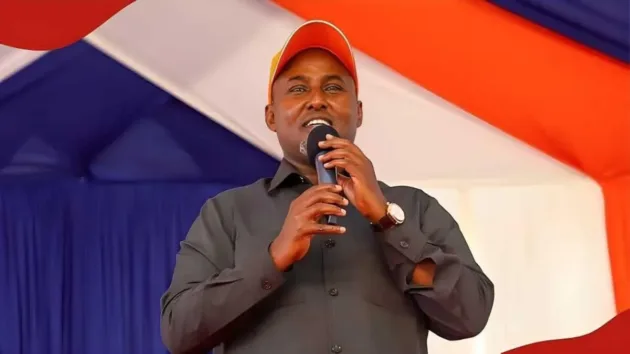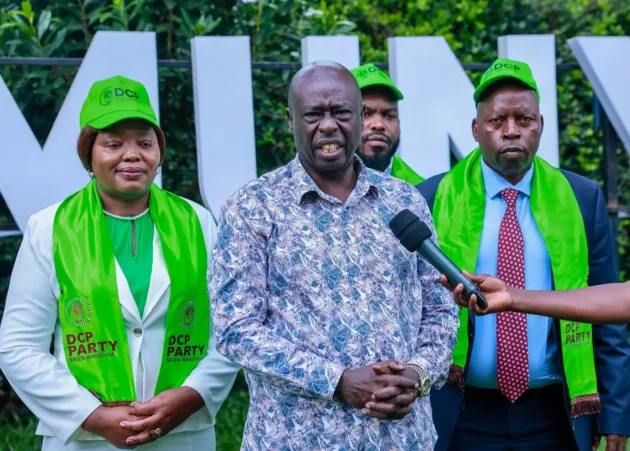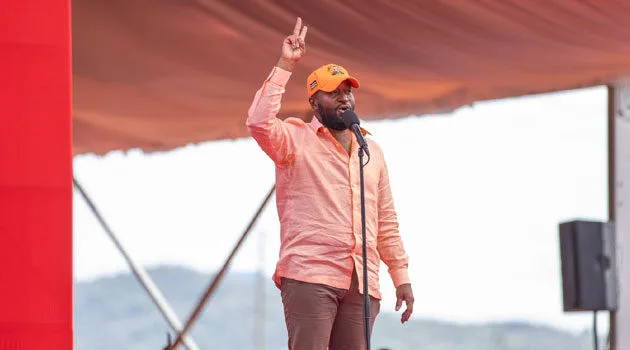
NAIROBI, Kenya Nov 17 – Mining Cabinet Secretary Hassan Joho has blasted politicians working with Democracy for Citizens party (DCP) leader Rigathi Gachagua, accusing them of betraying the political principles of the late Raila Odinga for personal ambition ahead of the 2027 General Election.
Joho appeared to take aim at former ODM Secretary General and Linda Mwananchi party leader Edwin Sifuna, who has been working with Gachagua in efforts to build an opposition alliance against President William Ruto.
The CS questioned how politicians who once stood behind Raila could now associate with someone he claims was among the former ODM leader’s fiercest political opponents.
Speaking about the shifting political alliances, Joho said Raila had spent years building political relationships but had maintained firm positions on certain individuals.
“A person who hated your father while he was alive cannot love him when he is dead. Do you understand that? So there is no way an enemy of your father can suddenly be your friend,” Joho said.
He maintained that his political loyalty to Raila remained unchanged even after his death, insisting that he would not abandon the principles they shared.
“I grew up politically from when I was young until where I am, in the hands of Raila Odinga. And there are some principles I will never change, whatever it takes. We did not betray him when he was alive, neither will we betray him when he is dead,” he declared.
Joho claims Raila refused to shake Gachagua’s hand
Joho further claimed that Raila had been willing to work with several former political rivals, including retired President Daniel arap Moi, former President Mwai Kibaki, Uhuru Kenyatta and President William Ruto.
However, he alleged that Gachagua was the one politician Raila had openly refused to shake hands with.
“Baba shook hands with Moi. He also shook hands with Kibaki. Then he shook hands with Uhuru. Then he shook hands with Ruto. But there is only one man that he said he will never, and he never wants to shake his hands. Who is it? Gachagua,” Joho claimed.
He questioned why some politicians who previously supported Raila were now comfortable working with Gachagua, arguing that such political partnerships went against the former Prime Minister’s beliefs.
“How can it be that some of us now see the one who was a major enemy as a friend? Is that really possible? Isn’t that betrayal of the highest order?” he posed.
The Mining CS also accused some politicians of abandoning their political principles in pursuit of elective positions and influence.
He suggested that the emerging alliance between Sifuna and Gachagua was driven by personal interests rather than shared political values.
“Because of interests, because you want to win a seat. Is this how we are built? Were we created like that?” he asked.
Joho warned that political ambitions should not become more important than the principles and causes that leaders had previously defended.
“You just see me now, ‘I want to be more popular and become a big person in the republic,’ and you betray the entire cause,” he said.
He urged ODM supporters to remain loyal to the political journey they had shared with Raila, warning them against being swayed by emerging political alliances.
“I want to tell you, stay solid, stay put. Remember your values, remember your principles, remember your journey, remember where you have come from, and focus on where we want to go as a people and as a party,” Joho stated.
Joho’s account, however, should be considered alongside previous encounters between Raila and Gachagua, who met on several occasions despite their political differences.
One notable encounter took place on September 16, 2022, about a month after Raila lost the presidential election to William Ruto. The two leaders met at the VIP lounge of Moi International Airport in Mombasa and exchanged pleasantries.
They also attended same events, including Raila’s formal unveiling as Kenya’s candidate for the African Union Commission chairperson position at State House, Nairobi, on August 27, 2024, where Gachagua was among those present.
While the encounters do not necessarily indicate a close political relationship or personal friendship, they provide important context to Joho’s assertion that Raila was unwilling to engage with Gachagua.