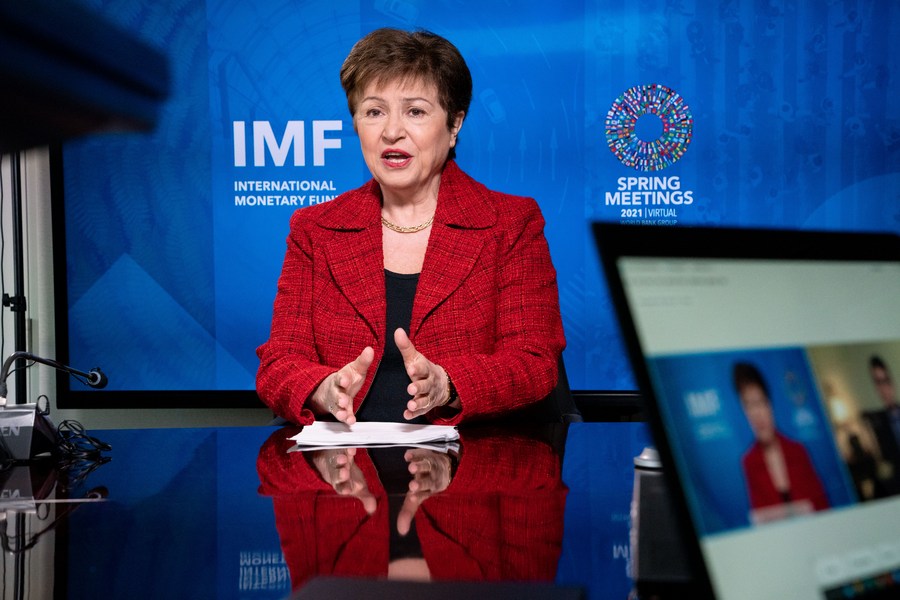
WASHINGTON, Jan. 14 (Xinhua) — The International Monetary Fund (IMF) Managing Director Kristalina Georgieva said on Sunday that artificial intelligence (AI) will affect almost 40 percent of jobs around the world, calling for a careful balance of policies to tap its potential.
“We are on the brink of a technological revolution that could jumpstart productivity, boost global growth and raise incomes around the world. Yet it could also replace jobs and deepen inequality,” Georgieva said in a blog, citing a new IMF analysis, which examined the potential impact of AI on the global labor market.
Historically, automation and information technology have tended to affect routine tasks, but one of the things that sets AI apart is its ability to impact high-skilled jobs, the blog noted.
“As a result, advanced economies face greater risks from AI — but also more opportunities to leverage its benefits — compared with emerging market and developing economies,” according to the blog. In advanced economies, about 60 percent of jobs may be impacted by AI.
In emerging markets and low-income countries, by contrast, AI exposure is expected to be 40 percent and 26 percent, respectively.
However, many of these countries don’t have the infrastructure or skilled workforces to harness the benefits of AI, raising the risk that over time the technology could worsen inequality among nations.
Noting that AI could also affect income and wealth inequality within countries, Georgieva said that in most scenarios, AI will likely worsen overall inequality, a troubling trend that policymakers must proactively address to prevent the technology from further stoking social tensions.
“It is crucial for countries to establish comprehensive social safety nets and offer retraining programs for vulnerable workers. In doing so, we can make the AI transition more inclusive, protecting livelihoods and curbing inequality,” she said.
The IMF chief suggested that advanced economies prioritize AI innovation and integration while developing robust regulatory frameworks.
For emerging markets and developing economies, the priority should be laying a strong foundation through investments in digital infrastructure and a digitally competent workforce, she said.