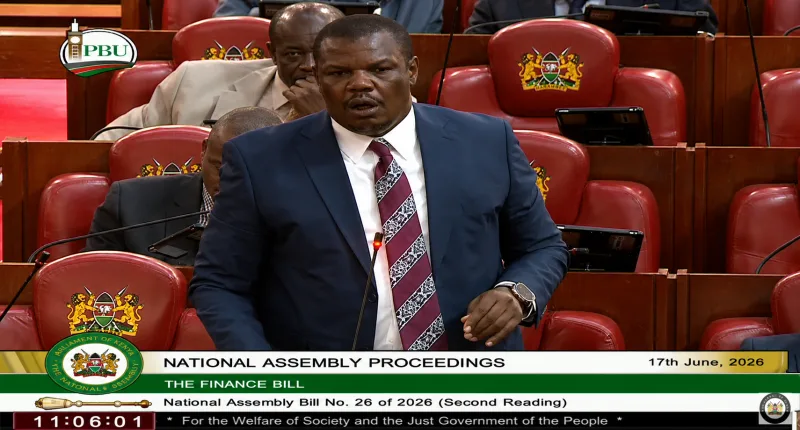
NAIROBI, Kenya Jun 15 – The National Assembly’s Departmental Committee on Finance and National Planning has entered the final phase of its review of the Finance Bill 2026 after concluding public sector stakeholder engagements.
The committee, chaired by Molo MP Kuria Kimani, retreated to prepare its report for tabling before the House following weeks of consultations with the public, government agencies and industry stakeholders.
Committee members said the report will seek to strike a balance between concerns raised during nationwide public participation forums and the policy objectives behind the proposed tax measures.
The committee recently conducted public hearings across 13 counties, collecting views from citizens and stakeholders on contentious provisions in the Bill.
On Friday, lawmakers held extensive discussions with officials from the National Treasury and the Kenya Revenue Authority (KRA), seeking clarification on several proposals that have generated public debate.
Among the issues raised were plans to tax imported mobile phones at the point of activation, proposals to review Pay As You Earn (PAYE) tax bands, mandatory use of electronic tax invoices (eTIMS) for expense claims, taxation of betting winnings and the proposed Value Added Tax (VAT) on digital financial transactions.
Appearing before the committee, National Treasury Principal Secretary Chris Kiptoo defended the Bill, saying it seeks to simplify tax compliance, widen the tax base and improve revenue collection while supporting economic growth.
Kiptoo told lawmakers that the Finance Bill is expected to generate approximately KSh98 billion in additional revenue, with KSh36.3 billion projected from enforcement measures under the Tax Procedures Act.
Members of the committee, however, emphasized the need for a predictable tax environment, arguing that policy consistency is critical for investor confidence and economic planning.
The committee also challenged Treasury officials to improve revenue forecasting models to ensure future projections are realistic and achievable.
In a separate session, KRA Commissioner General Adan Mohamed addressed concerns regarding the proposed phone activation tax, enforcement of agency notices and the extension of the tax amnesty programme.
Mohamed argued that Kenya’s tax burden is currently carried by a relatively small number of taxpayers and called for broader compliance across the economy.