NAIROBI, Kenya, July 13 – The Government has launched the ICT Integration in 10,000 Junior Schools Project, a nationwide initiative aimed at integrating technology into learning and transforming classroom experiences for learners under the Competency-Based Education (CBE) curriculum.
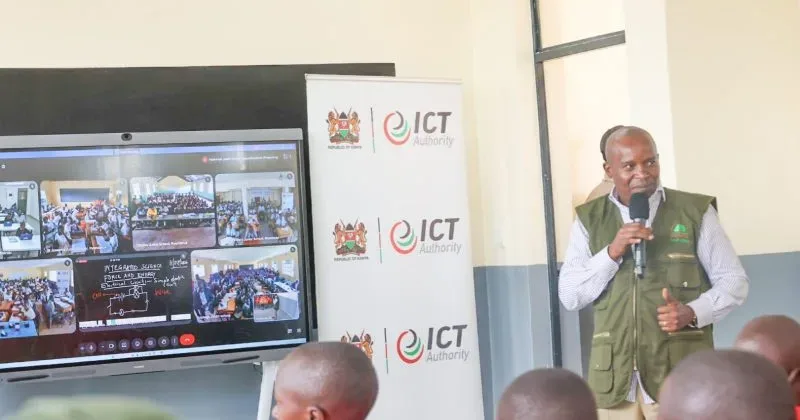
Deputy President Kithure Kindiki presided over the launch of the programme at Kaptarkok Junior School in Keiyo South Constituency, Elgeyo Marakwet County, where he witnessed the delivery of an Integrated Science lesson by a teacher stationed at Kaptarkok Primary and Junior School to six schools spread across six counties.
The schools participating in the national demonstration included institutions in Kakamega, Nairobi, Ol Kalou, Mombasa and Elgeyo Marakwet, showcasing the potential of technology to create shared learning experiences for learners across the country.
“Kenya’s journey to the first world requires us to modernise our delivery of education to match first-world standards,” said Kindiki.
The demonstration illustrated how digital connectivity can facilitate collaboration between learners and teachers across geographical boundaries, regardless of where schools are located.
The launch at Kaptarkok forms part of broader efforts to modernise education delivery and align classroom learning with international standards through the integration of technology.
Information and Communication Technology Authority (ICTA) Chief Executive Officer Jesse Maruti said the programme is intended to ensure inclusivity in access to digital services and opportunities across the country.
“What I mean is that when our Kenyans, whether in Turkana, Lamu, Mandera or Kakamega, they need to have the same experience when accessing services digitally,” said Maruti.
He said the fibre optic infrastructure that many Kenyans have noticed along roads and electricity lines across the country forms part of the Government’s digital transformation agenda.
“The cable is part of our 100,000 km agenda that we need to deliver in terms of connectivity, just to bridge the digital divide by providing connectivity to schools, hospitals, homes and across Kenya so that we can harness the full potential for digital space,” he said.
According to Maruti, the current phase of the programme involves the provision of digital devices to 10,382 schools, including one laptop and one smart board for each institution to support ICT integration in learning.
He added that the Government intends to connect 74,000 institutions across the country to affordable and reliable internet services under the Digital Superhighway programme.
Kiveu said the initiative goes beyond devices and connectivity by also investing in digital content and teacher preparedness.
“So far, with the partnership with the Kenya Institute of Curriculum Development, the Teachers Service Commission and the Ministry of Education, we have trained over 62,000 teachers across the country just to provide support to our learners so that they can be able to use this infrastructure,” he said.
The ICTA Chief Executive Officer added that support teams stationed across the country would continue assisting teachers and schools, while planned digital hubs would help create an ecosystem to sustain the infrastructure.
Kiveu said the programme marks a shift from the earlier digital literacy initiative that focused on tablets towards greater emphasis on digital content, collaboration and interactive learning through smart boards and connected classrooms.