When people think of India, they often picture a rapidly growing economy, a global IT hub, or perhaps its rich culinary traditions.
Living in New Delhi, daily life can be remarkably convenient. The city’s metro system, including lines supported by the Japan International Cooperation Agency (JICA), provides efficient transport, while a thriving delivery economy ensures goods arrive at one’s doorstep within hours. Fresh produce vendors still cycle through residential neighbourhoods, offering vegetables directly to households. Apart from severe air pollution during winter, urban life is generally comfortable.
The same sense of energy is evident in major cities such as Mumbai, Kolkata and Chennai. Their bustling streets, expanding infrastructure and growing metro networks reflect India’s rapid urban transformation.
Yet beyond these cities lies a different reality. A significant portion of India’s population still lives in rural areas, where agriculture remains the backbone of livelihoods. It is in these communities that JICA is supporting development through investments in agriculture, water supply and rural infrastructure.
Agriculture and Poverty
Agriculture employs nearly half of India’s workforce, making it one of the country’s most important economic sectors. At the same time, India is home to an estimated 130 million people living in poverty, representing nearly one-fifth of the world’s poor. Around 40 percent of those living in poverty are farmers.
Improving agricultural productivity and increasing farmers’ incomes therefore remain central to India’s efforts to reduce poverty and achieve inclusive economic growth.
Gender inequality presents an additional challenge. Despite progress in recent years, women in many rural communities continue to have limited access to education, economic opportunities and decision-making processes. Supporting women’s empowerment has therefore become an important component of rural development efforts.
Supporting Women Farmers in Jharkhand
One of JICA’s flagship agricultural programmes is being implemented in Jharkhand, a state in eastern India that has one of the country’s highest poverty rates and a relatively low Gender Development Index.
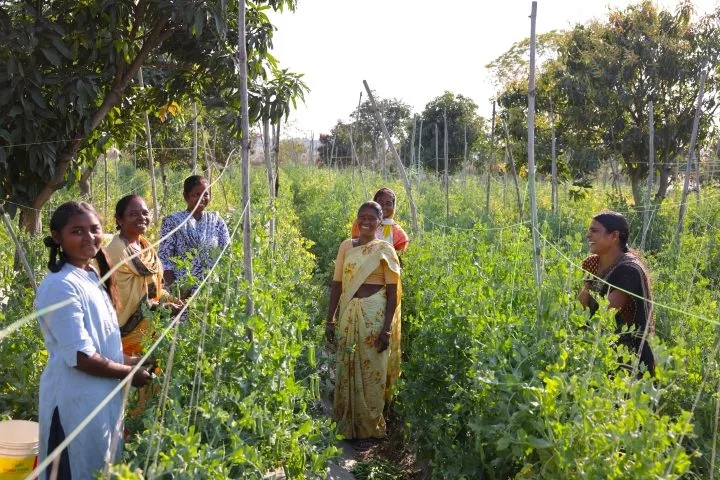
In many parts of Jharkhand, men migrate to urban centres in search of employment, leaving women responsible for managing farms and supporting their families. Recognising this reality, JICA has partnered with the state government to support approximately 30,000 small-scale women farmers through horticulture and livelihood programmes.
The initiative introduces technologies such as micro drip irrigation systems, shared agricultural machinery and improved farming practices aimed at boosting productivity and incomes.
The project also addresses one of the region’s growing concerns: climate change. Rainfall patterns have become increasingly unpredictable, making water management critical for agricultural sustainability.
Drip irrigation technology allows farmers to significantly reduce water consumption while increasing crop yields. It also enables cultivation during dry periods, helping farmers generate income throughout the year.
Beyond irrigation, the programme has introduced poly nursery houses, vermicompost production units, cold storage facilities and farmer resource centres that offer training and machinery rental services.
From Production to Markets
The initiative adopts JICA’s Smallholder Horticulture Empowerment and Promotion (SHEP) approach, which encourages farmers to shift from a traditional “grow and sell” model to a more market-oriented “grow to sell” approach.
Through women-led Self-Help Groups (SHGs), farmers receive training in business management, marketing and value-chain development, helping them make informed production decisions based on market demand.
Several years after its launch, the programme is already delivering results. Women farmers are using new technologies and skills to increase production and household incomes.
The impact extends beyond agriculture. Increased earnings are enabling families to invest in their children’s education, improve healthcare access and secure better housing.
For many households, the programme has become a pathway to greater economic security and opportunity.
A Model for Other States
The success of the Jharkhand initiative is attracting attention from other parts of India.
Officials involved in JICA-supported agricultural projects in neighbouring states have visited Jharkhand to study the programme, with several adopting elements of the SHEP approach and women’s empowerment strategies within their own agricultural initiatives.
This growing interest demonstrates how successful local interventions can create wider development impact across regions.
Working Together for Sustainable Development
One of the most striking aspects of working in India is the commitment of people at every level to improving rural livelihoods.
Government officials, development partners, local organisations and farmers themselves share a common goal of improving incomes, increasing productivity and creating better opportunities for rural communities.
While India continues to record strong economic growth, significant development challenges remain, particularly in rural areas where poverty and inequality persist.
Through partnerships with local governments and communities, JICA continues to support efforts that improve livelihoods, strengthen resilience to climate change and empower women farmers to play a greater role in shaping their futures.
For the 30,000 women farmers participating in the Jharkhand programme, these interventions are helping cultivate not only crops, but also hope, opportunity and a more prosperous future for their families.