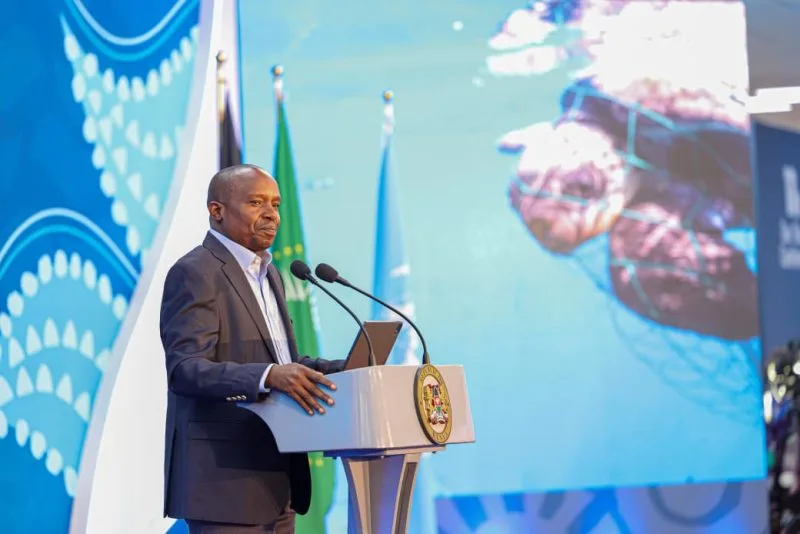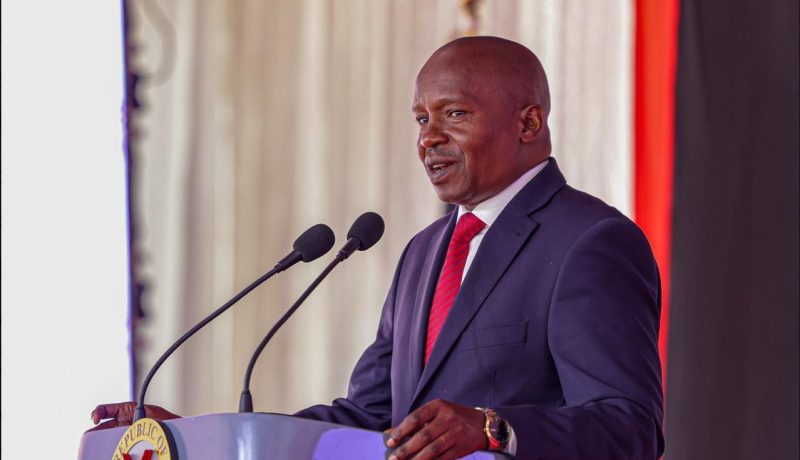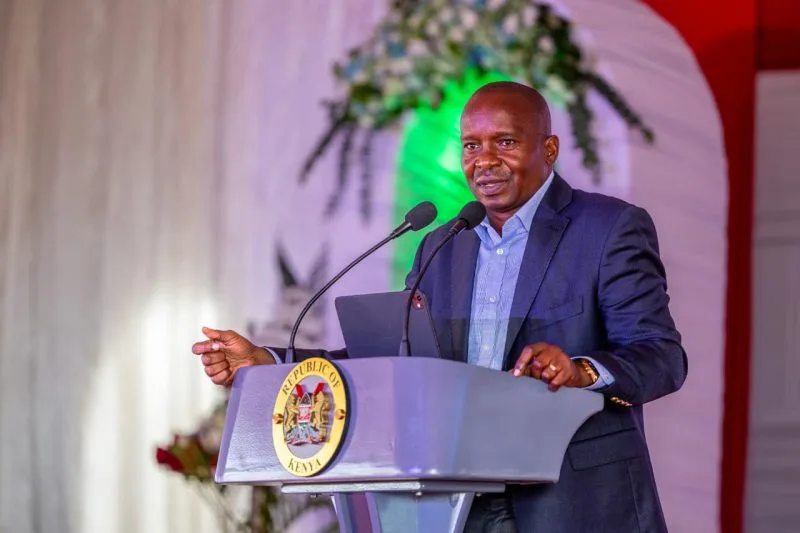
NAIROBI, Kenya, June 17 – Deputy President Kithure Kindiki has called for urgent global action to restore degraded rangelands and strengthen ecosystem resilience, warning that failure to protect natural resources threatens livelihoods, food security and environmental sustainability.
Speaking during the Global Observance of Desertification and Drought Day in Vipingo, Kilifi County, Kindiki said Kenya remains committed to large-scale ecosystem restoration programmes, including the government’s target of planting 15 billion trees by 2032.
The event was held under the theme, “Rangelands: Recognize, Respect, Restore.”
“We must recognize the magnitude of the challenge before us and the responsibility the present generation owes future generations,” Kindiki said.
The Deputy President noted that the degradation of rangelands, forests and wetlands continues to undermine food production, water access and economic opportunities for millions of people, particularly vulnerable communities that depend on natural resources for survival.
“When land loses productivity, farmers lose harvests, pastoralists lose livestock, communities lose water sources and young people lose opportunities. The consequences are poverty, conflict and displacement,” he said.
Kindiki stressed that wetlands and rangelands should not be viewed as idle land, but as critical ecosystems that support biodiversity, climate regulation and livelihoods.
“We must recognize that wetlands are not wastelands. They are ecosystems of activity and productivity,” he said.
He emphasized the importance of intergenerational responsibility in environmental conservation, saying natural resources must be preserved and improved for future generations.
“We have not inherited this land from our ancestors; we have only borrowed it from our children,” he stated.
The Deputy President called for clear implementation timelines and accountability mechanisms in environmental restoration efforts to ensure countries remain on track in combating land degradation, drought and desertification.
“We know what action needs to be taken. What is now required is accountability and measurable progress,” he said.
Kindiki highlighted Kenya’s collaboration with international environmental bodies, including the United Nations Environment Programme (UNEP) and the United Nations Convention to Combat Desertification (UNCCD), saying global partnerships remain essential in addressing climate and environmental challenges.
He also announced that the government’s 15 billion tree initiative will prioritize economically beneficial and environmentally suitable species such as mangroves, coconut trees, mango trees and cashew nut trees, especially in coastal counties.
“These trees will not only conserve the environment but also create wealth and improve livelihoods for communities in Kilifi and across the coastal region,” he said.
The Deputy President directed authorities to scale up mangrove restoration programmes in Kilifi as part of efforts to rehabilitate coastal ecosystems and strengthen climate resilience.
“We must commit to increasing the number of mangroves planted here in Kilifi every month,” he said.
Kindiki further assured local communities that the government will continue integrating indigenous knowledge into conservation programmes to ensure restoration initiatives remain sustainable and community-driven.
“We must respect communities, protect them and support their knowledge systems,” he said.
The event was attended by Environment Cabinet Secretary Deborah Barasa, Environment Principal Secretary Festus Ngeno, Kilifi Deputy Governor Flora Mbetsa, Kenya’s Permanent Representative to UNEP Dr. Ida Odinga, senior UNEP officials, Members of Parliament and other stakeholders.