NAIROBI, Kenya, April 29 – Last week, Kenya’s meteorological department issued its routine seven-day weather forecast indicating that most parts of the country will experience heavy rains for another consecutive week into the month of May.
According to the MET department, isolated heavy rainfall events are expected in some parts of the highlands east and west of the Rift Valley, Lake Victoria Basin, the Southeastern lowlands and the coast.
“Heavy rainfall (more than 50mm in 24hrs) was received in a number of Counties including Makueni, Machakos, Murang’a, Embu, Meru, Isiolo, Kericho, Homa Bay, Nyandarua, Bungoma, Nairobi and Migori,” explained the MET department in its report in part.
This is the third year in a row that Kenya expects higher than average rainfall during the ongoing short rains season with heavy flooding already being experienced in some counties.
Last year dozens of people were killed in heavy flooding that affected more than 37,595 households and destroyed 32,712 acres of crops according to official government figures.
This has cast the spotlight on the country’s preparedness to deal with extreme weather conditions that are expected to increase in frequency and intensity owing to climate change.
The adverse weather patterns have prompted calls from the public and private sectors for the development of innovative water management techniques of both ground and rain water resources.
Del Monte Kenya is one of the private sector players in the country that is taking on the challenge in a bid to promote sustainable use of water resources and boost productivity.
The firm recently teamed up with other private and public entities to develop sustainable irrigation practices across its farm holdings.
This has entailed investing tens of millions of shillings to update infrastructure and irrigation systems in the Thika and Athi Rivers. Working with other water users and landowners, the firm leads the way in sharing, managing and conserving these water resources.
This is crucial in ensuring that the farmlands in and around these water catchment areas are properly cushioned from water scarcity or flooding, maintaining optimum levels of production all year round.
According to the World Bank, Kenya’s top exports include tea ($1.37 billion), cut flowers ($817 million), gold ($400 million), tropical fruits ($323 million), and coffee ($304 million) exported mostly to neighboring Uganda, The United States, The Netherlands, UAE and Pakistan.
With over 75,000 tons exported annually, Del Monte Kenya put the nation on the global map, becoming the fourth largest exporter of canned pineapples, exported to more than 80 countries across the world.
The efforts by Del Monte Kenya have also helped position Kenya at the forefront of agricultural biotechnology, pioneering advancements that extend far beyond its vast pineapple plantations.
From developing cutting-edge fruit varieties to implementing efficient irrigation and water storage systems, the company is transforming agribusiness as we know it.
Its state-of-the-art processing facilities in Thika, Kiambu County, not only boost production efficiency but also reinforce Kenya’s status as a global hub for innovation in fruit cultivation and processing.
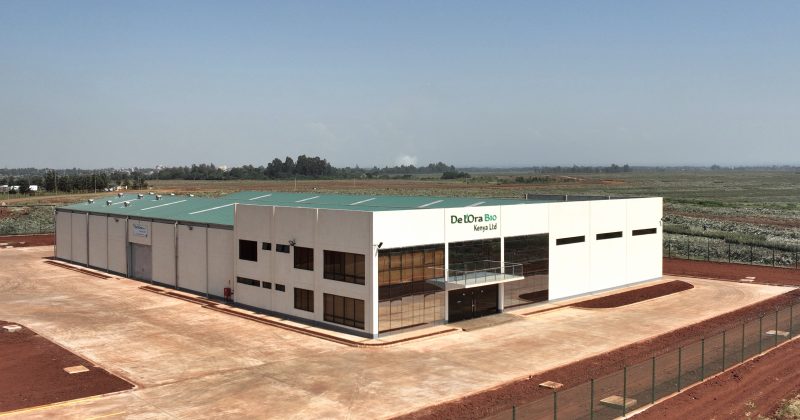
Last year, the farm unveiled a modern fertilizer facility uniquely designed to convert surplus pineapple waste into environmentally-friendly biofertilizers.
These natural fertilizers leverage beneficial microbes to improve soil health, enhance nutrient absorption, and boost crop yields while offering a sustainable alternative to conventional fertilizers.
With the global biofertilizer market projected to reach $9.14 billion by 2032, such innovations highlight the growing shift toward eco-friendly agricultural practices.
Sustainable agricultural practices like these, coupled with partnerships with the public sector ensure that agriculture remains a crucial source of employment, food and foreign exchange for the country.