NAIROBI, Kenya, May 30 – Over a decade ago, a group of visionary farmers in Kenya found themselves confronted with a common set of challenges: depleted soil nutrients, water scarcity, and declining crop yields.
Determined to overcome these obstacles and pave the way for a more sustainable future, farmers from Laikipia, Nakuru, Meru, Narok, Uasin Gishu, and Nyandarua counties joined forces.
Their collective goal? To pioneer sustainable farming practices in non-irrigated cereal-based systems. Thus, AgVenture was born—a testament to their shared vision and commitment to agricultural innovation.
“So in essence they saw they had challenges in their farming business and they needed to find ways to change it and make it more sustainable and more, you know, look towards the future,” Don White, AgVenture CEO, says.

“So that was the kind of original purpose of AgVenture was to figure out how to do that and to make farming more sustainable in every way,” he adds.
Since they experienced numerous challenges, they thought of sub-categorizing them for maximum success.
Consequently, they settled for Pure Mountain, AgVenture Seed and Centre of Excellence.
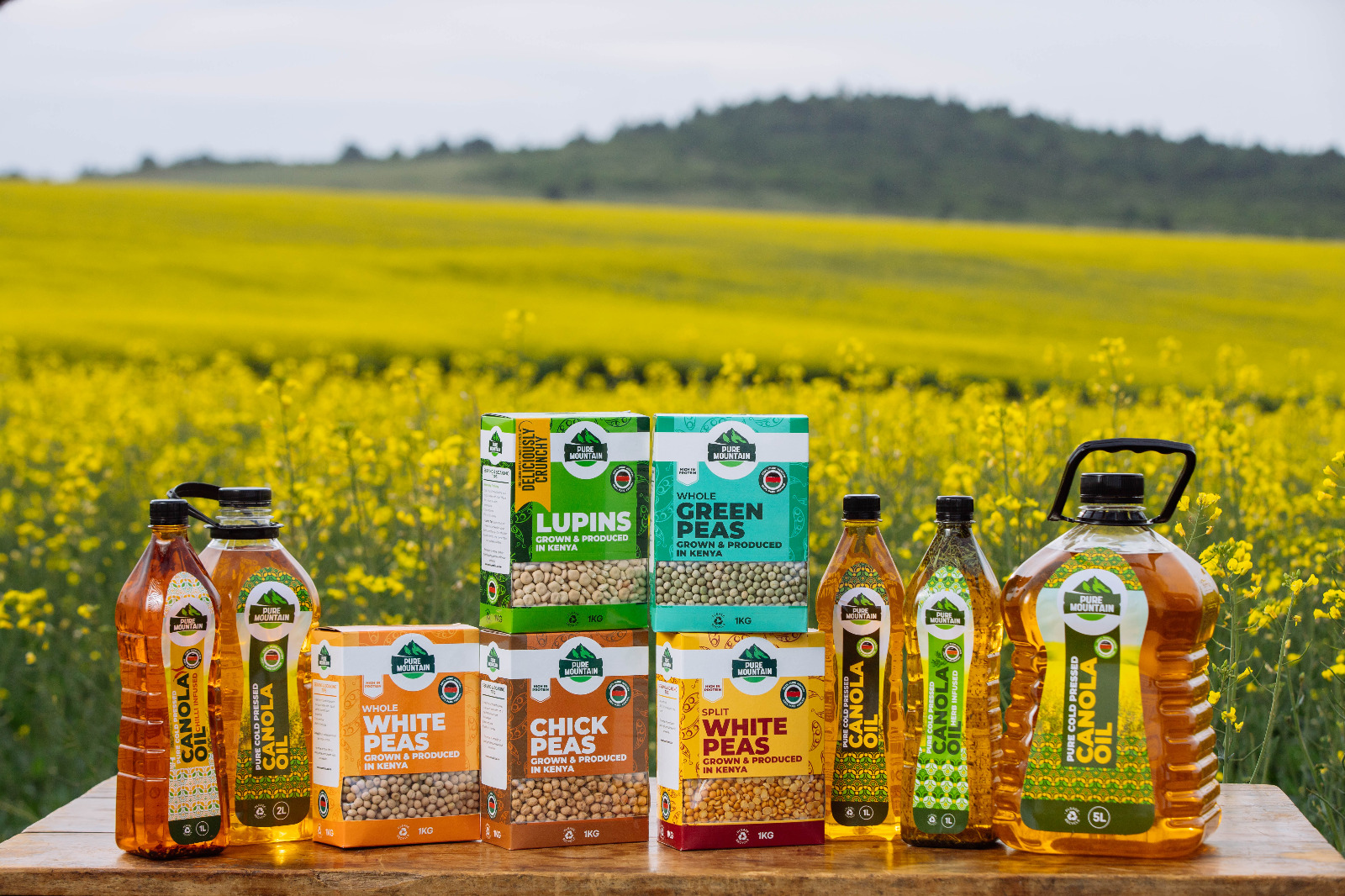
Pure Mountain, the core of the business, supplies edible oil and pulses to retail chains.
Under the brand name, the firm produces and sells canola oil locally and internationally.
They chose canola farming because farmers were looking for a crop that could add crop health or soil health back into the system.
“So, they needed the crop. They’re mainly cereal farmers growing things like maize and wheat,” White states.
“And they wanted a crop that could help their farming system. So, canola is a crop grown all over the world. It’s known under different names.”
Canola is a common crop that is known as rapeseed oil in Europe. In America, Australia, and Canada, it is known by the name canola, and in Australia.
“But the primary reason for it from a farming point of view was that it was something that would help farmers improve their soil health. So, we had a problem which was farmers wanted to grow it but there wasn’t a market for it. So, we set up Pure Mountain as a means of marketing the oil and getting that product into the market and generating revenue for farmers ultimately.”
White says canola oil is special as it has one of the lowest levels of saturated fat than even olive oil.
“Canola oil is a great choice for people in the kitchen. It’s got, as I said, low saturated fats and a very high smoke point. So those features feed into why you would choose it and use it in your kitchen, aside from it being a tasty and delicious oil as well.”
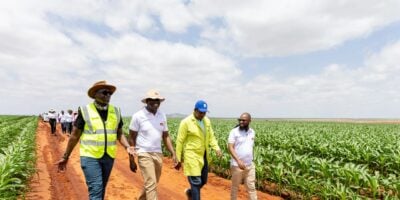
Pure Mountain works with farmers in Narok, Mount Kenya, among other areas, on how to grow canola and later connects them with factories through contract signing.
“So, the total area of farmers that we work with is about 25,000 hectares. But I think when you look at what the possibility is, you know Kenya’s a farming nation, and people want solutions,” White explains.
“They want to know how to do things differently or improve what they do. And I think there’s a lot of opportunity in that space. In order to fulfill that, there’s a number of things that have to be done,” he goes on to say.
“And I think at Agventure, we’re in a very unique place, actually, to offer solutions in that space to assist farmers, number one, but also to generate a lot of value within the economy for the country as well. Okay.”
Currently, Pure Mountain has a production capacity of between 5,000 and 7,000 tons of canola per year.
“We work through our brand, Pure Mountain, but we also supply Upfield, who are producers of the Blueband brand, and they use our oil as well in that product. So yeah, that’s roughly the volume, but we’re also bringing on stream sunflower oil production, which we also think should be able to grow a lot more as well.”
In terms of income, White says that farmers are guaranteed payment after harvest through contracts signed.
“It states the price and the terms and everything else. So we’ve worked on this for a long time, developed good relationships with our farmers, and the intention is to do more and more with them over time,” he says.
“So, whether it’s growing canola, or perhaps sunflower in the future, or indeed seed crops, that’s what we want to do, and we want to build a better relationship with our farmers and offer them solutions in their farming business.”
Since Kenya imports a big chunk of its oil from abroad, White believes that the country has the capacity to source oil within.
“So, as you may know, Kenya imports the vast majority of its edible oil. I think this is something that can change, and I think absolutely we can supply more oil for Kenyans from Kenya, which I think is a very important thing. We do export some of our seed, and there are export opportunities there, but I think again there’s a lot of demand for seed locally that needs to be met as well.”
However, White says that government support is limited.
“So, it’s an interesting question. I think the fertiliser one is obviously a hot topic, and there’s a lot more that could be done there.”
Although canola varieties currently grown in the country are for highlands, there are also varieties for lowland conditions.
“As it stands today, the varieties we have really are best suited to highland conditions. There are varieties elsewhere in the world that are suited to lowland conditions,’ he says.
“We don’t have those here now. But there’s also, as I’ve mentioned a couple of times, sunflower. And we think that sunflower is potentially a crop that suits those lowland areas slightly better.”
He adds that they plan to expand production by working with more farmers.
“Yeah, so currently we have been exporting into Tanzania and DRC, but as time goes by that will, we foresee that expanding quite a bit.”
AgVenture also has a seed company whose main aim is to research the best seeds for farming.
Likewise, it has an outreach program called Centre of Excellence, which is all about training farmers.
“But in the background we have a lot of other parts of the company really focusing on research and development in agriculture and how we can find better farming solutions.”
By Peter Ronko