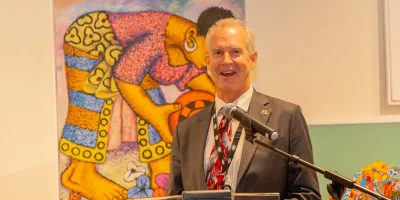
NAIROBI, Kenya, Sept 16 – African countries are seeking stronger disaster risk financing as governments insure only 3–5 percent of disaster losses, compared with about 40 percent globally.
Senior government officials, insurance regulators, development partners and industry representatives from 21 countries are meeting in Nairobi for the two-day Climate and Disaster Risk Financing and Insurance (CDRFI) Africa Forum.
Participants said African governments absorb more than 90 percent of disaster losses estimated at between $7 billion and $15 billion annually, highlighting the need for countries to arrange financing before disasters occur.
Representing Chief of Staff and Head of the Public Service Felix Koskei, National Treasury Principal Secretary for Economic Planning Boniface Makokha said governments should identify public assets exposed to disasters and determine how their recovery would be financed.
“The question is no longer whether disasters will occur, but whether our countries are financially prepared when they do,” Makokha said.
The forum is being held under the theme “Increasing Insurability to Close the Protection Gap in Africa” and is organised by ZEP-RE in partnership with the East Africa Insurance Supervisors Association (EAISA) and hosted by the National Treasury.
ZEP-RE Managing Director and Group CEO Hope Murera said governments should shift from relying on emergency spending after disasters to making financial preparations in advance.
“Disasters should not become fiscal crises,” Murera said. “Resilience is not a cost. It is an investment in growth and stability.”
Insurance Regulatory Authority of Kenya Commissioner of Insurance and Chief Executive Officer Godfrey Kiptum said closing the protection gap should be treated as a development priority.
He called for regulation that protects policyholders while allowing innovation, citing the impending El Niño event as a reminder of the need for early preparation.
EAISA Interim Chairperson and Acting Chief Executive Officer of Uganda’s Insurance Regulatory Authority Protazio Sande linked insurability to investment.
“If it is not insurable, perhaps it is not investable,” Sande said.
Insurance Development Forum Secretary General Ekhosuehi Iyahen said African countries also need to address whether public assets and risks can be made insurable.
“Prediction has improved faster than protection,” Iyahen said. “A protection gap is rarely just an insurance gap. It is almost always a development gap.”
Iyahen also highlighted work on shock-resilient loans that could incorporate risk-transfer mechanisms into sovereign lending, giving governments additional fiscal space after major disasters.
World Bank Group disaster risk finance specialist Emiko Todoroki said countries should match financing strategies to their individual risk profiles.
She said governments could combine budget reserves, contingent financing, insurance and investment in risk reduction to prepare for different levels of risk.
The forum is also examining the use of regional risk pools, insurance, data and other financial instruments to increase the capacity of governments to transfer disaster risks to the private sector.
Participants said reliable data, risk modelling and better identification of exposed public assets are necessary to determine the level of financing required after a disaster.
The forum builds on the 2025 Zanzibar Declaration, under which insurance regulators from 12 countries committed to programmes aimed at protecting critical public infrastructure.
The CDRFI Africa Forum brings together delegations from 21 countries, alongside institutions including the African Development Bank, World Bank Group, Agence Française de Développement, FSD Africa, the Global Shield against Climate Risks and the Insurance Development Forum.