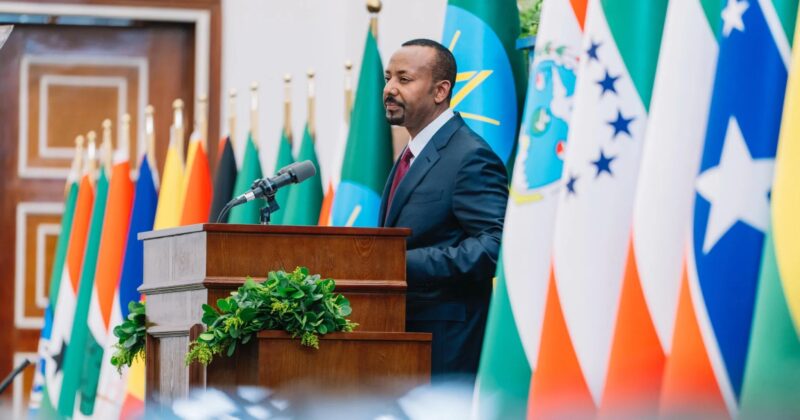
NAIROBI, Kenya, Oct 5 – Prime Minister Abiy Ahmed has been sworn in for a second five-year term as Ethiopia formally inaugurates its new government amid renewed fighting in Tigray and a diplomatic rupture with neighbouring Eritrea.
The Office of the Prime Minister said Abiy took the oath during the first regular inaugural session of the seventh House of Peoples’ Representatives on Monday, marking the start of the first year of the new parliamentary term.
“During the 1st regular inaugural session of the 7th House of Peoples’ Representatives’ 1st year of tenure, Prime Minister Abiy Ahmed (PhD) took the oath of office after being named as the Prime Minister of Ethiopia for a second term,” the Prime Minister’s Office said.
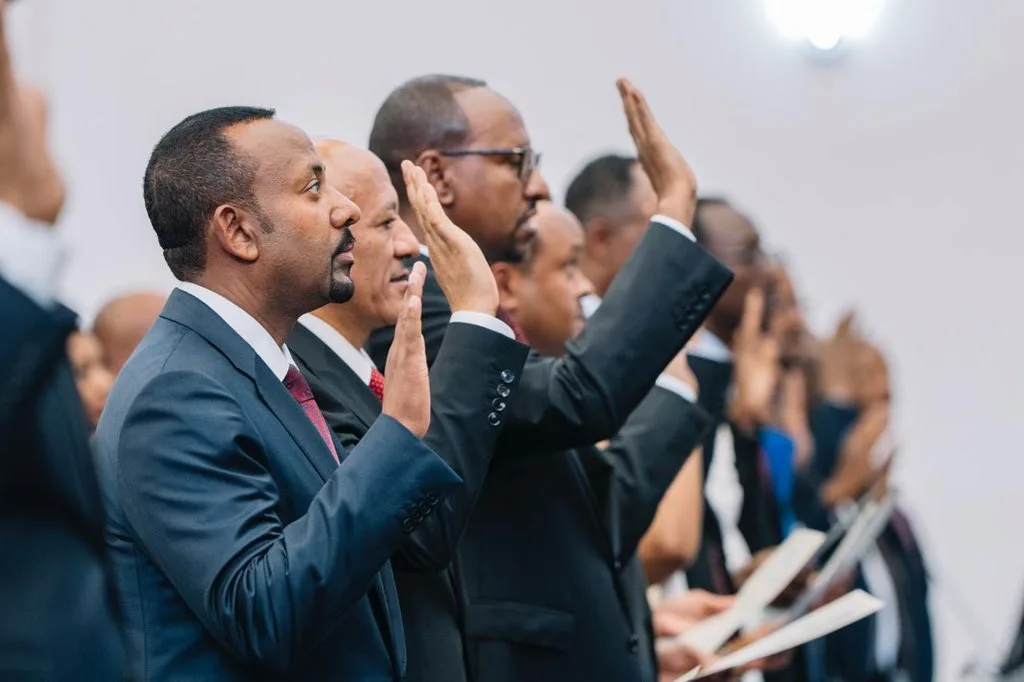
Members of the newly constituted House also took their oaths during the session, while the national anthem was observed as the new parliamentary term got underway.
The PMO described the new administration as the “Medemer Government,” signalling continuity with Ahmed’s political philosophy, which he introduced during his first term.
Medemer, an Amharic term meaning “addition,” or “coming together,” centres on cooperation, national cohesion and combining efforts toward common goals.
The inauguration comes as federal forces and their allies consolidate control of Mekelle, the Tigray regional capital, after the Tigray People’s Liberation Front (TPLF) withdrew from the city.
The TPLF said it had temporarily withdrawn to reduce risks to civilians, but fighting has continued elsewhere in Tigray, with airstrikes and artillery reported on Monday and humanitarian sources reporting at least seventeen deaths in attacks near Mekelle.
The renewed conflict began on September 23 and has raised fears of a return to the devastating 2020–2022 Tigray war, which ended with the Pretoria peace agreement.
The fighting has also coincided with a sharp deterioration in Ethiopia’s relations with Eritrea, with the two countries severing diplomatic ties after Addis Ababa accused Asmara of supporting the new rebel alliance, an allegation Eritrea has denied.
The diplomatic rupture marks a reversal of the rapprochement Abiy pursued in 2018, when Ethiopia and Eritrea restored relations after two decades of hostility.
Ethiopia has also faced heightened tensions with Egypt and Sudan, while leaders from Egypt, Eritrea, Somalia and Sudan met in Egypt and called for respect for sovereignty and the peaceful resolution of disputes.
The renewed fighting and diplomatic tensions have raised concerns about a wider Horn of Africa conflict, with the United Nations warning that insecurity is disrupting humanitarian operations in northern Ethiopia.
Abiy’s office said the formation of the new government represents “a new horizon of hope” for Ethiopia, as Abiy begins his second term facing renewed armed conflict in the north and heightened regional tensions.