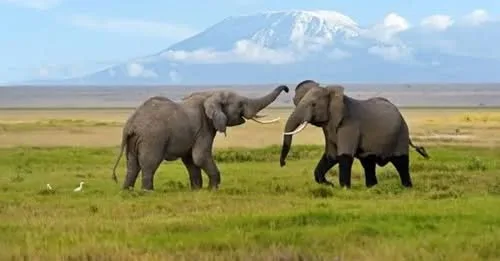
NAIROBI, Kenya, Aug 23 – Four suspects have been arrested as persons of interest in investigations into the deaths of 18 elephants in the Amboseli ecosystem, with preliminary laboratory findings pointing to probable cyanide poisoning.
The first fifteen deaths were recorded between June 24 and July 24, prompting the Kenya Wildlife Service, security, investigative and scientific agencies to intensify investigations.
“Thus far, comprehensive field investigations, laboratory analysis and environmental sampling have been undertaken,” Tourism and Wildlife Cabinet Secretary Rebecca Miano said in a stament released Saturday evening.
“Preliminary laboratory results point to the probable involvement of a toxic substance, with earlier indications suggesting cyanide poisoning arising from the ingestion of pesticide-contaminated tomatoes sourced from farms adjacent to wildlife habitats.”
Miano said the findings “remain subject to further scientific verification before the investigation is deemed complete.”
Lobbies seek cyanide poisoning probe after Amboseli elephant deaths
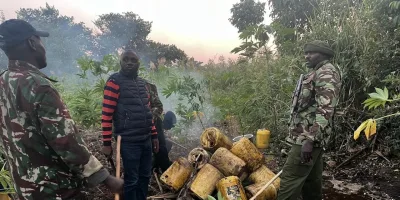
The multi-agency investigation has so far led to the arrest of four suspects, with investigators pursuing an additional individual believed to have information relevant to the case.
A search in Tikondo, Kimana, within Loitoktok Sub-County, also resulted in the recovery of assorted substances, including chemicals believed to have been sourced from a neighbouring country. The materials have been secured for further scientific analysis.
Miano, however, cautioned against treating the arrests as proof of wrongdoing.
“Although the investigations remain active, the arrest of persons of interest and the recovery of exhibits do not in themselves establish criminal culpability,” she said.
“The Government will allow the investigative and judicial processes to proceed to their lawful conclusion.”
She said anyone established to have unlawfully killed, poisoned or harmed wildlife would be prosecuted in accordance with the law.
National security concern
Miano described the deaths as “not solely a matter concerning elephants,” but a national wildlife conservation and security concern.
“The government is reinforcing measures to safeguard wildlife across all these ecosystems,” she said, adding that agencies would strengthen intelligence-led protection, surveillance, scientific investigation, law enforcement and rapid response in vulnerable areas.
She also called for stronger cooperation between government agencies, communities, landowners, conservancies and other stakeholders, noting that wildlife moves freely across community, private and agricultural landscapes.
“Collaboration among government agencies, communities, landowners, conservancies and other stakeholders is therefore indispensable,” Miano said.
Commending communities around Amboseli for their cooperation, she said their role was critical to protecting Kenya’s wildlife heritage.
“Communities are not passive beneficiaries of conservation, but indispensable partners and the primary guardians of Kenya’s wildlife heritage,” she said.
Miano said the government would continue pursuing every credible line of inquiry while strengthening preventive and enforcement measures.
“For now, I assure Kenyans and the international conservation community that the government remains firmly committed to safeguarding every species of wildlife in every landscape and seascape where it occurs,” she said.