By Shafana Rajani
NAIROBI, Kenya August 30 — The urban population in Kenya increased to roughly 15 million people in 2020, representing 27.8 percent of the country’s total population. This is according to Statista, a leading research company that specializes in market and consumer data, which means that Kenya’s urban population is projected to reach 44 million people by the year 2050 (UN-Habitat).
In this regard, the government and property developers will have to make additional provisions for housing by building more infrastructure to accommodate the growing urban population. Therein lies a potential problem. With the increase in new constructions in the cities, the current green spaces are shrinking at a very fast rate. Cities play an important role in the global carbon cycle. They produce a large proportion of CO2 emissions.
Without adopting environmentally friendly initiatives and activities as we continue building more infrastructure, we will not be able to reduce carbon emissions and lower the impact of climate change on lives and livelihoods.
Urban green spaces are defined as urban land, partly or completely covered with grass, trees, shrubs, or other greenery. These green spaces not only include parks, and community gardens, but also encapsulate rooftop gardens and vertical gardens, meadows, and woods. Urban green spaces are very important as they contribute to the well-being of cities and their residents, to better health, and social cohesion.
So why are these green spaces important? Living in an urban area is increasingly becoming more stressful as dwellers are constantly surrounded by concrete buildings, traffic, flooding, and noise pollution. Limited access to nature exposes us to environmental hazards such as air, water, and noise pollution. In cities, increasing impervious surface reduces infiltration of water and increases surface runoff. This one physical change creates so many multifaceted problems that greatly impact the quality of life in a city.
Of these problems, pollution and rainwater runoff, and urban floods have been garnering attention in recent years, particularly in Nairobi. the existing drainage infrastructure is unable to cope with the volume of surface runoff and flooding events are more frequent, therefore new approaches to create more space for water within developments are required.
For us to mitigate these effects, it is of high importance that we maintain and encourage urban green spaces to ensure that urbanization supports the well-being of Kenyans. Urban green spaces reduce the risks of flooding in cities and provide biodiversity. To provide a healthy and sustainable living environment, policymakers and developers need to implement urban green space interventions such as regeneration projects and urban renewal projects to create sustainable environments.
The question remains, what can be done to maintain green spaces? One way I believe we can do this is through legislation. The government can create biodiversity in the city to raise the quality of life by enhancing greenery and flora in Kenyan cities. We can see a great example of this policy in Singapore where the city-state partnered with landscape architects and real estate firms to create the Gardens by the Bay green space.
Looking at the new Nairobi expressway, the Kenyan government has done a good job planting greenery on the supporting pillars and the underpass. Using similar initiatives, companies through corporate social responsibility initiatives can undertake to green the surrounding areas by planting/maintaining trees and greenery when constructing new projects. More than just for aesthetic appeal, trees and green areas are essential for improving air quality, mitigating urban temperatures, encouraging physical activity, and improving overall health. By encouraging the growth of plants in urban areas, green infrastructure helps to lower the heat island effect.
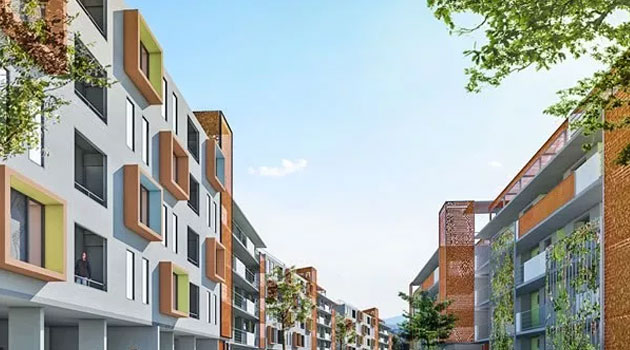
Being in the real estate sector, LASER Property Services fully supports the green initiative, we advise and guide our clients on how to make their buildings sustainable and maintain green spaces. For instance, adding a layer of vegetation to rooftops and creating green roofs has proven to reduce the urban heat island effect. Having soil, plants, and greenery on our roofs would both reduce surface temperature and serve as insulation for the structures below, reducing the energy needed to heat and cool the buildings. Green roofs can also help regulate rainwater, trapping it as it falls and filtering out pollutants.
Green spaces and other nature-based solutions offer innovative approaches to increase the quality of urban settings, enhance local resilience, and promote sustainable lifestyles, improving both the health and well-being of urban residents. Planning commercial and residential buildings to include green spaces wherever possible is the first step in making our urban areas healthier. These strategies will make sure that we maintain our green spaces leading to more sustainable cities and communities.
The writer is the Executive Director, LASER Property Services