By Rose Muasya
A mention of peace often brings images of war, bloodshed, displaced families and communities torn apart by violence. But for Richie Olaka, peace begins long before the guns fall silent. It is reflected in whether children can attend school, families can put food on the table, people can access healthcare and communities can resolve their differences without resorting to violence.
Even access to water during drought, he argues, can determine whether communities coexist peacefully or compete over scarce resources.
“Peace is not just the absence of war. It is a situation where different elements of a community or society work together to ensure homeostasis,” says Olaka.
Olaka, a civil servant working in the Department for Refugee Services under the Ministry of Interior, likens a peaceful society to a functioning human body, where organs such as the lungs, liver, kidneys and heart work together to sustain life.
“We cannot have peace without development, and vice versa,” he says.
His understanding of peace has been shaped by years of public service, community engagement and professional training, including a Rotary Peace Fellowship at Makerere University in Uganda, which he completed in 2023.
The Rotary Peace Centres promote peace through academic training, practical experience and global networking, equipping professionals to become effective catalysts for peace. The fellowships focus on areas such as youth, conflict prevention and development, recognising that young people are both a driving force in national development and, in some circumstances, among those involved in violence, particularly during political movements.
Olaka’s interest in peacebuilding dates back to his university days in 2007, when Kenya was recovering from the violence that followed the disputed General Election.
As a student at Moi University, he witnessed the devastating effects of violence and joined other young people in peace initiatives. Together with police officers and humanitarian workers, he participated in peace walks in Eldoret, Kakamega and Nandi Hills, areas that had experienced ethnic clashes.
“The mayhem and bloodshed within communities was heart-rending,” Olaka said.
Although he had little formal knowledge of peacebuilding at the time, the experience taught him that peace could not be left to security officers, politicians or international organisations alone. Ordinary citizens also had a responsibility to rebuild relationships and restore trust.
Years later, the Rotary Peace Fellowship strengthened his understanding of how peace can be built and sustained. The programme brought together professionals from different backgrounds, including academia, security, finance, law and journalism.
“Traditionally, people believe a peace practitioner is someone working with the United Nations on peace missions. But peace work is not confined to a particular person or profession,” he says.
A teacher who consistently shows up to teach, a public officer who treats people fairly or a community member who helps resolve disagreements can all contribute to peace.
“Peacebuilding is not only about going to a peacekeeping mission and doing what officers on deployment are doing,” observes the peace fellow.
The one-year fellowship combined academic learning with field experiences and a practical social change initiative. In Rwanda, Olaka examined efforts to rebuild the country following the 1994 genocide against the Tutsi. He also engaged with institutions and communities in Uganda, exploring governance, displacement and the relationship between environmental pressures and conflict.
The experiences reinforced his belief that lasting peace requires more than security interventions. It also depends on strong institutions, responsible management of resources and opportunities for people to participate in decisions affecting their lives.
As part of his practical initiative in Kenya, Olaka worked with national government administration officers to promote positive peace, drawing on his experience in public administration.
His exposure to displacement during the fellowship also deepened his interest in refugee affairs. After returning to Kenya, he was transferred to the Department of Refugee Services, where he now works on livelihoods.
Kenya hosts about 900,000 refugees and asylum-seekers, many of them in Kakuma and Dadaab.
“Supporting displaced people is not simply a humanitarian obligation but part of building peaceful communities,” Olaka notes.
The peace expert argues that peace must be considered from the perspectives of both refugees and their host communities. Where people lack opportunities, struggle to access essential services or feel excluded, tensions can deepen and potentially lead to violence.
Olaka’s work on refugee livelihoods seeks to create an environment in which refugees can pursue opportunities and build their lives with dignity.
“I define peace as dignity. Whether it is the host community or the refugee community, if people are not living in peace, we cannot say that the community is peaceful,” he says.
Recently, he has participated in visits to refugee-led organisations and food donation initiatives alongside humanitarian groups, including Rotary, as part of efforts to give back to society. Such engagements, he hopes, will encourage more people to see peacebuilding as a shared responsibility.
He also advocates using existing community networks, including churches, mosques and chamas, to promote dialogue and peaceful coexistence.
“How do we activate peace?” he poses. “It is about taking advantage of structures that already exist and leveraging the mechanisms within our communities,” he adds.
Such networks can bring people together to discuss differences and identify common ground, even when they disagree on politics, religion or other issues.
In Kenya, he also points to competition over natural resources as a potential source of conflict.
During his public service career, including his time as an assistant commissioner in Mutomo, Kitui County, he encountered tensions between communities over access to natural resources. Where livelihoods depend on land and water, changing weather patterns and environmental degradation can intensify competition. Communities that previously coexisted may find themselves competing for what remains.
Addressing these tensions, he says, requires sustainable resource management, access to clean energy and dialogue, rather than waiting for violence to erupt before deploying security officers.
His experience in Rwanda also shaped his thinking about inflammatory speech. He recalls examining how broadcasts and messages that encouraged hostility towards other communities contributed to the climate preceding the genocide.
“A single word spoken can trigger conflict and result in war. We need, therefore, to calculate each word spoken and take full responsibility,” he says.
He adds that strong institutions are essential to maintaining peace. When people report wrongdoing, he says, the police, the judiciary and oversight bodies must respond fairly.
According to him, where citizens lose trust in institutions or fear their grievances will go unaddressed, tensions can grow.
Rwanda’s post-genocide recovery, including the transformation of Kigali, impressed him during his peace fellowship. He sees the country’s progress as an example of what sustained efforts to rebuild institutions and communities can achieve.
“The lesson is not that countries can eliminate every disagreement, but that they must build systems capable of managing differences without allowing them to tear society apart,” he adds.
As Kenya heads towards the August 2027 General Election, Olaka hopes more people will recognise their role in creating peaceful societies. For him, the task is not simply to prevent violence during the election period but to build communities where people feel included and have opportunities to improve their lives.
“My dream is to have a community or a society where members are accorded an opportunity to participate in engagements, with the environment providing them with support to pursue whichever opportunities they would want,” he says.
Meanwhile, with Kenya heading towards the 2027 General Election, the National Cohesion and Integration Commission (NCIC) is calling for greater efforts to counter hate speech, bridge ethnic divisions and prevent election-related violence.
NCIC Chief Executive Officer Dr Daniel Mutegi urged Rotary members to use their networks to spread messages of peace, invest in young people and promote civic education.
“All of us must have shares in Kenya. All of us are shareholders in Kenya, away from political pronouncements,” he said.
Mutegi urged Kenyans to reject discrimination based on ethnicity, religion or place of origin.
“Kenya is bigger than all of us. Kenya is our home. Some of us do not have two passports. We only have Kenya,” he said.
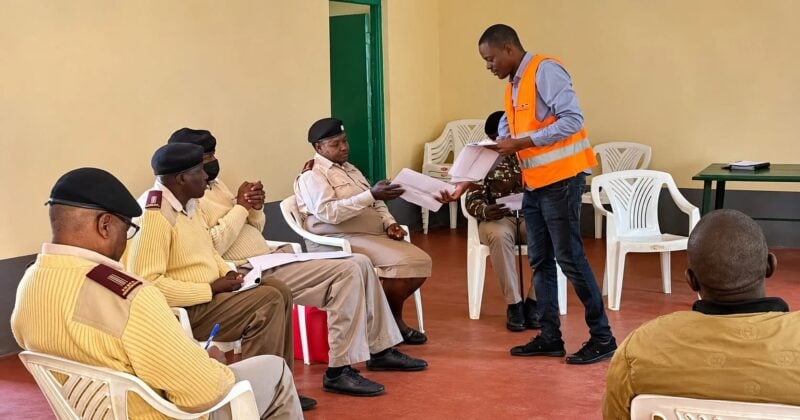
During a peace engagement with Rotary and other peace stakeholders, Mutegi said the commission was working with government agencies, faith-based organisations, civil society and communities to promote peaceful coexistence and equal access to public services and opportunities.
The commission has developed a roadmap aimed at ensuring a violence-free electoral process. Mutegi also called for investment in sports and livelihood opportunities for young people, saying these could strengthen social cohesion.
Rotary District Governor Saad Rahman said Rotarians and Rotaractors wanted to promote peace and ensure Kenyans’ voices were heard during and after the elections.
“Kenyans are great planners. When one election is done and concluded, already another election is planned,” said Rahman.
The club intends to work closely with NCIC in urban slums and villages where skirmishes are often reported as the country heads towards the August 2027 election.