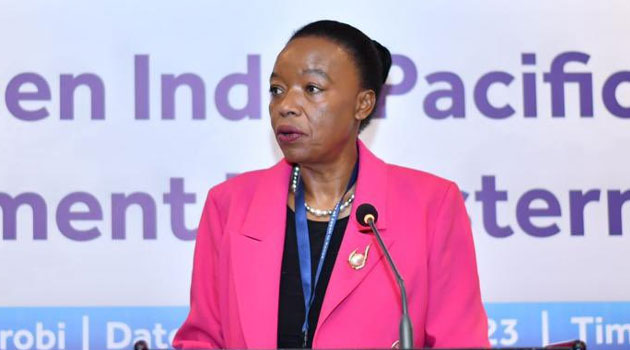
NAIROBI, Kenya Jun 27 – United Nations Office on Drugs and Crime Executive Director of the Monica Juma, has warned that global drug traffickers are increasingly exploiting technology, geopolitical instability and evolving trafficking networks to flood markets with dangerous new narcotics.
Speaking during the release of the UNODC World Drug Report 2026, Juma said criminal networks are rapidly adapting by creating more potent synthetic substances, experimenting with new trafficking routes and targeting emerging markets across the globe.
“We have seen an unprecedented spike in new types of drugs on the market, and worryingly, some are more potent or dangerous than before,” Juma said.
She warned that the consequences are already devastating communities worldwide, citing millions of premature deaths, rising insecurity, economic disruption and increased violence linked to the illicit drug trade.
“The imperative to focus on stopping organized crime groups has never been greater. We must surge deterrence efforts, increase intelligence-sharing and coordinate joint operations, while investing more in prevention and treatment,” she added.
According to the report, an estimated 331 million people used drugs in 2024, representing 6.2 percent of the global population aged between 15 and 64, up from 5.2 percent in 2014.
Cannabis remained the most widely used drug globally with 256 million users, followed by opioids at 63 million, amphetamines at 32 million, cocaine at 25 million and ecstasy at 21 million users.
The report highlights a dramatic rise in synthetic and psychoactive drugs, with traffickers increasingly manufacturing substances designed to evade regulation and law enforcement detection. UNODC said five times more drug types were identified in seizures in 2024 compared to the period before 2000.
A total of 755 new psychoactive substances were reported circulating in global markets in 2024, including 118 identified for the first time.
UNODC also noted a major shift in the global opioid market following Afghanistan’s 2022 opium ban, which sharply reduced heroin production. The agency warned traffickers are increasingly turning to synthetic opioids such as fentanyls, nitazenes and orphines as alternatives to heroin.
The report further identified methamphetamine trafficking as a growing global threat, with new trade routes emerging across Africa, the Middle East and parts of Europe.
UNODC said organized crime groups are also expanding cocaine trafficking into Africa and Asia as they seek new markets beyond traditional destinations in Europe and North America.
The agency cautioned that drug use continues to fuel violence, family breakdown, organized crime and social instability, particularly in communities grappling with poverty, homelessness and limited access to treatment services.