EL BATTAN, Jan 27 – A Tunisian farmer attaches a machine to a cow’s udder and sets the pump whirring, but he only expects to fetch less than half the normal amount of milk amid soaring fodder prices.
Mohamed Gharsallaoui said he has been forced to sell four cows in recent months to cover forage costs for the 20 that remain on his farm — but still struggles to feed them enough.
“Why have the cows stopped producing so much? Because they don’t get the full amount of food,” the 65-year-old said. “We can only give them half the amount they used to get.”
The North African country’s farming union says the price of cattle feed has risen by up to 40 percent in the past year due to the impact of the war in Ukraine on imported fodder ingredients.
The dairy sector’s woes have been exacerbated by years of drought, drying up reservoirs and making it harder for farmers to grow their own fodder.
At his farm in El-Battan west of the capital, Gharsallaoui showed AFP a dwindling stock of feed and a pile of invoices for hay, barley and straw, which he is struggling to pay.
A 50-kilogramme (110-pound) sack of corn/soya supplement has multiplied eightfold in price in the past 10 years, he said.
As a result, cows that used to produce 30 litres (63 pints) a day now only provide 12, he added.
“All these costs are shouldered by the farmer,” said the father of four, flicking through a wad of unpaid bills.
Having built his business over the decades, starting with a single cow, Gharsallaoui said it was hard to see the herd shrink.
“These cows used to be my family’s main income,” he said. “Now four of my kids are working elsewhere to try to earn money to feed the herd.”
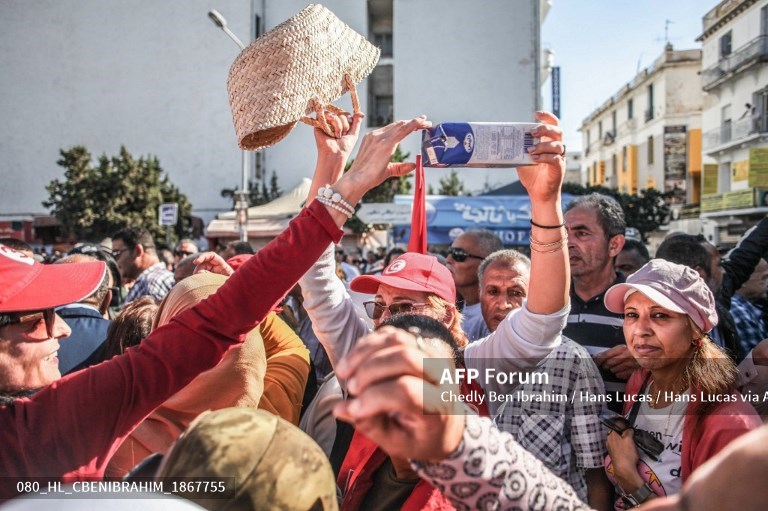
Noura Bchini scoured the corner shops of Tunisia’s capital for milk, a rare commodity in a country that usually consumes 1.8 million litres (3.8 million pints) of milk a day, but where today only 1.2 million litres are available.
“Some shops don’t have any at all,” said Bchini, in her 50s. “But we can’t go without milk, especially our kids.”
Since October, many shops in Tunisia have restricted milk purchases to two cartons per person as consumers scramble for limited supplies.
Another shopper, Leila Chaouali, said she goes out early to get her hands on the white gold.
“You do find it sometimes, but only in the morning. By the afternoon, it runs out,” she said.