NAIROBI, Kenya, Nov 25 – The Teachers Service Commission (TSC) plans to recruit an additional 24,000 teachers in the 2027/28 financial year as the government steps up efforts to address the persistent teacher shortage in public schools.
TSC Chief Executive Officer Cheptumo Ayabei told the National Assembly Education Committee that the recruitment forms part of the commission’s performance targets for the financial year, as it seeks to bridge staffing gaps across the country’s basic education institutions.
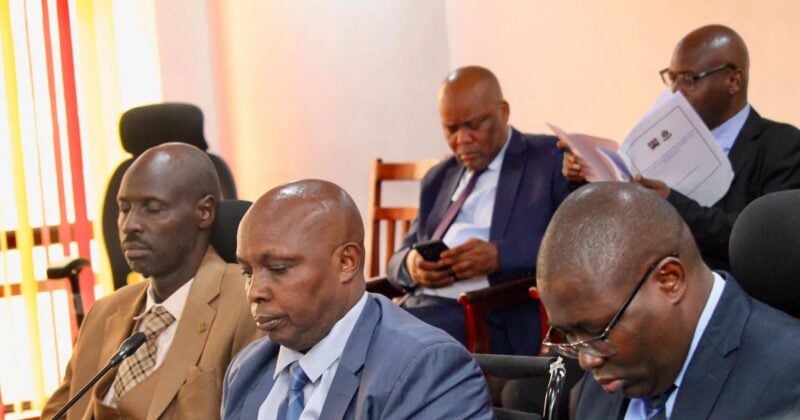
Appearing before the committee, chaired by Julius Melly, during consideration of the 2026/27 Budget Policy Statement, Ayabei said the commission had recruited more than 100,000 teachers over the previous three financial years as part of the government’s Bottom-Up Economic Transformation Agenda (BETA).
The government had set a target of recruiting 116,000 teachers to reduce the shortage in public schools, with the commission planning to recruit a further 20,000 in the 2026/27 financial year to meet that target.
“The Commission plans to recruit a further 20,000 teachers in FY 2026/2027 to achieve the BETA target of 116,000. Further, TSC shall convert 24,000 teacher interns to permanent and pensionable terms in FY 2027/28 as a strategy to continuously address the existing teacher shortage,” Ayabei told the committee.
The planned recruitment will come alongside the conversion of 24,000 teacher interns to permanent and pensionable terms in 2027/28, a move intended to improve job security for teachers who have been serving on internship contracts while addressing staffing needs.
The two measures form part of the government’s broader efforts to improve teacher availability as schools continue to grapple with uneven distribution of staff, increased enrolment and the demands of the Competency-Based Education (CBE) curriculum.
Teacher shortages have been particularly challenging in some rural, marginalised and hard-to-staff areas, where schools struggle to attract and retain teachers across different subject specialisations.
The staffing pressure has also been compounded by the transition to the new education structure, which requires additional teachers, particularly as learners progress through junior and senior school.
Funding gap
Meanwhile, the State Department for Technical and Vocational Education and Training (TVET) has proposed a budget of Sh84.129 billion for the 2027/28 financial year against an allocation ceiling of Sh64.767 billion, leaving a funding gap of approximately Sh19.4 billion.
Principal Secretary Esther Muoria told the committee that the shortfall could affect the department’s ability to implement key programmes, including scholarships, grants and the construction of additional TVET institutions.
She said the department remained committed to developing middle-level technical skills needed to support economic growth and improve Kenya’s competitiveness in the global economy.
“We have presented a total resource requirement of Kshs.84.129 billion for FY 2027/28, against a ceiling of Kshs.64.767 billion, leaving a deficit of Kshs.19.425 billion. The underfunded priorities include scholarships, grants, and construction of TVET institutions,” Muoria said.
She added that strengthening technical and vocational training was essential in promoting entrepreneurship, investment, productivity and employment opportunities.
Capitation shortfalls
The State Department for Basic Education has also proposed a budget of Sh140.18 billion for the 2027/28 financial year, up from the Sh136.55 billion approved for 2026/27.
The proposed allocation comprises Sh121.93 billion for recurrent expenditure and Sh18.24 billion for development programmes.
However, the department faces significant funding gaps in key areas, particularly free primary education and junior school capitation.
According to Principal Secretary John Ololtuaa, free primary education has been allocated Sh7.01 billion against a requirement of Sh9.97 billion, leaving a shortfall of approximately Sh2.96 billion.
The allocation is intended to support capitation for 6.39 million learners, with the department also providing for additional funding for learners with special educational needs in integrated schools and special needs boarding institutions.
The funding shortfall is more pronounced in junior school, where the department has proposed Sh30.72 billion against a requirement of Sh54.23 billion, leaving a deficit of Sh23.51 billion.
Ololtuaa said the requirement was based on regular capitation for 3.58 million learners at Sh15,043 per learner.
The funding gaps raise concerns over the adequacy of resources available to schools as the government continues implementing the Competency-Based Education curriculum, which requires additional learning materials, infrastructure and specialised teaching support.
The State Department for Higher Education and Research and the State Department for Science, Research and Innovation also appeared before the committee to present their budget proposals and funding priorities for the 2027/28 financial year.