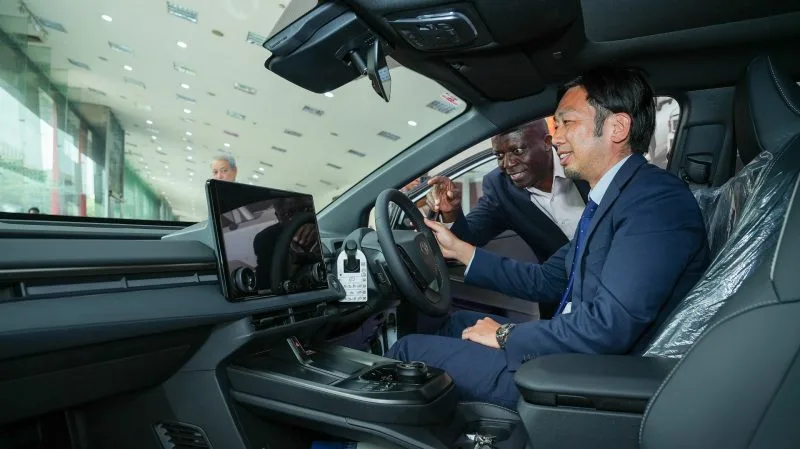
NAIROBI, Kenya, June 17 – CFAO Mobility Kenya has introduced Toyota’s first fully electric vehicle in the Kenyan market, marking the Japanese automaker’s entry into the country’s fast-growing electric mobility segment.
The launch of the Toyota bZ4X, which costs about Sh11 million, comes as demand for electric vehicles continues to rise, driven by increasing fuel prices, lower operating costs and growing environmental awareness among motorists.
The electric SUV offers a driving range of up to 516 kilometres on a full charge and can accelerate from 0 to 100 kilometres per hour in 5.1 seconds.
It is also equipped with an All-Wheel Drive (AWD) system and Toyota’s X-MODE with Grip Control, designed to improve handling on slippery and challenging terrain.
The vehicle supports 150kW DC fast charging, enabling drivers to recharge the battery from 10 percent to 80 percent in about 30 minutes.
“The bZ4X represents the next chapter in mobility. With its zero-emissions, impressive range and standard-setting safety features, this innovative SUV ensures our customers don’t have to choose between cutting-edge electric performance and trusted, durable engineering,” said Arvinder Reel, Managing Director of CFAO Mobility Kenya.
“With the bZ4X, Toyota establishes a new benchmark for the modern electric vehicle,” he added.
The launch comes as Kenya’s electric mobility market continues to expand, supported by government efforts to promote clean transport and reduce dependence on fossil fuels.
Rising fuel prices and global oil supply disruptions have pushed more consumers and businesses to consider electric alternatives due to their lower running and maintenance costs.
The shift has also fueled growth among local electric mobility firms. Electric bus manufacturer BasiGo has expanded its presence in the public transport sector as matatu operators increasingly adopt electric buses.
Meanwhile, electric motorcycle providers such as Roam and BasiGo have continued to gain traction among ride-hailing operators and delivery businesses seeking to reduce fuel expenses.
Industry players expect EV adoption to accelerate further as charging infrastructure expands and the cost of electric vehicles gradually declines.