AUG 24 – Fast-fashion giant Shein could see its stock market valuation reach almost $27bn (£19.8bn) when its makes its debut in Hong Kong on 1 September.
The long-awaited move comes after failed attempts to list in the US and London due to regulatory challenges amid scrutiny of the firm, which has its headquarters in Singapore but was founded in China.
Since it was founded in 2008, Shein has risen to become one of the world’s biggest fast-fashion retailers, with customers in more than 150 countries.
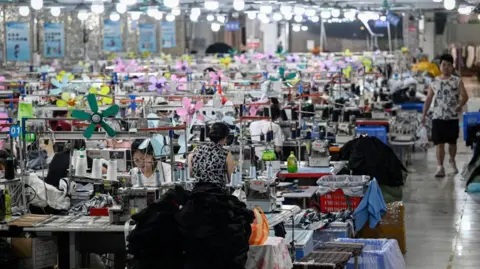
The e-commerce giant is known for selling ultra-cheap clothes, backed by a vast network of factories in China that are able to quickly manufacture new products based on the latest trends.
Shein said in a filing on Monday that it will offer nearly 280 million shares for between HK$47.60 ($6.07; £4.45) and HK$49.50 each.
At the top of the range, share sale would raise $1.77bn (£1.3bn) for the company and give it a market valuation of $26.8bn.
But that is much lower than the $100bn it was worth in 2022, reflecting weaker sales growth and higher costs.
The initial public offering (IPO) is being backed by Wall Street investment giants Goldman Sachs, Morgan Stanley and JP Morgan.
The company will make its highly anticipated debut on the Hong Kong stock exchange after efforts to go public since 2023.
Hong Kong has been revived as “one of the largest IPO markets” after attracting more firms from mainland China, said economics associate professor Feng Qu from the Nanyang Technological University.
Shein is likely to command a higher valuation in Hong Kong than it would in London, where regulatory scrutiny derailed its plans to sell shares there, Feng said.
Chinese companies may also be wary of selling shares in the US as tensions between the world’s two largest economies could result in firms being de-listed, he added.
Competition and roadblocks
Shein’s listing will test investor confidence in the fast-fashion industry and its position in an increasingly competitive market.
In July, Shein said it had swung to a quarterly loss as its sales slowed after US President Donald Trump removed an import duty waiver on small packages called the de minimis exemption.
The company said it lost $99m in the first three months of the year, compared with a net income of $395m a year earlier.
It also came as uncertainty remains over the tit-for-tat US-China tariffs wars, which is currently paused.
“In response to the increased duties and taxes, we are pursuing a wide range of options, including increasing our prices in the US market to offset a portion of the increased costs,” Shein said at the time.
The company also said the Iran war had hit demand, increased costs and caused delays of deliveries in some markets.
The first-quarter figures also partly reflected a paper loss of $328m due to an accounting change for special investor shares. The shares can be turned into ordinary stock later, and their value can change before a listing.
Some investors are questioning whether higher costs and regulatory challenges will impact Shein’s ability to get goods swiftly and cheaply to market.
Marguerite LeRolland from market research company Euromonitor International told the BBC that the firm’s sales have slowed in the US partly due to the end of the de minimis exemption.
The exemption helped retailers like Shein and its fierce rival Temugrow quickly in the US as they were able to deliver goods without incurring import taxes.
These factors could “narrow the price gap” between Shein and competitors like Primark and H&M, she added.
Jane Foley, Rabobank’s head of FX strategy, told the BBC’s Today programme that the ending of the de minimis exemption “really did undermine the core business model of Shein”, adding that the EU has done something similar.
As of the end of March 2026 it had 281 million active customers – a rise of more than 16% on a year earlier – who placed a total of more than one billion orders.
But Shein’s fast-fashion business has faced concerns over its environmental impact, and allegations of forced labour in supply chains. The company has previously told the BBC it has a “zero tolerance for forced labour”.
Its attempt to go public on the London Stock Exchange collapsed after the company came under scrutiny over its refusal to answer questions about its supply chain practices.