NAIROBI, Kenya, May 13 – In October last year, Safaricom became the first telco in the country to roll out 5G networks in five counties.
They included Nairobi, Kisumu, Mombasa, Kisii, and Kakamega.
Fast forward, and the service has now reached 28 counties in the country, with the telecommunications firm targeting the entire nation.
Fast internet speeds allow users to browse at ultra-high speeds, boosting customers experiences.
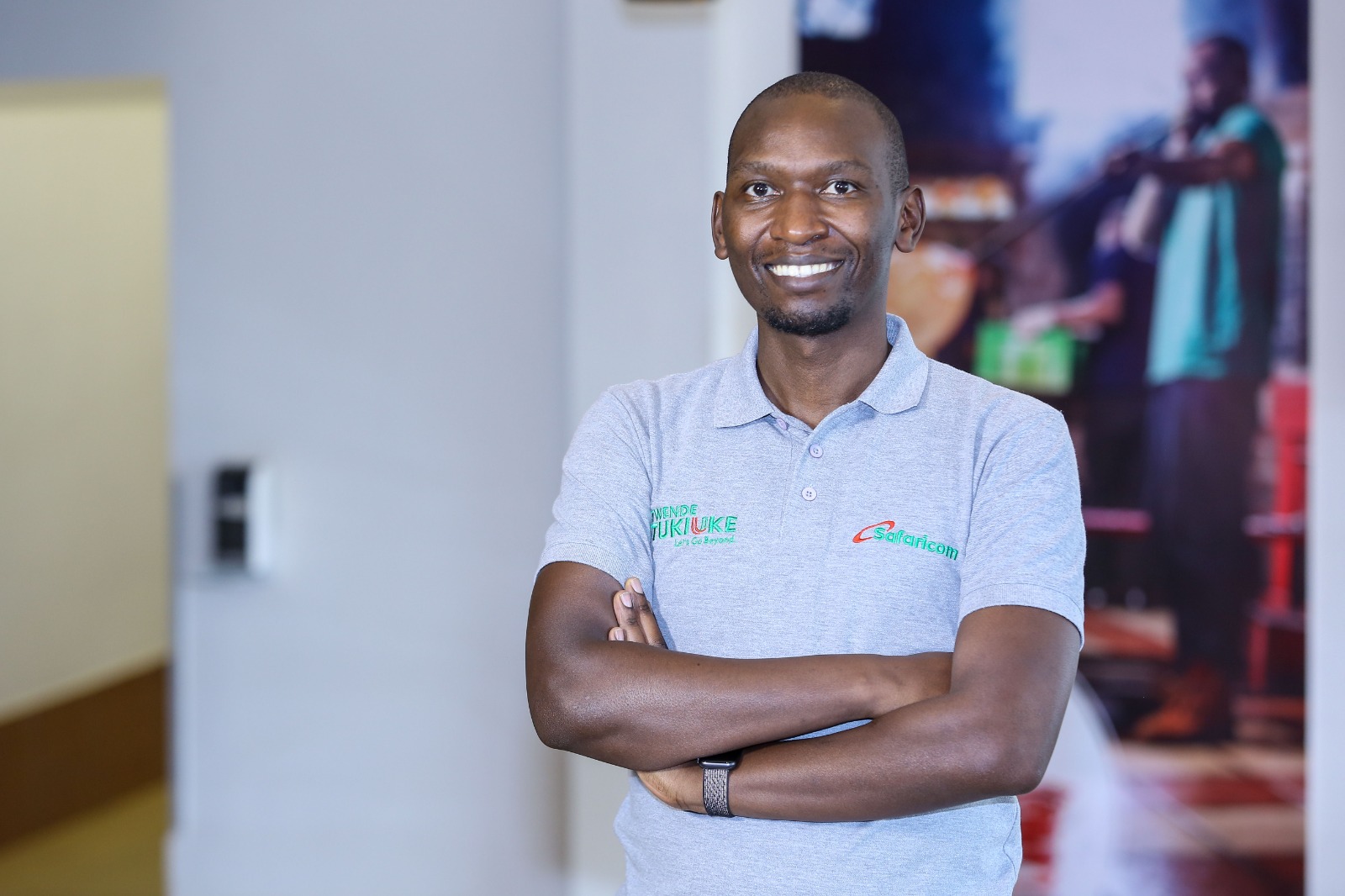
Capital Business had a sit-down with Safaricom’s Albert Mwaura (network planning) and Frankline Ocharo (fixed data).
Below is an excerpt of the conversation:
Last year, Safaricom rolled out its first 5G network in the country. What is the current status of 5G deployment?
Mwaura: So, in terms of where we are, we are in 28 towns, covering about 21 counties.
Ocharo: To then give maybe the chronology of how we reach there, we started in March 2021, when we announced our trials, and since then, we have had some sites and we have done some trials across the country.
Then after that, the next big milestone was the commercial launch, which we did in October 2022. We have now commercially launched our fixed wireless access packages.
When you say you are in 21 counties, do you mean you are fully present in all the devolved units so much that anyone can use 5G as they use 4G, 3G, and 2G?
Mwaura: Okay, covering the whole country will also take some time, but we are in the presence. So, what is happening with intensify? You see, for example, Nairobi will keep on densifying.
So, for the next few years, we’ll be looking at those areas that are not covered by 5G but where we have other technologies because, like 4G, we have 97 percent population coverage.
So those areas will keep on adding 5G just to enhance the experience and get a better customer experience with 5G.
So those are the areas that we are looking at to cover in the coming financial year. So, in the next two to three years, we will have those counties covered.
When you talk about timelines, you say two to three years. So, do we expect that in the next two to three years, all 47 counties will have 5G?
Ocharo: I think what we are doing with the 5G rollout is trying to follow the customer; we’re trying to follow the need.
So first, we see where there’s a lot of traffic that we need to serve and how the devices are distributed. So, there’s that part that we then project.
And if, in the next two to three years, we have 5G devices across the country, then it means we need to have a presence in all the counties, so that is also guiding our rollout.
And alongside that, what we also see with 5G is a lot of 4G traffic.
So, there’s heavy traffic in a place, and there are 5G devices that are coming in.
It enables us to now introduce 5G and offload this heavy traffic on 4G, which then, because you’re still also densifying 4G. We’ve not stopped our 4G journey, because then it also helps us, even for the places that are underserved and don’t have 4G, to take 4G data since 5G is now serving these densely populated areas.
So, what you’re saying is that a customer informs where 5G goes?
Mwaura: It acts as a key point because you don’t want to go to a place where there is no 5G device.
So, it’s also part of how it informs us where we need to put it. So, it’s just an input. It’s not the only thing, but it is an input.

Among Safaricom users, what is the current adoption rate for the 5G network?
Ocharo: So, at the moment, we are getting close to 500k mobile devices. And we are seeing this rapidly grow in the coming months.
So, at least the new mid- to high-end smartphones are coming with 5G capability. We now have about 13 smartphone models that support 5G in the country.
The top eight take the bulk, and this covers Samsung, Apple, Nokia, and Oppo in different models supporting 5G. Manufacturers have to update or make sure their devices support this.
So that’s another area that they follow to make sure manufacturers update their devices with 5G-capable hardware and have that support in them.
But that is what is now growing: the adoption of 5G as the handsets keep increasing. And as the volumes come in, the prices of the handsets start reducing.
What are the challenges Safaricom has been facing in deploying 5G?
Ocharo: So, the first is the device ecosystem, and I spoke to the fact that the devices are still pretty costly.
When we launched fixed wireless in October last year, one of the key issues was the price of the router. The cheapest router retails for Sh25,000.
And we have all the way to Sh260,000. When we come to smartphones, we also face the same challenge: the pricing is a bit high.
So that’s one area that we’re focusing on to help customers acquire this. On the router side, we’ve introduced a contract model where customers can sign up on a contract and we waive the router fees, then they can get the router at our cost to use in their homes.
On the smartphone side, we are really working with the vendors to drive the ecosystem up.
Of course, there has already been discussion on local manufacturing to try and enable the ecosystem in Kenya, currently focused more on the 4G side.
But of course, once it’s put up, those are some of the things that could help us drive prices down.
And the last part is just the growth: the more we accelerate globally, the more manufacturers speak about this, the more volumes go up, and we then expect these to help us drive down the pricing for 5G devices.
So, the biggest challenge is pricing?
It’s the cost of the device. Alright, since these are new, all these things happen with economies of scale. So the higher the numbers, even in the outside world, the lower the cost.
So, we expect that in the coming days and months, we will see the price of these devices go lower. It was also the same thing when we started 4G.
The devices are so costly. But now, with the numbers and the manufacturers’ economies of scale, they can lower the cost of manufacture, which the customers can then enjoy.
Since it’s a new technology, we expect the prices to go up but go down as devices and users increase.
Apart from Huawei, is the firm also working with other international companies to deploy the network in Kenya? Please name some of them?
Mwaura: We have two partners: Huawei, and we also have Nokia. So, Nokia is also providing 5G equipment.
How expensive is it to run and sustain a sustainable energy network since it consumes a lot of power and data? What are the cost implications for Safaricom to run 5G?
Mwaura: Okay, we are seeing a cost in terms of buying the equipment that is a bit higher compared to 4G.
And then, also in terms of brand for power, the power consumption is high; we are seeing between 30 and 40 percent increases in power consumption.
So that’s just the KPLC. And then that’s why we are trying to reduce that by going to this green energy, solar, and then using lithium batteries, just to try and reduce your power so that this benefit can also be experienced or enjoyed by the customer.
So, it is something that is there. But we have the mitigation of using green energy just to try and mitigate the high power consumption that is being used by 5G.
Ocharo: But when we’re looking at that consumption, it’s an evolution, whether or not you truly change and say you’re doing 5G, the customer is increasing, and you are getting more high-definition video, so the data is going up.
And one thing that put us in a good position was that we already had close to 70 percent of our assets connected to fiber.
Seven, when we put 5G on those sites, we are able to carry that traffic, and we are able to manage cutting that traffic out. So that’s why, for us, that is not a new cost that is coming up.
We’ve heard about it as we’ve been preparing for it, because at least the main change now is power consumption. Okay.
Subscribers have been complaining of expensive mobile data charges for the 5G network, which is understandable. So, what measures have you instituted to address this?
Ocharo: Yes, I think that’s key. And this cuts across not just 5G. But specifically, for 5G, the understanding is that because the speeds are higher, you will consume more, which will change your use cases because you will be fed with higher-definition videos.
And that’s why, as we extended to the 28 towns, we had to introduce richer, bigger mobile packages to address that.
Already. In October last year, when we launched for home and business with the routers, we introduced packages for that.
And they can see we have packages from 300 GB all the way up to 1000 GB, which are quite rich compared to what you find on the 4G side.
So that’s what we are doing, continuing just to see and evolve and make sure you don’t end up introducing 5G. Then the next thing was that the bundle disappeared.
And typical speed tests on 5G Because of the high speed, you get 400 to 700 Mbps, which will consume 300 MB just to run a speed test.
And that just demonstrates how much data can be consumed.
Hence, we are very quick to start introducing the 50 bundles.
And we’ll continue observing the usage trends and continually evolving to make sure we don’t end up with a big shock for five users.