
NAIROBI, Kenya, May 3 – The Kenyan government launched the first Electric Mobility Draft Policy, setting in motion plans to adopt and accelerate the use of electric vehicles (EVs) in the country.
During the event, the Cabinet Secretary, Roads and Transport, Kipchumba Murkomen, said the document will guide the development of electric mobility in all transportation modes—roads, rail, air, and maritime—as well as provide a transition framework from the internal combustion engine.
He added that the state is partnering with the private sector, international investors, and academic institutions to build the necessary infrastructure.
Capital Business sat down with Sten van der Ham, the CEO and co-founder of eBee, a pan-African e-mobility company that provides sustainable e-mobility solutions.eBee sells and rents e-bikes to consumers and businesses and operates a fleet of last-mile delivery riders in Kenya, Uganda, and Rwanda.
Can you describe eBee Africa’s vision for e-mobility?
eBee’s vision is to create 150,000 jobs and have 1 million eBees (electric bicycles) on the road by 2030.
What measurable impacts have eBee Africa’s initiatives had on carbon emissions reduction in the cities you operate in?
We have more than 1,000 electric bicycles on the road, and we are currently operational in four cities in Africa: Nairobi, Mombasa, Kampala, and Kigali. In comparison to cars, we have saved 412,000 kg of carbon emissions to date. That’s the equivalent of creating a forest of close to 2,500 mature trees!
Considering the Draft National e-Mobility Policy emphasizes the development of e-mobility infrastructure, what steps is eBee Africa taking to enhance charging infrastructure for electric bicycles?
Our charging infrastructure is future-ready, as our e-bikes can be charged at regular power sockets, just like laptops or smartphones. In 2-4 hours, the battery will be full and will provide 80 km of range. This makes electric bicycles unique compared to other EVs.
In what ways is eBee Africa working with local governments and other partners to promote sustainable urban mobility?
eBee actively works together with organizations that are involved in advocating for cycling, non-motorized transport (NMT), and cycling lanes. Some of the organizations we work with include Critical Mass Nairobi, the Electric Mobility Association of Kenya (EMAK), Mama Cycling, and the Institute for Transportation and Development Policy (ITDP).
Could you share insights into any partnerships that exemplify your commitment to reducing carbon emissions through e-mobility?
eBee partners with large e-commerce and food delivery platforms like Glovo, Dial-a-Delivery, Bolt, Uber, and Leta to electrify last-mile deliveries and create green jobs for women and youth. Through these partnerships, hundreds of riders make eco-friendly last-mile deliveries across major cities instead of using internal combustion engine (ICE) motorbikes or cars.
How does eBee Africa incorporate technological innovations into your electric bicycles to ensure they meet the needs of African cities?
As mentioned, our battery technology provides for an extremely efficient mode of transport given the range of 80–90 Km for a charge of less than 1 KWH (that’s about KES 32). Also, all our eBees are connected to the Internet and have built-in GPS, which makes it easy and fast to retrieve the e-bicycles in case of theft. Moreover, we could provide government authorities with cycling heat maps of cities to support decision-making on cycling lanes.
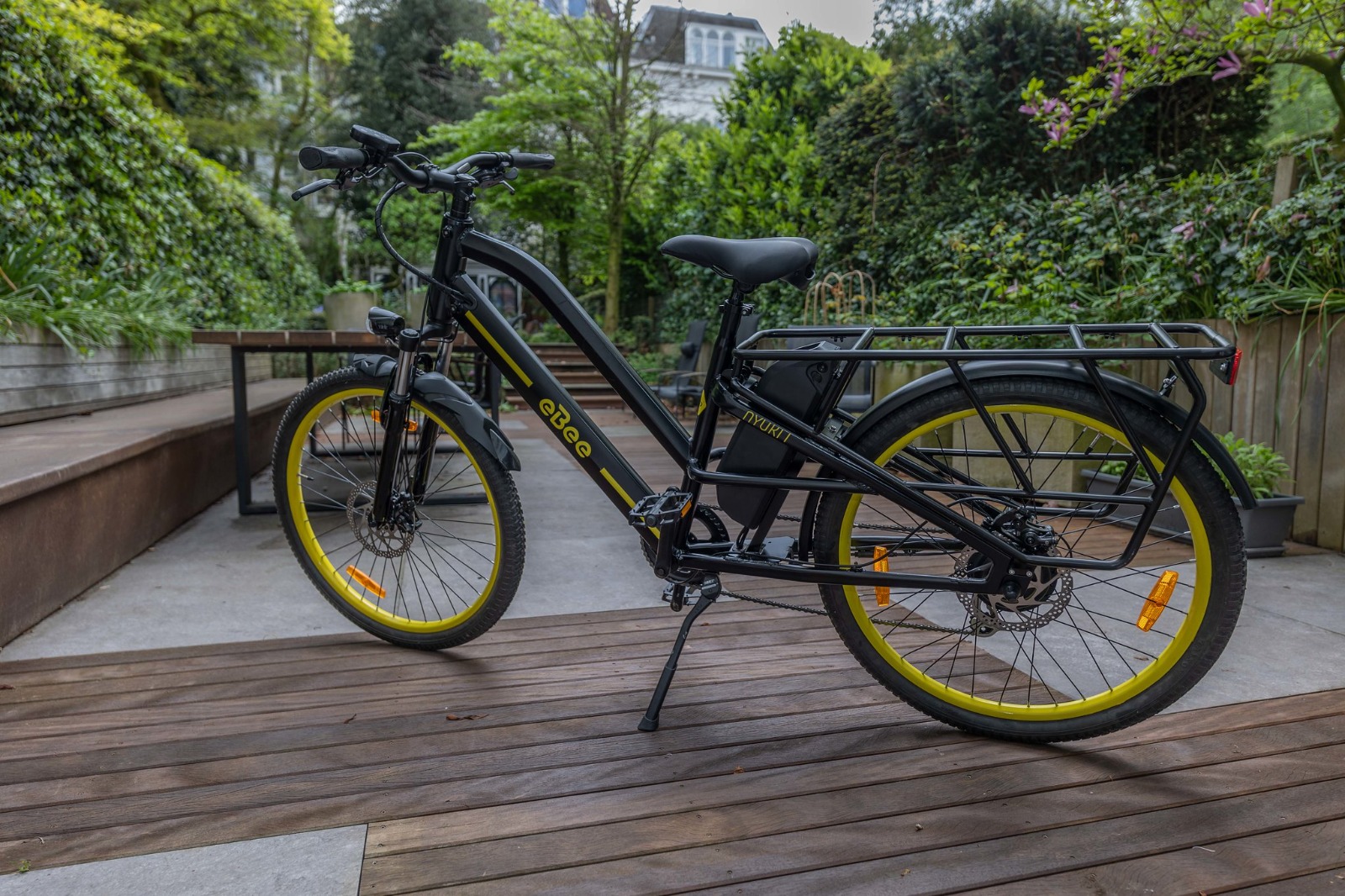
Given the policy’s focus on enhancing local technical capacity, what initiatives does eBee Africa have in place for technology transfer or local manufacturing?
eBee assembles and services all its electric bicycles locally. Also, we train mechanics, of which 50% are female, in our e-bicycle academy. This includes all electric and mechanical parts of the electric bicycle, including the battery technology.
Based on your experience, what recommendations would you make to policymakers to further support the growth of e-mobility in Kenya and across Africa?
To stimulate the quick adoption of electric bicycles, it is important to ensure that e-bicycles are affordable. To achieve this, all duties on electric vehicles, including electric bicycles, need to be waived for a fixed period of time. Also, the government should support banks and microfinance companies to provide attractive loans for EVs.
Can you discuss the socio-economic benefits that eBee Africa’s operations have brought to local communities, especially in terms of job creation and empowerment of women and youth?
First of all, eBee Africa has been able to create more than 350 direct jobs in Kenya, Uganda, and Rwanda in the past two years. These are jobs at our offices, assembly, and for last-mile delivery riders. In job creation, our focus is on women and youth. E.g., 50% of our mechanics are female, and 80% of our delivery riders are under the age of 30. Secondly, our electric bicycles are income providers. Through our electric bicycle delivery, riders are able to earn 25k–30k KES per month.
What do you see as the biggest obstacles to the adoption of e-mobility in Kenya and other African countries where you operate?
High prices due to high duties on parts are an obstacle. When duties are lower, e-mobility becomes affordable and accessible for the majority of the population, not something for the rich. Electric bicycles have the potential to democratize e-mobility. So bringing the duties down and providing more attractive financing will remain crucial.
What opportunities do you believe the Draft National e-Mobility Policy opens up for startups and investors in the e-mobility sector?
Again, making e-mobility affordable will drive adoption, which will attract more investment into the sector. Linking the EV tax benefits to local value addition will make sure that the growth of the e-mobility sector will also boost the growth of direct jobs and local knowledge buildup.