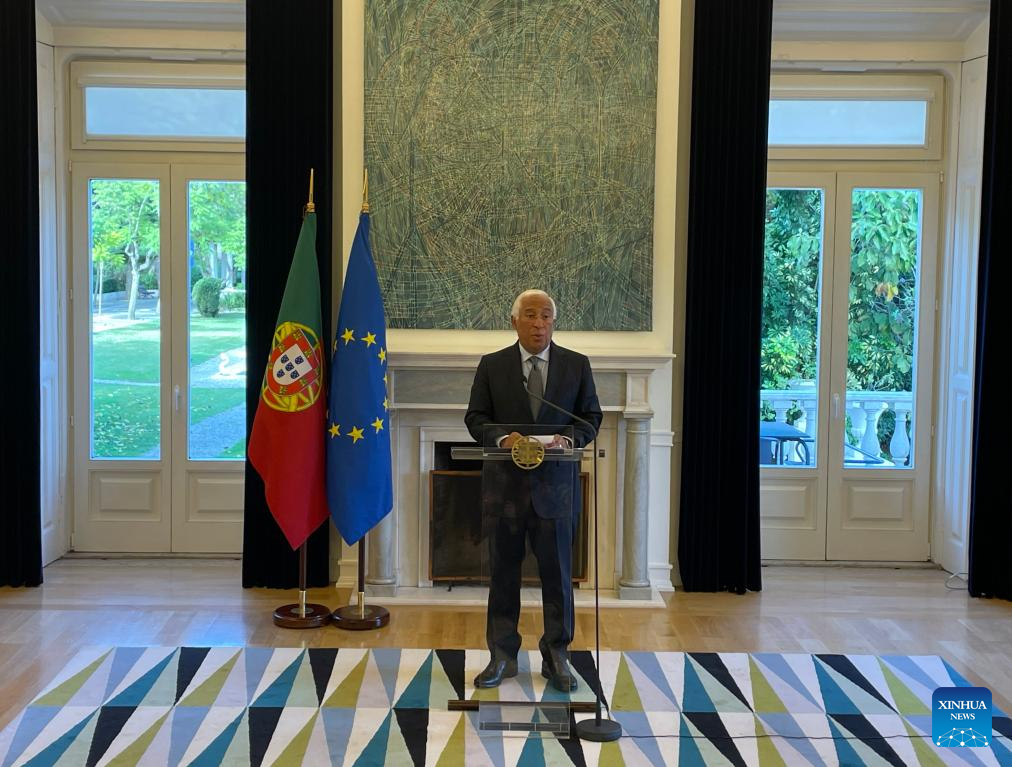
LISBON, Nov. 7 (Xinhua) — Antonio Costa, prime minister of Portugal, resigned on Tuesday afternoon after becoming the target of an investigation into alleged government corruption.
Costa submitted his resignation to President Marcelo Rebelo de Sousa earlier in the day.
In a statement, Costa denied corruption accusations but said he preferred to step down to focus on his defense.
The country’s attorney general (AG) has already announced that a criminal case will be filed against Costa.
The AG was also received by the Portuguese president, who was informed about the search operations that resulted in the arrest of five people, including Vitor Escaria, Costa’s chief of staff.
Infrastructure Minister Joao Galamba, and the President of the Portuguese Environment Agency (APA), Nuno Lacasta, were also named as formal suspects.
According to the AG’s office, the inquiry focuses on the alleged crimes of prevarication, active and passive corruption, and influence peddling.
The investigation also focuses on lithium exploration concessions in Portugal, as well as a hydrogen energy production plant project.