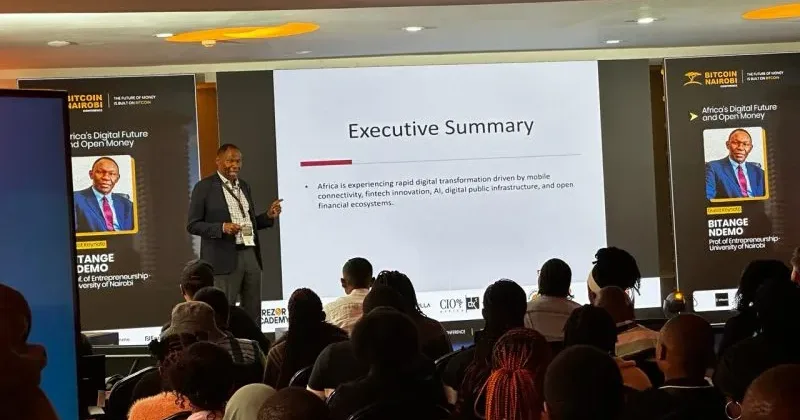
NAIROBI, Kenya, June 24 – Kenya risks losing its competitive edge as one of Africa’s leading technology and financial innovation hubs if regulations governing emerging technologies such as Bitcoin and artificial intelligence are introduced too aggressively, University of Nairobi Professor of Entrepreneurship Bitange Ndemo has warned.
Speaking at the Adopting Bitcoin Conference in Nairobi, Ndemo said policymakers should focus on creating enabling frameworks that support innovation, entrepreneurship and digital trade rather than imposing restrictions that could slow the growth of new technologies.
His remarks come as Parliament considers legislation aimed at regulating virtual asset service providers and cryptocurrency-related activities, part of broader efforts to bring digital assets under formal regulatory oversight.
“Innovation precedes regulation. If we regulate too early, we risk killing opportunities before they have a chance to mature.”
“We need to create open pathways and encourage regulations that allow digital money such as Bitcoin to grow and support trade.”
Ndemo argued that Africa is entering a critical phase in its economic development where digital infrastructure, artificial intelligence and digital finance could help unlock greater levels of intra-African trade and financial inclusion.
According to him, the continent’s growing digital economy requires payment systems that can facilitate seamless cross-border transactions while lowering the cost of doing business for individuals and enterprises.
According to Ndemo, Bitcoin and other digital payment technologies could complement existing financial systems by providing new rails for cross-border commerce and supporting a more connected African market.
His comments come against the backdrop of increasing adoption of digital financial services across the continent.
Kenya remains one of Africa’s most advanced digital finance markets, driven by widespread mobile money use, a thriving fintech ecosystem and a youthful, tech-savvy population.
Industry estimates indicate that Sub-Saharan Africa processed more than $200 billion worth of cryptocurrency transactions between 2024 and 2025, reflecting growing interest in digital assets as consumers and businesses seek faster and more affordable ways to transfer value across borders.
Ndemo said the next phase of Africa’s digital transformation will depend on the development of what he described as an “open money ecosystem” built around interoperability, open banking and frictionless payment systems.
Under such a framework, consumers and businesses would be able to move funds more easily across different platforms, financial institutions and national borders, helping reduce transaction costs and expand access to financial services.
He also highlighted the growing convergence between artificial intelligence, data and digital finance, arguing that technologies such as AI-powered credit scoring, fraud detection and personalized financial services could significantly expand financial inclusion.
According to Ndemo, these innovations have the potential to improve access to credit for underserved populations, support small and medium-sized enterprises and increase participation in the digital economy.
While acknowledging the need for oversight and consumer protection, Ndemo cautioned against creating fragmented regulatory frameworks that could hinder innovation or make it difficult for businesses to operate across multiple African markets.
Instead, he called for harmonized regulations that support innovation while enabling countries to benefit from the opportunities presented by digital finance, artificial intelligence and emerging technologies.
He argued that Kenya’s long-term competitiveness will depend on its ability to remain open to innovation and attract entrepreneurs building the next generation of financial infrastructure.