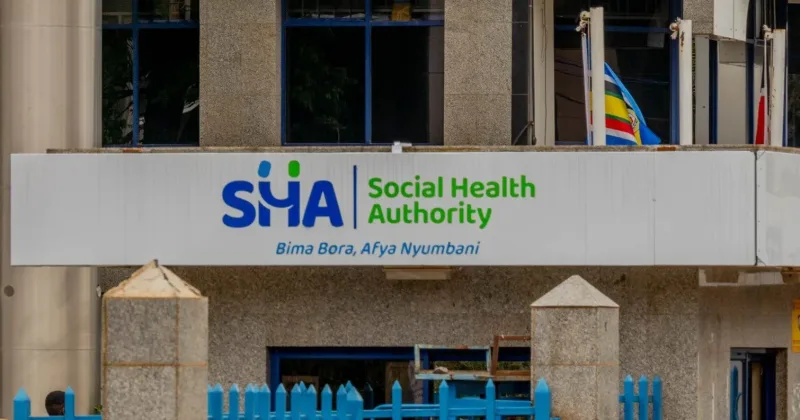
In the last three years, and especially since the inception of the Social Health Authority (SHA), health has become one of the most important subjects of national conversation in Kenya. The debate has ranged from the new SHA funding model and the laws underpinning it, to health-worker strikes and now a less discussed but equally corrosive problem: county governments failing to pay health workers on time.
More significantly, we have witnessed the rise of health communication as a discipline and health journalism as a craft. Today, the reigning Journalist of the Year is a health journalist from Willow Health Media, an outlet that has helped elevate health reporting into mainstream public interest.
That policymakers and even the President are now part of this conversation is largely a result of the work of health journalists and communication platforms that have deliberately made health, health financing and access a permanent fixture on the public agenda.
Policymakers have taken notice. Health financing and access can no longer be shielded from public scrutiny.
Last week, President William Ruto hosted a national town hall at the Kenyatta International Convention Centre, bringing together health-sector stakeholders and ordinary citizens to assess the reforms.
For once, we had figures rather than generalities. According to the President and SHA Chief Executive Officer Dr Mercy Mwangangi, SHA registrations have reached 32.3 million, compared with eight million under the defunct National Hospital Insurance Fund (NHIF). On another count during the same week, the figure was put at 33 million.
The financing shift is equally significant. While NHIF used to pay about Sh5.6 billion every three months, SHA is now paying about Sh12 billion every month. In the last one-and-a-half years, Sh170 billion has reportedly been disbursed to health facilities, with Nairobi County alone receiving Sh32 billion.
The next question should be: how much of this money is being reinvested in hospitals to improve infrastructure, equipment and quality of care?
On primary healthcare, the government reported that 107,800 Community Health Promoters have been deployed nationwide, reaching more than nine million households and referring more than 750,000 patients for care. Through the Primary Health Care Fund, Sh27.4 billion was allocated and Sh23.3 billion disbursed, supporting more than 20 million outpatient visits involving more than 15 million Kenyans.
The government also reported that the Social Health Insurance Fund has collected Sh70 billion from 4.8 million contributors.
Perhaps the most revealing moment was the live accountability test involving The Karen Hospital. The hospital had submitted claims worth Sh302.5 million since SHA began. Of this, Sh201.5 million, or 66.5 per cent, had been paid; Sh9.5 million rejected; Sh40.2 million returned for correction; and Sh51 million remained pending documentation.
Whether a system that works needs to be publicly demonstrated is debatable. But the fact that the President placed himself at the centre of such scrutiny is good for the ordinary Kenyan.
The President and SHA leadership offered data-heavy defences of the reforms, at times with limited acknowledgement of their shortcomings. Yet Kenyans should welcome one important development: health-sector leaders, including KMPDU and the President himself, have put themselves in a position where their claims can be interrogated more rigorously.
Public commitments create accountability. In that sense, the summit was useful. It moved the conversation from broad claims towards specific numbers, commitments and questions.
The KMPDU Deputy Secretary-General distinguished himself with a short and precise intervention. He spoke about the plight of health workers, acknowledged areas where health workers themselves bear responsibility, and confronted an issue others have sometimes avoided: the role of county governments in undermining Universal Health Coverage.
Broken diagnostic machines, shortages of medicines and delayed salaries remain among the biggest problems facing Kenya’s health system.
As a high school student, I remember receiving better healthcare at my local health centre than many students experience today, even after devolution. Why? Because we have created 47 semi-autonomous health systems without adequately addressing the structural problems within them.
It took Dr Miskellah, on the second day of the summit, to candidly call out governors in the 33 counties where health workers have reportedly not been paid.
Even if SHA were working perfectly, the young health worker at a local dispensary who has faithfully contributed to the system would still face empty shelves and broken equipment if the county responsible for that facility fails to finance and stock it properly.
That local failure can then become a generic indictment of SHA.
There are also claims circulating that SHA funds intended for healthcare are being diverted to finance equipment supplies, leaving only a small proportion reaching hospitals. If these claims have substance, health communication organisations such as Willow Health Media have a critical role to play in testing them and explaining the facts to the public.
This is where health journalism becomes indispensable.
We cannot have a situation where the government says everything is working, critics say nothing is working, and Kenyans are left to determine the truth for themselves.
A chaotic information environment can be almost as dangerous as a failing health system. An infodemic — the rapid spread of false, misleading or unverified health information — can itself cause serious harm and cost lives.
Kenya has made progress by placing health at the centre of national conversation. The next step is to make that conversation more honest, evidence-based and accountable.
The numbers matter. But what matters more is whether those numbers translate into medicines on shelves, functioning equipment, paid health workers and better care for the Kenyan walking into a public health facility.
That is where the real test of Universal Health Coverage begins.
The author is a Media and Political Communications Expert based in Nairobi, Kenya.