NAIROBI,Kenya June 18 – The National Assembly has approved the Finance Bill 2026 with amendments, clearing the way for its submission to President William Ruto for assent before it becomes law.
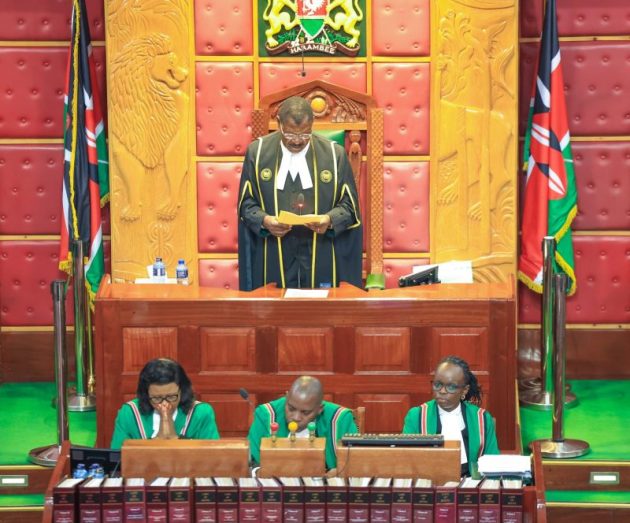
The Bill was passed on Thursday evening following an electronic vote, after lawmakers adopted all amendments proposed by the Departmental Committee on Finance and National Planning.
In the final tally, 122 Members of Parliament voted in support of the legislation, while 40 opposed it. No legislator abstained from the vote.
The House had initially endorsed the Bill through acclamation. However, several members called for a division, prompting the Speaker to order a formal electronic vote after the required threshold was met, in line with parliamentary procedures.
The passage of the Bill marks a key step in the budget-making process, with the legislation now awaiting presidential assent before its provisions can take effect.
The Finance Bill 2026 is projected to raise an additional Sh98.9 billion in revenue, more than three times the roughly Sh30 billion generated through the Finance Act 2025 and the Tax Laws (Amendment) measures adopted following the withdrawal of the Finance Bill 2024.
Among the passed laws is the rejection of a proposal that would have empowered the Kenya Revenue Authority (KRA) to issue agency notices even when tax disputes, objections or court proceedings were still pending. Legislators argued that granting such powers could disrupt business operations, strain cash flows and undermine taxpayers’ constitutional right to fair administrative action.
MPs also opposed plans to include weekends and public holidays in calculating timelines for filing tax objections and appeals, warning that the move would significantly reduce the time available for taxpayers to meet procedural requirements.
Businesses received further relief after lawmakers rejected a proposal to impose a 60 per cent minimum deemed dividend distribution threshold on undistributed income. Stakeholders had argued that the measure would restrict companies’ ability to reinvest profits and finance expansion. Instead, the committee recommended a lower threshold, to be introduced through amendments during debate on the bill.
In another taxpayer-friendly amendment was extending annual tax return filing deadlines to four months for individual taxpayers and six months for corporate entities.
Lawmakers also moved to protect manufacturers and consumers from higher costs by recommending the retention of zero-rated Value Added Tax (VAT) status for several products. These include locally assembled mobile phones, electric motorcycles, bicycles, buses, solar and lithium-ion batteries, sugarcane transportation services, and raw materials used in the manufacture of animal feeds.
Lawmakers cautioned that reclassifying these items from zero-rated to VAT-exempt would increase production costs, discourage investment in green technologies and create uncertainty within the tax system.
MPs further rejected a proposal to shift the excise duty tax point for mobile phones to the stage of network activation, citing implementation challenges and the potential for consumer confusion.
While seeking to cushion taxpayers, legislators endorsed several measures aimed at boosting revenue collection. These include the introduction of a 1.5 per cent withholding tax on scrap metal sales to improve traceability in the largely informal sector, as well as new compliance requirements for non-resident landlords earning rental income in Kenya.
Lawmakers also backed a one-year tax amnesty programme set to commence on July 1, 2026. Under the proposal, penalties and interest accrued up to December 31, 2025, will be waived provided taxpayers settle the principal tax liability by June 2027. The recommendation is informed by the success of the 2023 tax amnesty programme, which raised Sh43.9 billion from more than one million applicants.
However, committee chairperson Kimani cautioned that frequent tax amnesties could encourage taxpayers to delay payments in anticipation of future waivers, potentially eroding voluntary tax compliance.
To strengthen enforcement once the amnesty period ends, the committee proposed amendments to the Tax Procedures Act that would grant KRA enhanced powers to recover debts arising from fees and levies collected on behalf of other government agencies.