NAIROBI, Kenya, Jun 15 — The Motorists Association of Kenya (MAK) has called for parliamentary scrutiny of the Energy and Petroleum Regulatory Authority (EPRA), accusing the regulator of presiding over a politically influenced fuel pricing regime after announcing a marginal 22-cent reduction in petrol prices under the latest monthly review.
In a statement issued on Monday, the association termed the reduction “insulting” to motorists and questioned why consumers had not benefited more substantially from declining international crude oil prices.
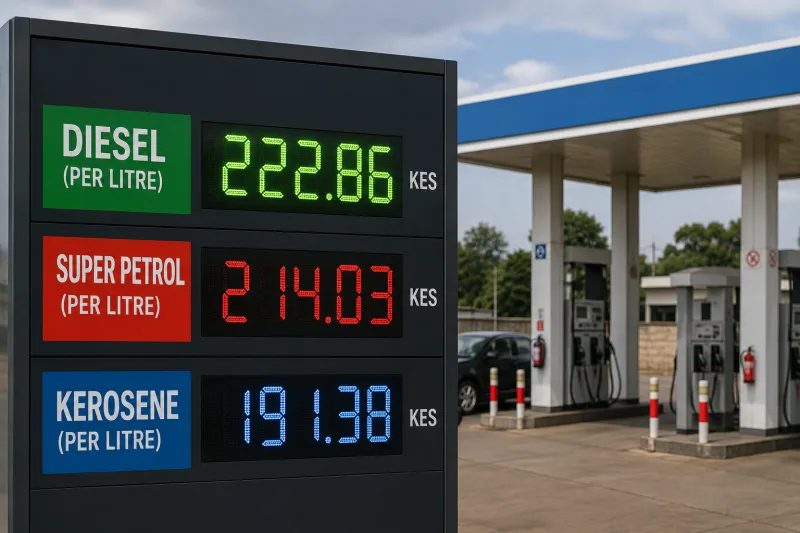
The criticism comes a day after EPRA announced new pump prices for the period between June 15 and July 14, reducing the retail price of Super Petrol by Sh0.22 per litre to Sh214.03 in Nairobi while slashing diesel prices by Sh10 to Sh222.86 per litre. Kerosene remained unchanged at Sh191.38 per litre.
EPRA attributed the diesel reduction to the government’s decision to utilize approximately Sh10 billion from the Petroleum Development Levy (PDL) Fund to cushion consumers from rising energy costs.
“The Government will in this cycle cushion consumers through the Petroleum Development Levy Fund by utilizing approximately Sh10 billion to subsidize the prices of Diesel and Kerosene,” EPRA said in its pricing review.
The diesel cut follows a commitment made by President William Ruto on May 22 after negotiations with transport stakeholders helped avert a threatened nationwide strike that had disrupted economic activity for two days.
MAK, however, argued that the sequence of events reinforced concerns that fuel prices were increasingly being influenced by political negotiations rather than a transparent pricing formula.
“The June/July pricing cycle bears all the hallmarks of political interference rather than professional regulation,” the association said, claiming that the diesel reduction was linked to engagements between government officials and transport sector representatives.
The lobby further questioned EPRA’s independence, saying the latest review had exposed what it described as a growing disconnect between global oil market trends and local pump prices.
According to MAK, international crude oil prices eased significantly during May amid improving geopolitical conditions and expectations of diplomatic progress in the Middle East, developments it believes should have translated into larger reductions at the pump.
However, EPRA’s review indicated that while the average landed cost of imported Super Petrol declined by 0.56 percent to US$901.16 per cubic metre, the landed cost of diesel increased marginally by 0.21 percent to US$1,294.71 per cubic metre during the pricing period. The landed cost of kerosene fell by 0.33 percent to US$1,328.36 per cubic metre.
The regulator has maintained that Kenya’s petroleum pricing framework is designed to recover legitimate importation and distribution costs while shielding consumers from excessive volatility in international markets.
MAK nevertheless insisted that the current pricing regime had lost public confidence, arguing that previous fuel price increases had been passed on to consumers more readily than subsequent declines in international oil prices.
The association renewed calls for a public audit of the fuel pricing formula, publication of all assumptions used in determining the June/July prices, parliamentary scrutiny of EPRA’s operational independence, and a review of the Government-to-Government fuel import arrangement.
It also urged policymakers to consider introducing a competitive free-market pricing model to reduce what it termed political interference in fuel price determination.
The latest dispute highlights growing debate over Kenya’s fuel pricing mechanism at a time when high energy costs continue to weigh on transport operators, businesses and households, despite government efforts to cushion consumers through targeted subsidies.