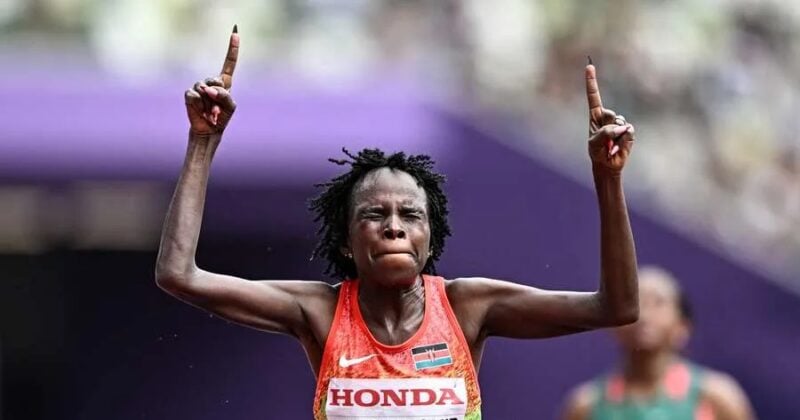
NAIROBI, Kenya, Nov 19 – Kenya’s historic opportunity to host the 2029 World Athletics Championships is facing an uncomfortable credibility test following a fresh wave of doping sanctions against three prominent athletes, including reigning world marathon champion Peres Jepchirchir.
The sanctions against Jepchirchir, world road running silver medallist Veronica Loleo and marathoner Ronald Korir have reignited concerns over Kenya’s persistent doping crisis, threatening to overshadow the country’s preparations for the first-ever World Athletics Championships to be staged on African soil.
When World Athletics awarded Nairobi the hosting rights, the decision was celebrated as a major endorsement of Kenya’s rich athletics heritage and its standing as a global distance-running powerhouse.
However, the latest doping cases have cast a shadow over that achievement, raising difficult questions about the country’s ability to protect the integrity of its athletes and deliver a championships worthy of its reputation.
For a nation preparing to welcome the world’s best athletes to the Moi International Sports Centre, Kasarani, in 2029, the timing could hardly be more troubling.
World Athletics President Sebastian Coe recently expressed optimism that hosting the championships would accelerate Kenya’s efforts to combat doping. Yet, the latest sanctions expose the scale of a problem that has increasingly reached the upper echelons of Kenyan distance running.
The three cases announced by the Athletics Integrity Unit (AIU) on Thursday are the latest in a troubling succession of high-profile doping violations that have shaken Kenya’s athletics establishment over the past year.
In October 2025, women’s marathon world record-holder Ruth Chepng’etich received a three-year suspension, sending shockwaves through the global athletics community.
In June 2026, former half-marathon world record-holder Kibiwott Kandie was handed a seven-year ban for refusing an anti-doping test and tampering with the process.
Their cases followed the six-year suspension of former 10km world record-holder Rhonex Kipruto in 2024 and the seven-year ban imposed on two-time Boston Marathon champion Lawrence Cherono.
The growing list of sanctions has raised concerns about the extent to which doping has penetrated Kenya’s once-celebrated distance-running fraternity.
The situation is equally concerning at the domestic level. The Anti-Doping Agency of Kenya (ADAK) currently lists 65 provisionally suspended athletes on its active register, with additional cases involving prohibited substances such as EPO and CERA, as well as alleged anti-doping rule violations, reported in October and early November.
Among the athletes listed in recent suspension notices are Lameck Kibiwott Too, Shadrack Kenduiywo Kipkurui and Justus Muasya.
Nairobi 2029: Kenya faces an integrity test
Hosting the 2029 World Athletics Championships places Kenya’s anti-doping structures under unprecedented international scrutiny.
Beyond the logistical demands of staging a global sporting event, the country must demonstrate that its athletics environment is credible, transparent and capable of safeguarding fair competition.
Traditionally, host nations rely on their sporting icons to generate excitement, attract commercial partnerships, inspire local fans and create a sense of national pride.
But Kenya’s doping troubles threaten to complicate that ambition.
Jepchirchir’s three-year suspension, which runs until October 19, 2029, effectively rules her out of much of the build-up to the championships, even though her ban is scheduled to expire shortly before the event.
More significantly, the case involving the reigning Olympic and World Marathon champion has dealt another blow to confidence in Kenyan distance running.
Her admission to using erythropoietin (EPO), a prohibited blood-boosting substance, is particularly damaging given her standing in the sport.
The concern is that repeated high-profile doping cases could leave future Kenyan performances under unnecessary suspicion, even when achieved through legitimate means.
Kenya also faces questions about the effectiveness of its anti-doping enforcement mechanisms.
The country remains in Category A, the highest-risk classification under World Athletics’ anti-doping framework, while its anti-doping programme has previously faced intense international scrutiny over funding and institutional capacity.
The recurrence of sophisticated doping cases, particularly those involving blood manipulation and EPO, suggests that expanding testing alone may not be enough to address the problem.
As AIU Chief Executive Brett Clothier acknowledged on Thursday, Kenya has made progress in strengthening its anti-doping structures over the past five years, but significant challenges remain.
“The Kenyan authorities have made a lot of progress in the fight against doping in the last five years, but these cases highlight that there is still a long way to go. The Kenyan government is aware of the current situation and has committed to further strengthen the Anti-Doping Agency of Kenya and take action to address the criminal networks that facilitate doping within the country,” Clothier said.
He added that the AIU would discuss the details of those commitments with the Kenyan government in the coming months.
New law offers hope in fight against doping networks
Against this backdrop, the proposed Anti-Doping (Amendment) Bill, 2026, currently undergoing public participation in the Senate, could become a significant milestone in Kenya’s efforts to confront the crisis.
The proposed legislation seeks to strengthen the legal framework for combating doping by targeting not only athletes who use prohibited substances but also individuals and networks involved in supplying and facilitating their use.
Among the proposed measures are fines of up to KSh5 million and prison sentences of up to five years for medical practitioners, coaches and other individuals found culpable of supplying banned substances.
The Bill also proposes enhanced enforcement powers for ADAK compliance officers.
If enacted and effectively implemented, the legislation could mark a shift in Kenya’s anti-doping strategy, moving beyond the punishment of individual athletes towards dismantling the networks that enable doping.
However, legislation alone will not be enough. Effective investigations, adequate funding, stronger intelligence gathering, accountability and sustained cooperation between government agencies and international anti-doping bodies will be essential.
The real race to Nairobi 2029
Between now and 2029, Kenya faces a race that will extend far beyond the athletics track.
Winning the right to host the World Athletics Championships demonstrated the world’s confidence in Kenya’s athletics heritage and organisational potential.
But preserving that confidence will require more than constructing facilities, mobilising resources and preparing a memorable opening ceremony.
Kenya must demonstrate that it is equally committed to protecting clean sport, holding offenders accountable and dismantling the networks that threaten the integrity of its athletes.
The challenge is not simply to deliver a successful championship at Kasarani. It is to ensure that when the world descends on Nairobi in 2029, the conversation revolves around extraordinary performances, historic records and sporting excellence — not doping scandals.
For a country proudly known as the Home of Champions, the greatest victory before 2029 may be restoring the world’s confidence in the integrity of its champions.