NAIROBI, Kenya Sep 7 – Homeschooling advocates are calling for clearer legal recognition of home education in Kenya, arguing that the practice is being used by families but remains insufficiently defined in the country’s education framework.
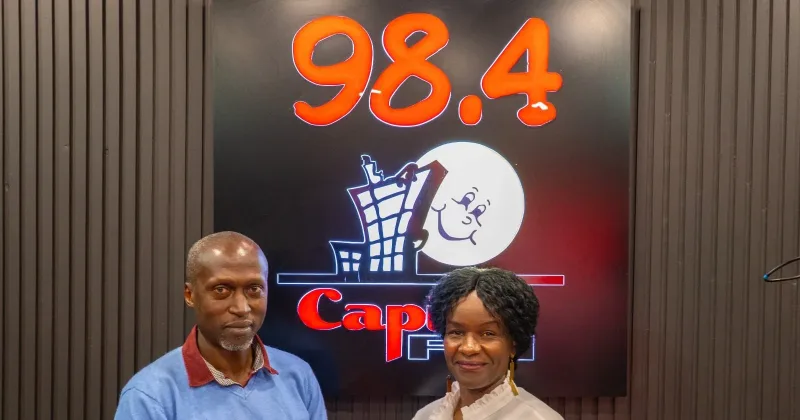
The call was made by Emmanuel Nandokha, Convenor of the Home Education Reforms Initiative, during an interview on Capital FM’s Capital in the Morning, where he discussed homeschooling, proposed education reforms and the Basic Education Bill.
“Basically, homeschoolers have existed for years in Kenya, but we’ve never been formally recognized,” Nandokha said.
He explained that the Home Education Reforms Initiative was formed after homeschooling families sought to engage the government on education reforms, adding that more than 1,500 parents had signed up in support of the initiative’s latest submission.
Nandokha said the group wants homeschooling to be recognised alongside other forms of education and clearly defined in documents governing education in Kenya.
“Basically, just the same way the government recognizes public schools, private schools, and what they call Alternative Providers of Basic Education. We’d also want homeschooling to be recognized as a valid alternative to what you might call formal and informal schooling in the documentation that supports education in Kenya,” he said.
He described the current position as a “legal lacuna”, saying homeschooling is mentioned in some government documents but is not clearly defined.
“Basically, you’re entering into what some people call a legal lacuna. It’s a no man’s land where it is mentioned in one preface of one document, but it is not defined,” Nandokha said.
The issue of whether parents could face legal consequences for homeschooling was also raised during the interview. Nandokha said some parents had previously faced arrest and court proceedings because of the uncertainty surrounding the legal framework.
“Yeah, so like I said, because it’s not properly defined, then a parent can be arrested, and parents have been arrested for homeschooling and taken to court,” he said.
Nandokha cited the case of a man he identified as Silas, whom he said was arrested in Kakamega in 2019 and charged in a criminal case before the charges were dropped. He said the man later pursued a constitutional case against the government, the Attorney General and the Ministry of Education, but that case was also unsuccessful.
The discussion also examined how homeschooling could be regulated if it were formally recognised. The presenters raised concerns over the possibility of parents using homeschooling to keep children away from formal education without adequate safeguards.
Nandokha said any framework should establish standards and education milestones for children while allowing for the different ways home education is practised.
“So, their standards, their education milestones that should be met at different ages. And so part of how the government can support homeschooling, and that’s what the Presidential Working Party said, is to just come up with working consultation with homeschoolers to come up with standards,” he said.
He said home education takes different forms, with some parents teaching their children themselves while others use tutors, co-operative groups, micro-schools and learning centres. Some families also move their children from homeschooling into conventional schools.
“Why do we say that? I think homeschooling is one of the fastest-growing forms of education, but the varieties are so many,” Nandokha said, while arguing that any regulations should take account of the different approaches used by families.
The discussion also touched on the Basic Education Bill and proposals concerning Alternative Provision of Basic Education and Training. Nandokha argued that placing homeschooling under an existing alternative education framework without clearly defining it would leave the same uncertainty unresolved.
He said the Alternative Provision of Basic Education framework is associated with informal settlements and arid areas, while homeschooling is also practised by families outside those settings.
Nandokha argued that homeschooling should not simply be absorbed into that category because, in his view, the existing framework does not specifically define home education.
The issue of access was also raised, particularly whether homeschooling would favour families who can afford internet connectivity, electricity, learning materials and other resources.
Nandokha disagreed with the suggestion that home education must necessarily be limited to families with greater financial means.
“No, it would actually then increase access to quality education,” he said. “Because in some of those remote areas where parents exist, we even have homeschooling parents in Isiolo. You can still give quality education regardless of whether there is quality schools around. And regardless of distance.”
Rose Murigu, a parent who said she homeschooled her children from 2012, shared her experience of choosing home education after her family moved between continents.
“In 2012. We were going through a huge transition, moving from one continent to another. I had kind of looked at the schools, I already knew what I wanted in terms of my children, what I had experienced before for me. And I just wanted something different,” Murigu said.
Murigu said her approach went beyond teaching the conventional school curriculum at home. She said home education required parents to be deliberate about their children’s learning and to expose them to experiences outside academic work.
“So I think for home education, what we call it now because we didn’t want to define it as ‘doing school at home,’ it’s very wholesome, very holistic. You have to be very intentional,” she said.
She said her children were exposed to apprenticeships, their individual interests and opportunities to interact with people outside the home.
Murigu also said the choice of curriculum should depend on what a parent considers education to be and what the child intends to pursue later in life. She cited IGCSE as one possible option for a child interested in medicine because of its focus on sciences.
For Murigu, the aim was to encourage children to continue learning beyond formal academic requirements and develop skills that could allow them to change careers or pursue different interests later in life.
The debate over homeschooling therefore centres on two related questions: how Kenya can recognise families already using home education and what safeguards should apply to ensure children receive an appropriate standard of education.
While advocates are seeking formal recognition, the discussion also points to the need for a framework that defines homeschooling, sets clear expectations for learners and distinguishes it from other forms of alternative education.
For parents considering home education, the issue is therefore not only about choosing whether a child learns at home or in a conventional school. It also raises questions about the legal status of that choice, the standards learners should meet and how the government should oversee different pathways to basic education.