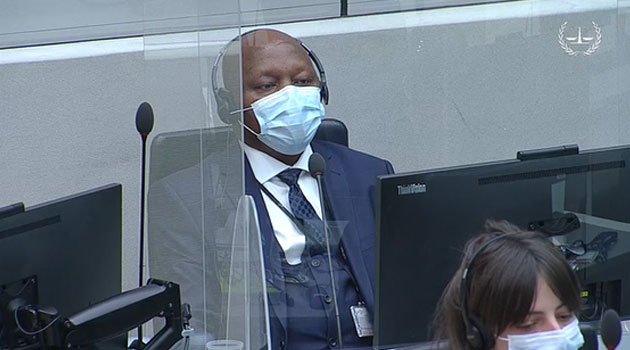
NAIROBI, Kenya, Feb 17 — The defense team in the trial of Kenyan lawyer Paul Gicheru who is facing witness interference charges at the International Criminal Court has dismissed bribery claims by a prosecution witness as untrue.
The Defense Attorney Michael Karnavas who carried out the cross-examination on the witness on Wednesday poked holes into his statement, severally referring to him as a liar.
The defense said this is because there was an impression that even the prosecution viewed the witness as a liar, since during questioning they insisted that he must be truthful.
“They even said you needed a lawyer and that you needed to be 100 per cent honest, and you said okay,” Karnavas submitted.
The defense questioned the witness’s credibility, arguing that the office of the prosecutor had earlier on accused him of double dealing and treated him as a suspect at first.
“You were first viewed as a suspect. You were asked if you were playing for both sides and that you needed to be frank with them,” Karvanas submitted.
The defense also questioned whether the witness acted voluntarily.
The first prosecution witness who testified on Tuesday claimed that he was approached several times with bribery offers so as to withdraw his cooperation from the court.
The witness who had initially testified in the Deputy President William Ruto and Joshua Arap Sang case in the Hague-based court, on Tuesday gave testimony of how he was approached several times with bribery offers so as to withdraw his cooperation from the court.
He told the court that he recorded conversations which the prosecution described as key evidence in Gicheru’s witness tampering case.
“I was contacted by telephone and then we met in person with person no. 2. I reported to the authorities of this court, who asked me to record every conversation that I had with this person,” the witness said during cross examination by the prosecutor.
The witness also explained how he alongside other witnesses met with some people at various locations so as to plan on how to recant their testimonies.
“We met in person at location number 6. If I agreed on the offer that was given as a bribe, I would recant all the testimonies that I have before this court and not to appear before this court at any occasion that I was needed to appear,” he said.
The prosecution, during their opening statement, said they will be presenting evidence of phone records and transactions to confirm that Gicheru acted to prevent witnesses from testifying and coerced them to recant their statements.
The prosecution also submitted that Gicheru was to lead the witnesses in signing legal documents to cease cooperation with the court.
“The evidence shows that Gicheru was tasked with locating ICC witnesses inside and outside the country, by Deputy President William Ruto,” the prosecution said.
The witnesses Gicheru is said to have improperly engaged were in the case against Deputy President William Ruto and journalist Joshua Arap Sang which terminated in April 2016, and Henry Kosgey in whose respect the court declined to confirm charges in January 2012.
The case was terminated about a year after a similar suit against President Uhuru Kenyatta was discontinued in March 2015.
Other Kenyans who faced charges of crimes against humanity at the ICC alongside Kenyatta, Ruto, Sang and Kosgei were Francis Muthaura and police chief Mohammed Ali.