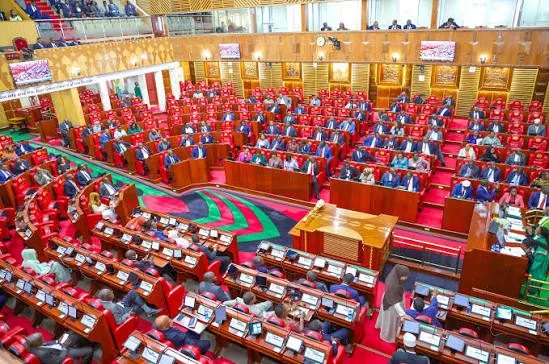
NAIROBI,Kenya June 18 – The National Assembly is expected to hold a decisive vote on the Finance Bill, 2026 this afternoon after lawmakers conclude consideration of a series of key legislative proposals that will shape the government’s fiscal agenda for the coming financial year.
The highly anticipated vote comes a day after the Finance Bill sailed through the Second Reading stage amid heated exchanges between Kenya Kwanza and opposition lawmakers, setting the stage for clause-by-clause consideration at the Committee of the Whole House before the final vote.
According to the Order Paper, Members of Parliament will first consider the Supplementary Appropriations Bill, 2026 at the Second Reading and Committee of the Whole House stages before turning their attention to the Sovereign Wealth Fund Bill.
The House will then proceed to the Committee of the Whole House on the Finance Bill, 2026, where MPs will debate and vote on individual amendments before the Bill is taken for Third Reading.
Unlike the Second Reading, which focuses on the general principles of a Bill, the committee stage allows lawmakers to debate, amend, delete or introduce specific provisions. Members will vote on individual clauses and proposed changes before the amended Bill is reported back to the House for Third Reading and a final vote. The stage is expected to be particularly significant for the Finance Bill, as MPs determine the fate of contentious tax proposals and other revenue-raising measures that could directly affect businesses and households.
The Finance Bill has emerged as one of the most closely watched pieces of legislation this year, with the government maintaining that the proposed measures are necessary to support implementation of the 2026/27 budget and sustain economic growth.
Treasury Cabinet Secretary John Mbadi defended the proposals as part of a broader strategy aimed at boosting investment, job creation and economic resilience.
However, the Bill has sparked sharp political divisions. Opposition MPs have accused the government of using its numerical strength in Parliament to fast-track what they describe as controversial tax measures, arguing that legislators were not given sufficient time to scrutinise the proposals and public concerns.
On the other hand, Majority Leader Kimani Ichung’wah and Finance Committee Chairperson Kimani Kuria have dismissed claims that the Bill introduces punitive taxes, insisting that extensive public participation was conducted and that several contentious proposals were either amended or dropped following consultations with stakeholders.
The debate has also attracted attention beyond Parliament, with former Deputy President Rigathi Gachagua urging opposition-allied MPs to vote against the Bill and demand a recorded division vote to publicly show how each legislator casts their ballot.
Meanwhile, a legal challenge filed by the Consumers Federation of Kenya (COFEK) has added another layer of uncertainty. The lobby group is seeking court intervention to halt implementation of several provisions, arguing that some proposals raise concerns over consumer protection, privacy and taxation safeguards.
Lawmakers rejected several proposals that would have expanded the powers of the Kenya Revenue Authority, a move seen as an attempt to balance revenue collection efforts with taxpayer protections.
The outcome is expected to have far-reaching implications for taxation, public spending and the government’s efforts to finance a budget estimated at nearly Sh4.8 trillion in the 2026/27 financial year.