By Amb. Gen. Bacha Debele Buta
As Ethiopia headed to the 7th General Election on June 6, 2026, a barrage of media campaigns was launched using misinformation and disinformation to portray the process as having failed to meet international standards, with the aim of eroding public trust in state institutions.
Well-known media outlets intensified an orchestrated campaign not only to discredit the national democratic process but also to weaken the democratic institutions that have held the nation together and erode public trust in the electoral process. An astonishing aspect of this campaign was that these media outlets repeatedly published the same narratives before, during, and after the election in an apparent effort to ensure that the international community and policymakers developed a skewed perception of the process.
Apart from these media campaigns, Ethiopia also faced organized efforts aimed at destabilizing the country and preventing the holding of the national election. An axis of instability known as “Tsimdo” was formed by various anti-national unity and anti-peace factions within the country, coordinating unprecedented efforts with Ethiopia’s regional rivals.
The sole purpose of these efforts was to prevent Ethiopia from conducting the 7th General Election and ensure that no legally elected government, whose legitimacy emanated from the ballot box, could emerge—ultimately pushing the nation toward chaos and weakening its ability to pursue its national interests.
However, against all odds, Ethiopians stood firm in the face of intense media campaigns and coordinated efforts by internal and external actors seeking to subvert the democratic process.
The election witnessed an unprecedented level of public participation and civic engagement, technological innovation, and logistical sophistication. With more than 54 million registered voters, 42 political parties, over 52,000 polling stations, and 80 independent candidates, the election represented one of the largest democratic exercises on the African continent. The remarkable level of political inclusivity and civic participation directly challenged the narratives promoted by critics of the process.
Unlike the portrayal of the election as a failure, the most significant refutation of that argument lies in voter turnout. At a time when democratic participation is declining in many parts of the world, and where some established democracies struggle to achieve turnout rates of 50 to 60 percent, Ethiopia recorded a level of participation that surprised many observers.
According to the National Election Board of Ethiopia (NEBE), more than 54 million citizens registered and turned out to vote. Across polling stations in Addis Ababa, regional states, and remote rural areas, citizens formed long queues before dawn. Voting, which was scheduled to conclude at 6 p.m., continued until midnight in some locations due to the overwhelming turnout and the determination of citizens to exercise their democratic right and shape the future of their nation.
Witnessing such a strong public desire to vote despite long hours of waiting, Prime Minister Abiy Ahmed delivered a message of appreciation to the electorate:
“…The perseverance you demonstrated amid many challenges and hardships, against all odds, was a contribution made for democracy and for the very survival of the nation…”
Indeed, the perseverance demonstrated by Ethiopians in safeguarding the future of their nation, despite the challenges they faced, was remarkable. The participation of women, youth, and persons with disabilities carried a clear and unmistakable message to skeptics. The notion that Africans cannot conduct peaceful and credible elections on their own no longer reflects today’s reality. Africa does not require validation from external media outlets or observers to conduct free and fair elections.
Ethiopia’s 7th General Election was observed by the African Union Election Observation Mission led by former Kenyan President Uhuru Kenyatta and the Intergovernmental Authority on Development (IGAD) Election Observation Mission headed by Dr. Speciosa Wandira-Kazibwe. Both missions commended the peaceful, orderly, and transparent conduct of the vote.
Such continental endorsements are not merely diplomatic courtesies. Rather, they reflect a different perspective on African democratic processes. International media organizations and foreign observers often assess African elections against idealized standards while overlooking local realities and the determination of citizens to uphold constitutional order under difficult circumstances.
Portraying the election as predetermined while more than 54 million citizens endured long hours in queues to determine the future of their nation is dismissive of the sacrifices made by ordinary Ethiopians. It also overlooks the country’s long history of independence and the strong political consciousness of its people.
The central question is whether the election embodied the universal principles of democracy. In many respects, Ethiopia’s 7th General Election met those standards. The positive assessments by the African Union, IGAD observers, and domestic civic organizations deserve recognition. Equally important is the response of the Ethiopian people themselves, who delivered one of the highest voter turnouts on the continent.
In conclusion, Ethiopia’s 7th General Election demonstrated that democracy works when people believe their vote has real value. While critics questioned the future of Ethiopian democracy from afar, millions of Ethiopians were determined to cast their ballots. Security forces prevented attempts by extremist elements to disrupt the process, and the National Election Board of Ethiopia successfully managed the largest candidate field in the nation’s history.
The election ultimately showcased the resilience of Ethiopia’s democratic institutions and the commitment of its people to shaping their future through the ballot box.
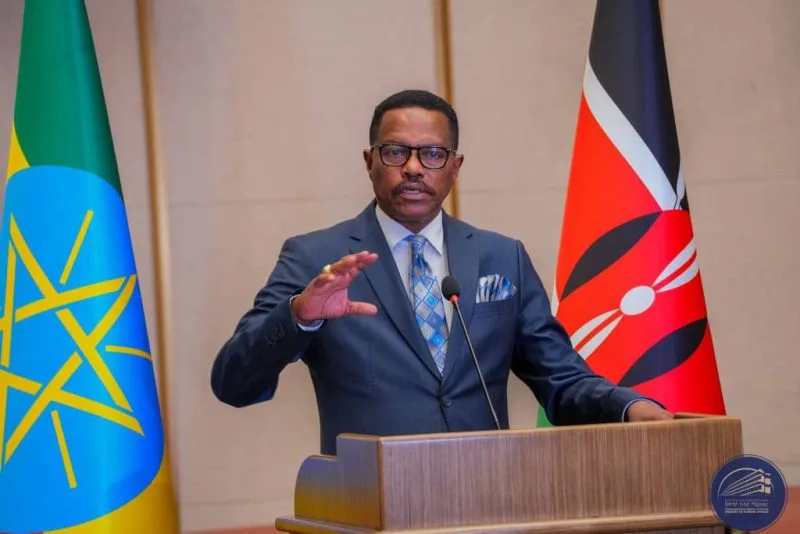
General Bacha Debele Buta is Ethiopia’s Ambassador to Kenya