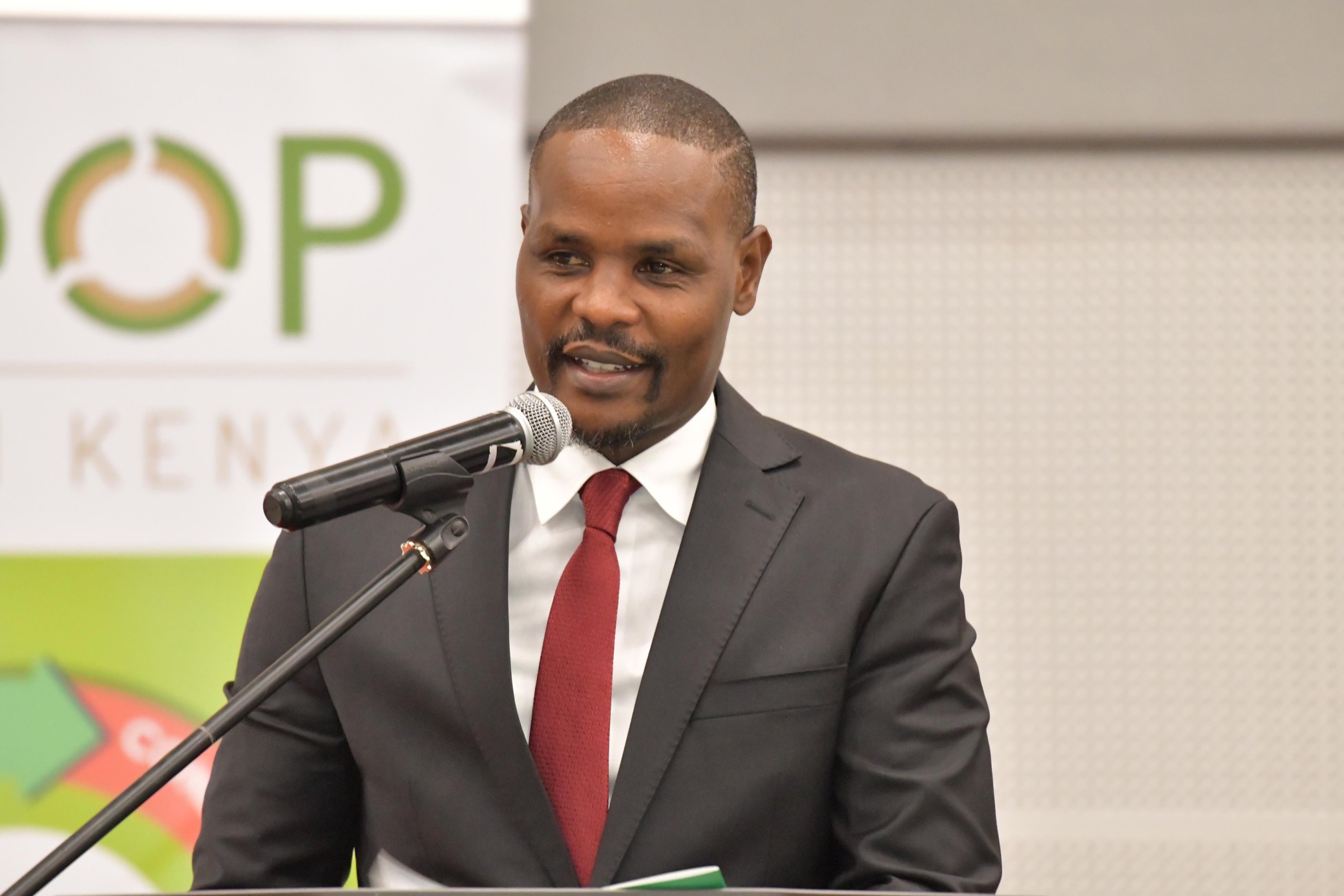
NAIROBI, Kenya, Feb 28 – State Department of Environment and Climate Change Permanent Secretary (PS) Festus Ng’eno has said that the adoption of a circular economy is the only solution to combating the current climatic changes that the country is grappling with.
The PS stressed that the Ministry is prioritizing three areas, including ecosystem restoration, climate change adaptation and mitigation, and the circular economy.
Circularity is based on three principles: eliminating waste and pollution; circulating products and materials; and regenerating nature.
It creates solutions to the challenges that Kenya and other countries are facing worldwide, such as climate change and biodiversity loss, while also addressing important social needs.
“Circular economy is not only central in the fight against climate change by eliminating greenhouse gas emissions through waste management, but also for itself immense potential to transform the socioeconomic well-being of our communities,” Ng’eno said at the Kenya Association of Manufacturers (KAM) 2nd edition of the Loop Forum in Nairobi.
“This forum accords us a platform to reflect and come up with tangible solutions on how business ventures can be part of the solutions to the triple planetary crisis of pollution, biodiversity loss and climate change,” he added.
The forum is an annual multi-sectoral platform that catalyzes circular innovation, policy dialogues, and business-to-business collaborations.
It brings together industry stakeholders, policymakers, regulators, private companies, civil society, knowledge institutes, investors, development partners, and youth involved in the circular economy.
“As we convene today to accelerate the transition to a circular economy, we reinforce our nation’s dedication to sustainable development and environmental stewardship. The forum builds on the success of its predecessor, held in February 2023 and is inspired by the Nordic circular economy forum,” KAM Head of Consulting and Business Development Joyce Njogu stated.
On his part, Danish Minister for Environment Magnus Heunicke emphasized the need to develop a systemic circular economy for a sustainable world.
“As humans, we have spent centuries developing a certain set of skills to harvest resources from our environment. As you also know, this has put our planet under a lot of pressure, leading to biodiversity challenges,” Heunicke noted.
“The challenges facing us are many, and the answers are simple; we need to use our resources over and over again, reduce our consumption and footprint, and develop a systemic circular economy for a more sustainable world.”