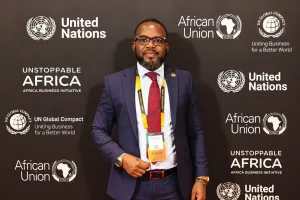
NAIROBI, Kenya, Feb 16 – Bridging the information gap in climate discourse could unlock significantly more investment into Africa’s green economy, a climate innovation expert has said.
Speaking on Monday at the Sustainability and Climate Action Breakfast hosted by Capital FM at Karura Forest, Tobias Bele, who leads communication and knowledge management at the Kenya Climate Innovation Center (KCIC), highlighted that limited public understanding of climate issues remains one of the biggest barriers to scaling climate finance and innovation.
Bele noted that while funding opportunities for youth, women, and persons with disabilities exist, the broader ecosystem still faces structural challenges rooted in communication gaps.
“There’s a narrative gap. There is an information gap that really needs to be filled,” Bele said.
He argued that climate conversations have long been highly technical and dominated by jargon, effectively excluding large segments of the population from understanding both the risks and opportunities within the sector.
“If that information gap is filled, it would open up room for investors, it would open up room for more understanding of what needs to be done, and for more behavior change to be achieved in this sector,” he added.
According to Bele, demystifying climate language and localizing sustainability conversations are essential to building long-term resilience and attracting capital into climate-smart enterprises.
KCIC has implemented targeted programs supporting youth and women-led enterprises, including an agribusiness initiative that backed more than 2,000 ventures across Kenya.
These initiatives, he said, demonstrate that opportunities exist, but scaling them requires wider public buy-in and clearer storytelling around impact.
Bele emphasized that communities must not only be beneficiaries of climate action but active participants who understand why environmental conservation and sustainable development matter for both present and future generations.
Beyond financial constraints often cited in the development sector, he maintained that communication remains the more urgent bottleneck.
He called for collective responsibility across the ecosystem—from policymakers and investors to media and innovators—to “delocalize” and “decolonize” climate narratives while amplifying stories of African-led solutions.