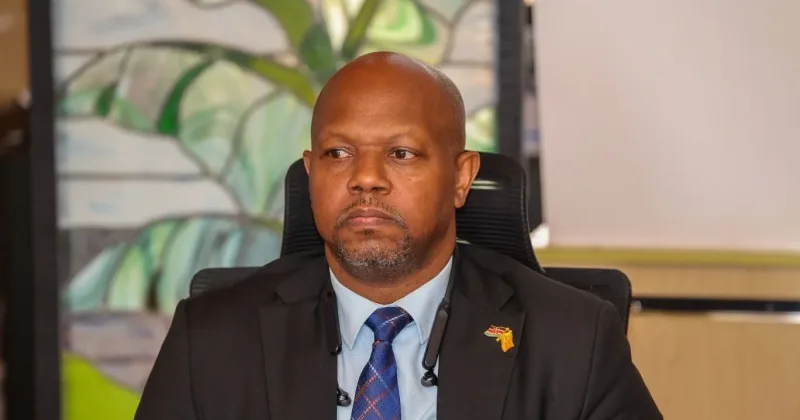
NAIROBI, Kenya Augg 12 — Vision 2030 has played a major role in transforming Kenya’s development landscape and attracting large-scale private investment, Vision 2030 Board Chairman Dr Emmanuel Nzai has said.
Nzai said the impact of the national development blueprint can be seen in major infrastructure projects and investment decisions across the country, including plans linked to the Lamu Port-South Sudan-Ethiopia Transport (LAPSSET) Corridor.
Speaking during a discussion on Kenya’s long-term development agenda, Nzai said Vision 2030 should be assessed through tangible projects and investments rather than political rhetoric.
“Vision 2030 has changed the country. It is evidence; it is not talk,” Nzai said.
He cited the LAPSSET Corridor as an example of how long-term national planning can create opportunities for private-sector investment.
Nzai argued that Kenya’s investment environment and major infrastructure projects have created opportunities that would previously have been difficult to realise.
He pointed to Nigerian industrialist Aliko Dangote’s reported interest in investing in Lamu as an example of how Vision 2030 projects can influence major business decisions.
“Dangote today would not say he wants to go to Lamu and put in that sort of investment if it was not the Kenya Vision 2030 LAPSSET project,” he said.
The LAPSSET Corridor is one of Kenya’s flagship infrastructure initiatives and is designed to link the Lamu Port with parts of Kenya and neighbouring countries through a network of transport and related infrastructure.
The project has been positioned as a major driver of economic activity in northern Kenya and the wider East African region.
Vision 2030 was established as Kenya’s long-term development blueprint, with the goal of transforming the country into a newly industrialising, middle-income economy offering a high quality of life to its citizens.
The strategy has been implemented through successive medium-term plans and flagship projects across infrastructure, economic development and social sectors.
Nzai’s comments come amid renewed debate over Kenya’s development direction beyond the current Vision 2030 framework.
With the country approaching the 2027 General Election and Vision 2030 nearing the end of its implementation period, policymakers and other stakeholders have increasingly turned their attention to what should guide Kenya’s development after 2030.
The debate has centred on whether Kenya should develop another medium-term plan or establish a broader long-term national vision before rolling out new programmes and projects.
Supporters of long-term planning argue that major infrastructure initiatives require continuity across successive administrations and should not be disrupted by changes in political leadership.
Nzai’s remarks underline the argument that long-term development frameworks can provide a foundation for investment by creating infrastructure and policy certainty.
The LAPSSET Corridor, which includes the Lamu Port and planned transport links connecting Kenya to Ethiopia and South Sudan, remains one of the most significant examples of Kenya’s attempt to use infrastructure to unlock new economic corridors.
As Kenya considers its development agenda beyond Vision 2030, the experience of projects such as LAPSSET is likely to remain central to discussions on infrastructure, investment and long-term economic planning.