NAIROBI, Kenya, Nov 18 – Senators have questioned proposed amendments to the Public Finance Management (PFM) Act that would require county governments to obtain prior written approval from the National Treasury before opening or closing bank accounts, raising concerns over their implications for financial autonomy under devolution.
The proposals also seek to consolidate county government funds into a Treasury Single Account (TSA) maintained at the Central Bank of Kenya (CBK), a move the central bank says could improve oversight of public resources and reduce government borrowing costs.
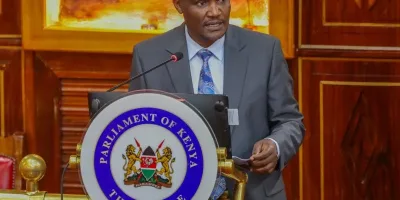
Appearing before the Senate Standing Committee on Finance and Budget on Tuesday, CBK Governor Kamau Thugge supported the proposed changes, arguing that holding county deposits centrally would give the National Treasury better visibility of available public funds.
Thugge said the arrangement would reduce the proliferation of commercial bank accounts and limit situations where government borrows while public funds remain idle in separate accounts.
“We fully support this proposed amendment,” Thugge told the committee.
He further proposed limiting counties to a single commercial bank imprest account, with their main operational and project accounts maintained at the CBK.
However, senators questioned whether giving the National Treasury authority over county banking arrangements would undermine the constitutional independence of the two levels of government or introduce additional bureaucratic hurdles in managing public finances.
Kakamega Senator Boni Khalwale questioned the constitutional implications of requiring counties to seek approval from the national government before opening bank accounts.
“Management of public funds is a critical role of any government. If the national government will now be involved in authorizing bank accounts at the county level, does it not affect the constitutional provision that the two governments are independent?” Khalwale posed.
Committee Vice Chairperson Tabitha Mutinda also raised concerns about possible delays in accessing and disbursing funds, citing existing challenges with requisitions through the Office of the Controller of Budget.
She questioned how the proposed approval requirements would affect semi-autonomous county institutions, including municipalities, water companies and public hospitals that manage Facility Improvement Funds.
In response, Thugge maintained that the proposed approval process would largely be a one-off requirement, rather than an additional step for routine county transactions.
He said counties would be allowed to consolidate existing commercial accounts into a single approved imprest account, with further National Treasury approval required only when opening additional accounts.
On concerns about access to CBK services in counties without physical branches, including Wajir, the central bank said approximately 99 percent of transactions involving county governments are already conducted digitally.
Thugge said the electronic channels allow all 47 counties to open accounts, make payments and manage deposits remotely.
Committee Chairman Ali Roba called on the CBK to prioritise technological solutions to improve accountability and efficiency in county financial management, rather than relying primarily on additional legal restrictions.
The committee is expected to invite the National Treasury to present its position on the proposed amendments in subsequent sittings.
The debate comes against the backdrop of broader questions about how to strengthen public finance oversight while preserving the financial independence of county governments under Kenya’s devolved system.
The proposed changes will require scrutiny of both their potential benefits for cash management and their implications for county-level decision-making and service delivery.