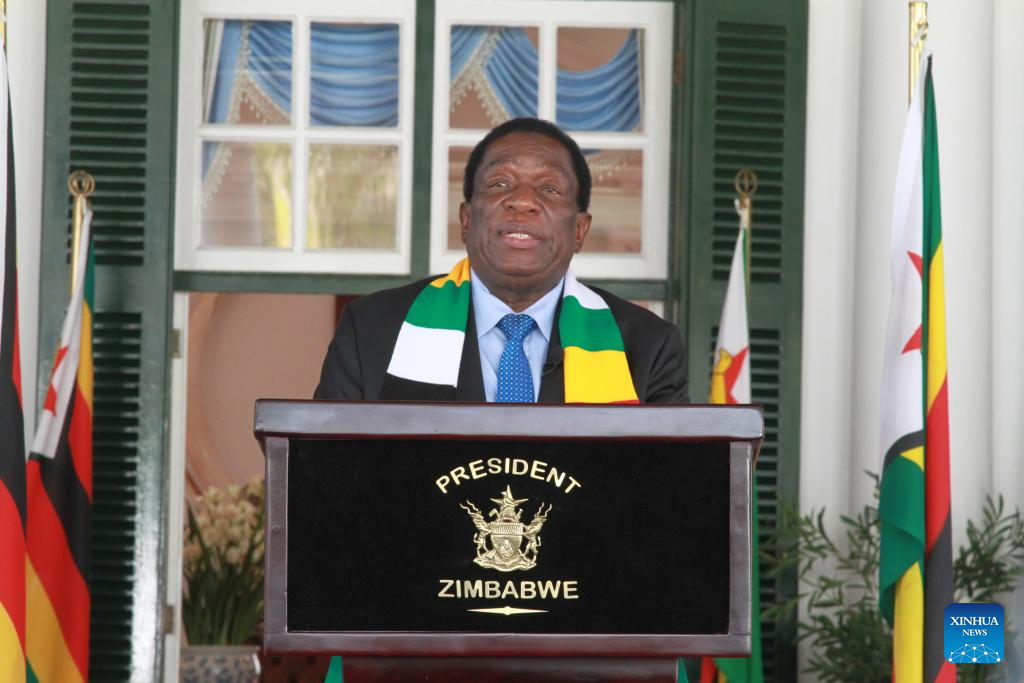
GABORONE, Oct. 25 (Xinhua) — The Southern African Development Community (SADC) on Wednesday equated the West’s targeted economic sanctions imposed on Zimbabwe to a “modern-day atrocity.”
It is now over 20 years since the imposition of the targeted sanctions, said Joao Lourenco, the president of Angola and chairperson of the SADC, in a statement released by the regional bloc’s headquarters in Gaborone to mark the annual SADC Anti-Sanctions Day.
“The targeted sanctions geared at a few individuals in Zimbabwe adversely impact the country,” said Lourenco, adding that the past two decades since the imposition of the targeted sanctions were marred by the inability of the people of Zimbabwe to achieve their full potential.
The United States adopted the Zimbabwe Democracy and Economic Recovery Act in 2001, which imposed targeted sanctions against selected Zimbabwean officials.
Similarly, in 2002, the European Union imposed sanctions against late Zimbabwean President Robert Mugabe and some of his allies.
However, after two decades, the sanctions have harmed the rights and well-being of ordinary and otherwise innocent civilians, said Lourenco, adding that the sanctions limit Zimbabwe’s access to financial and capital markets.
“The extent of this block to Zimbabwe’s socio-economic growth on the livelihood of its people represents a modern-day atrocity, which we, as the SADC family, strongly feel is an impediment that leaves one of our members behind from our common quest for regional integration, growth and prosperity,” he said.
During an SADC Anti-Sanctions Day webinar held in Gaborone on Wednesday, President Mokgweetsi Masisi of Botswana urged the international community to lift sanctions on Zimbabwe. He emphasized the need for a new narrative, direction and approach for the southern African country.
Masisi said an unconditional lifting of sanctions would create the conditions for Zimbabwe and the SADC region to spearhead national and regional growth and bolster good governance, human rights and social cohesion.
The SADC is a regional economic community comprising 16 member states, namely, Angola, Botswana, Comoros, the Democratic Republic of Congo, Eswatini, Lesotho, Madagascar, Malawi, Mauritius, Mozambique, Namibia, Seychelles, South Africa, Tanzania, Zambia and Zimbabwe.