For years, much of the global conversation about China has been dominated by predictions of its slowdown, concerns about debt, demographics and geopolitical tensions. Yet while analysts debate whether China has peaked, the reality on the ground tells a different story.
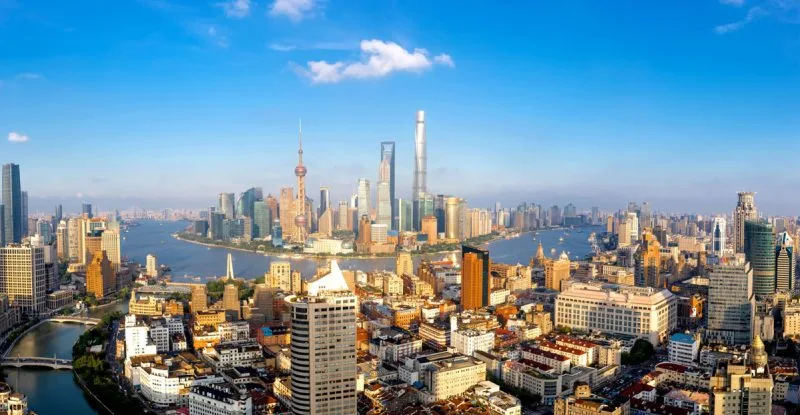
Across vast stretches of the country, high-speed trains connect cities hundreds of kilometres apart in a matter of hours. Ports handle more cargo than anywhere else in the world. Chinese companies dominate global supply chains for electric vehicles, solar panels, batteries and consumer drones. In artificial intelligence, renewable energy and advanced manufacturing, China is no longer simply catching up with the West; in many areas it is setting the pace.
The more important question for Africa is not whether China has surpassed the United States in every measure of national power. The more relevant question is what developing countries can learn from China’s remarkable transformation.
Less than half a century ago, China was a predominantly rural country struggling with poverty, limited industrialisation and inadequate infrastructure. Today, it is the world’s largest manufacturing nation, the largest trading nation and a leading force in technological innovation. Such a transformation did not happen by accident.
One of the most striking lessons is the importance of long-term planning. While many countries operate according to election cycles, China has pursued development goals spanning decades. Infrastructure projects, industrial policies, technology investments and education reforms have often been guided by long-term national objectives set out by President Xi Jinping rather than short-term political calculations.
Africa frequently suffers from policy inconsistency. Governments change, priorities shift and flagship projects are abandoned before completion. China’s experience demonstrates the value of continuity and strategic focus. Development is rarely achieved through quick fixes; it requires patience, discipline and sustained investment and China is a living example.
The second lesson is the central role of infrastructure. China understood early that roads, railways, ports, airports, power generation and digital connectivity are not luxuries but foundations of economic growth. Infrastructure reduces the cost of doing business, attracts investment and integrates markets.
This lesson is particularly relevant for Africa. The African Continental Free Trade Area offers enormous potential, but its success will depend largely on whether African countries can build the infrastructure necessary to move goods, people and information efficiently across borders.
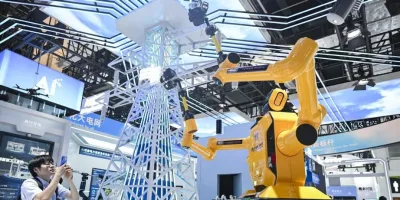
Third, China recognised that manufacturing matters. While much of the world shifted towards services and finance, China invested heavily in industrial capacity. Today it produces everything from textiles and household goods to electric vehicles, satellites and advanced robotics.
Many African economies remain heavily dependent on the export of raw commodities. Yet history shows that no nation has achieved sustained prosperity without industrialisation. The challenge for Africa is not merely to export minerals, coffee, tea, crude oil or other primary products, but to move up the value chain through processing, manufacturing and technological innovation.
China’s recent decision to grant zero-tariff treatment to imports from all African countries with diplomatic relations with Beijing, excluding Eswatini, presents a significant opportunity in this regard. While the immediate benefit is improved market access for African exports, the real opportunity lies beyond the export of raw materials. African countries can leverage this preferential access to develop manufacturing industries, increase value addition and integrate more deeply into global supply chains. Rather than exporting raw coffee beans, for example, countries can export processed coffee products. Instead of shipping unprocessed minerals, they can invest in beneficiation and manufacturing. The long-term winners will be those nations that use China’s vast market not simply as a destination for commodities, but as a catalyst for industrial transformation.
Education and human capital offer another important lesson. China produces millions of science, technology, engineering and mathematics graduates every year. Its investment in research and development has helped create a pipeline of talent capable of driving innovation.
For Africa, whose population is projected to become the youngest in the world, investing in education may be the single most important determinant of future competitiveness. The continent’s greatest resource is not beneath the ground; it is its people.
China’s rise also highlights the importance of energy security. The country has become a global leader in renewable energy, electric vehicles and battery technology. By investing heavily in solar, wind and transmission infrastructure, it has positioned itself at the centre of the global energy transition.
Africa possesses some of the world’s greatest renewable energy potential, yet millions still lack access to reliable electricity. Bridging this gap will be critical if the continent hopes to industrialise and compete in the twenty-first century economy.
What is clear, however, is that China has fundamentally altered the global development conversation. Its rise challenges the assumption that economic modernisation must follow a single Western template. It demonstrates that developing countries can transform themselves through investment, industrialisation, innovation and long-term planning.
As Africa seeks its own path to prosperity, the continent would do well to study China’s experience not to imitate it blindly, but to understand the principles that enabled one of the most remarkable economic transformations in human history.
The greatest lesson from China’s rise may be this: development is not determined by destiny. It is shaped by choices, institutions and the willingness to think beyond the next election and invest in the next generation.
Elijah Mwangi is a scholar based in Nairobi; he comments on local and global matters.