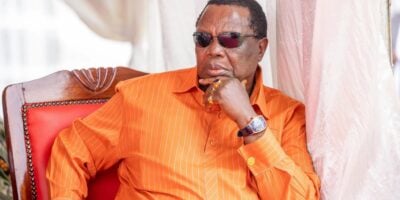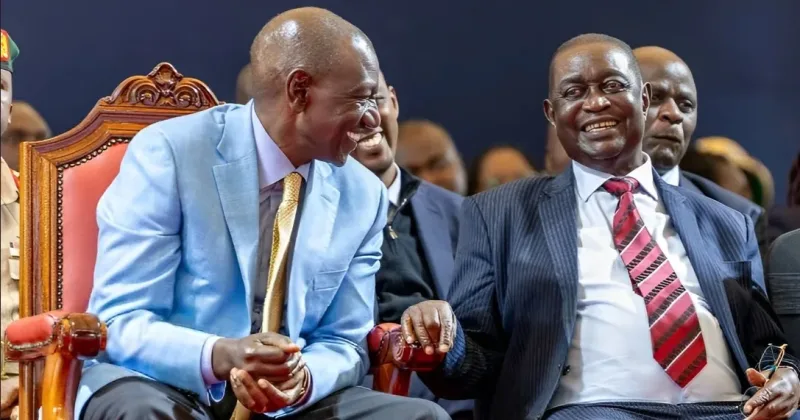
NAIROBI, Kenya Aug 10 – ODM Party Leader and Siaya Senator Oburu Oginga has defended the party’s decision to work with President William Ruto, saying the political partnership was driven by the need to preserve stability after the 2022 General Election.
Oburu said ODM leaders assessed the political options available at the time and concluded that joining Ruto’s administration was preferable to the alternatives.
“And we believed in the stability. When there was a little shake, we said no, let us come in and join President Ruto,” Oburu said during a broad-based government meeting in Naivasha.
He said the decision was made despite ODM’s previous opposition to Ruto, arguing that the party considered him the “better devil” among the political choices available at the time.
“Because looking at the options then, there was no anybody who was better than Ruto. Even if we still thought he was a devil, he was a better devil than the other devils,” Oburu said.
The remarks offer a blunt explanation of ODM’s shift from being one of Ruto’s strongest political opponents to becoming a partner in the broad-based government arrangement.
ODM backed Raila Odinga’s presidential bid in the 2022 election, while Ruto campaigned against the Azimio coalition. The two camps were subsequently brought into a working relationship following months of political tensions and opposition-led protests.
Oburu said the decision to join the administration was informed by the need to safeguard the country’s stability rather than allow political disagreements to plunge Kenya into further uncertainty.
Oginga told politicians uncomfortable with the party’s cooperation with President William Ruto to leave rather than remain on the fence, as divisions within the Orange party continue to deepen ahead of the 2027 General Election.
Oburu said ODM could not accommodate leaders who opposed its current political direction while simultaneously remaining within the party, challenging them to openly declare whether they supported or rejected the broad-based government arrangement.
“We must urge that let us be straightforward. If you have an issue that you want to raise, raise it honestly. Do not be a fence sitter. Decide where you are because we want to know who is with us and who is not with us,” he said.
Oburu was speaking during a broad-based government meeting in Naivasha, where he defended ODM’s decision to work with Ruto’s administration despite the bitter political contest between the two sides in the 2022 election.
The remarks come against the backdrop of a major internal struggle within ODM, pitting leaders backing the party’s cooperation with Ruto against a faction opposed to the arrangement.
The divisions have been particularly visible in the fallout between Oburu and former ODM Secretary-General Edwin Sifuna, with the two camps taking sharply different positions on the party’s political direction and leadership.
Oburu has previously told dissenting members who are uncomfortable with ODM’s negotiations with Ruto and the United Democratic Alliance to leave the party, saying ODM would not be held hostage by internal rebels.
The divisions have also spilled into debates over the party’s electoral strategy. In April, Suba North MP Millie Odhiambo joined other ODM legislators in opposing a proposed political zoning arrangement, warning that such an agreement could put leaders’ personal interests ahead of those of their constituents.
Odhiambo and other MPs argued that zoning could undermine the broad-based arrangement if implemented ahead of the 2027 elections.
The disagreement over ODM’s direction has also involved the party’s younger leaders and senior officials. A section of ODM youth previously came out in support of Sifuna after senior party figures criticised him, illustrating the widening generational and ideological fault lines within the movement.
Despite the internal disagreements, Oburu sought to portray ODM’s decision to work with Ruto as a pragmatic response to its failure to win the presidency in 2022.
“We missed the presidency and we said it is okay, life must move on,” he said.
Oburu recalled the period when ODM supporters mounted street demonstrations against the Ruto administration, saying the political relationship had since undergone a dramatic transformation.
“And Ruto could feel our presence on the streets, but as fate could have it, we are together and we are now tied together by this umbilical cord,” he said.
His remarks signify the extent of the political shift since the 2022 election, when ODM was firmly in opposition before entering into a working arrangement with the Kenya Kwanza administration.
The partnership has, however, created a difficult balancing act for ODM, with some members arguing that cooperation with Ruto risks weakening the party’s traditional opposition identity as others push for the alliance to be used to secure influence in government and prepare for the next election.
Oburu also defended ODM’s longevity and organisational structure, dismissing rival political parties as temporary outfits that emerge around elections before disappearing.
“Many parties were registered, some are briefcase parties that only appear during elections and are folded at the end of the day. Our party is the longest-serving party. We are organised from the grassroots all the way to the polling stations,” he said.
He claimed the party’s organisational model had attracted the attention of other political formations seeking to replicate its grassroots network.
“Many people admire us because they want to copy what we are doing,” he said.
The party leader’s remarks come as ODM faces the challenge of maintaining cohesion while navigating its relationship with Ruto and the competing ambitions of its leaders ahead of 2027.