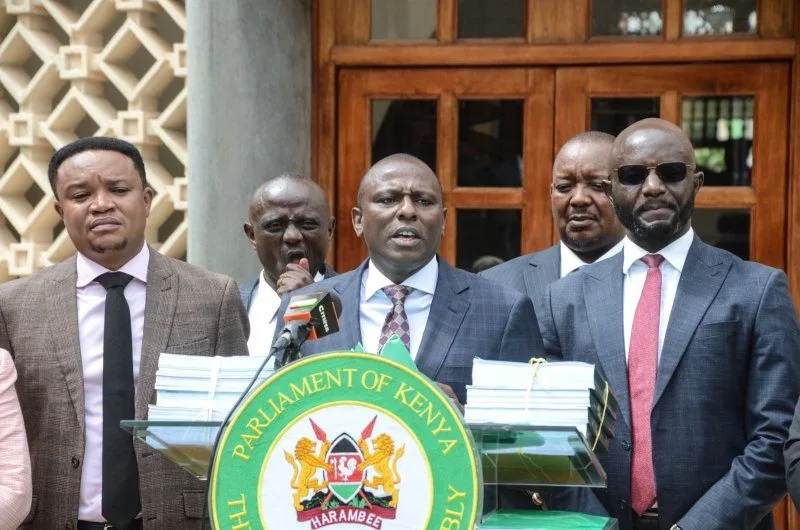
NAIROBI, Kenya, June 18 – The Finance Bill 2026 has sparked intense debate over the taxation of mitumba clothing, prompting lawmakers to clarify what the proposed law actually says.
At the centre of the clarification is Clause 31(a)(ix)(169), which specifically addresses the Value Added Tax (VAT) treatment of second-hand clothing.
The clause provides that VAT on mitumba will be applied only at the point of importation into Kenya, and once the goods enter the country, all domestic sales of the same goods will be exempt from VAT.
In practical terms, this means that importers will pay VAT at the border or point of entry, but traders in local markets will not be required to charge VAT when reselling the clothes.
The intention, according to National Assembly Majority Leader Kimani Ichung’wah, is to simplify tax administration and ensure VAT is collected at a single, clear, and verifiable stage in the supply chain.
Policy makers further argue that this approach reduces duplication and compliance challenges that have long affected small-scale traders. It also removes the risk of double taxation, allowing traders to retain more of their income while making pricing more predictable for consumers.
This clarification comes after concerns were raised on the floor of the House by Kathiani MP Robert Mbui, who suggested that the Bill contained provisions introducing new taxation on mitumba.
His remarks triggered a swift response from Kenya Kwanza leadership, who accused opposition MPs of spreading misinformation and misinterpreting the clause.
National Assembly Majority Leader Kimani Ichung’wah led the defence of the Bill, insisting that critics had failed to point to any clause introducing new taxation burdens.
He said the government had been transparent throughout the public participation process and urged MPs to rely on the actual text of the Bill.
“There is no taxation on mitumba. Ignore any propaganda on the increase of taxes on mitumba,” added Finance Committee Chairperson Kuria Kimani, who also reiterated that no new tax has been introduced on second-hand clothing.
He further challenged opposition legislators to substantiate their claims, arguing that none had been able to point to a specific provision introducing additional taxes. “None of them were able to tell us which clause they were referring to,” he noted during the parliamentary exchange.
Government leaders maintained that the Finance Bill 2026 is designed to streamline tax systems rather than increase the burden on citizens. They emphasised that the mitumba VAT framework is a simplification measure aimed at improving efficiency, transparency, and compliance.
“This Bill is not imposing any taxation that may be harmful to Kenyans,” Ichung’wah stated as the House concluded the Second Reading debate.
With the Bill now progressing through Parliament, lawmakers say the clarification on mitumba VAT should reassure traders and consumers that the sector remains protected from additional taxation, with the focus instead on making compliance easier and more predictable.