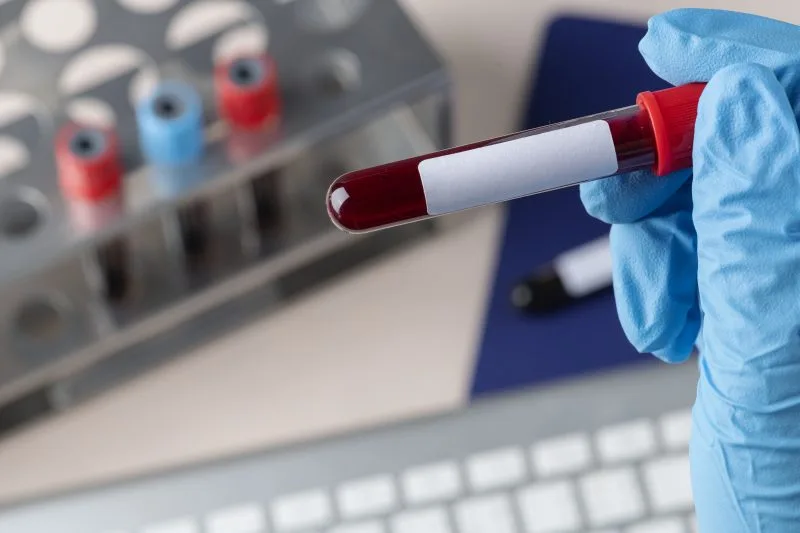
NAIROBI, Kenya June 19 – Strathmore Researchers, in partnership with other research institutes, have identified seven major challenges affecting blood availability across three Kenyan counties in a study. These include persistent shortages of blood, mismatches between where blood is stored and where patients need it, heavy reliance on family replacement donors, delays in patient care, strain on healthcare workers, varying attitudes toward blood donation and transfusion, and inadequate resources for collecting, testing, storing, and transporting blood.
The consequences of inadequate blood availability are far-reaching. Patients experience delays in receiving life-saving transfusions. Families are often forced to mobilize relatives and friends to donate blood during emergencies. Surgeries may be postponed, and healthcare workers often spend valuable time searching for blood rather than providing clinical care.
This study, published in The Lancet Global Health, has found that weak links between communities, blood banks, hospitals, and policymakers create a fragmented blood transfusion system that delays treatment, strains healthcare workers, and puts patients at risk. The researchers advocate for collective stewardship and greater community involvement to strengthen Kenya’s blood transfusion system ahead of World Blood Donor Day. Kenya’s blood shortage crisis runs deeper than a lack of donors
Drawing on the experiences of nearly 200 healthcare workers, donors, patients, administrators, and government officials across Siaya, Nakuru, and Turkana counties, the study offers one of the most comprehensive examinations of a country’s blood transfusion system to date.
The research reveals that the challenge facing Kenya is not simply collecting enough blood. Rather, it is ensuring that blood moves efficiently, safely, and reliably from donor to patient through what researchers describe as the ‘blood transfusion continuum’ (BTC), the entire journey from donation and testing to storage, transportation, and transfusion.
Globally, an estimated 61 percent of countries lack an adequate blood supply, resulting in an annual shortfall of approximately 102 million units of red blood cells. The burden falls disproportionately on low- and middle-income countries, particularly those in sub-Saharan Africa, where demand for blood remains high due to maternal hemorrhage, severe childhood anemia, trauma, surgery, and infectious diseases.
The study found that healthcare workers often go beyond their formal responsibilities to bridge these gaps. Some personally contact neighboring facilities, mobilize community networks, arrange transport, or advocate directly for patients in need of urgent transfusions. While these efforts demonstrate remarkable commitment, researchers warn that reliance on individual heroics is neither sustainable nor sufficient to address systemic challenges.
Despite these challenges, the study also uncovered promising innovations and examples of resilience across the counties. These include successful community blood drives, local donor-mobilization campaigns, partnerships between healthcare facilities and communities, and emerging digital tools that connect donors to patients in need.
The research points to several opportunities to strengthen Kenya’s blood transfusion system, including expanding community engagement, improving public awareness of blood donation, investing in local blood collection and testing capacity, strengthening transportation networks, and developing digital systems to track blood supplies and donor availability in real time.
Notably, participants emphasized that sustainable solutions must be rooted in community ownership and shared responsibility.
The study introduces the concept of ‘collective stewardship’, a model that encourages healthcare facilities, blood banks, governments, community organizations, donors, and citizens to work together to ensure a safe, sufficient, and sustainable blood supply. This approach is the focus of an ongoing research study by the group.
The researchers argue that strengthening Kenya’s blood transfusion system will require moving beyond isolated interventions and adopting a more integrated approach that connects every step of the journey from donor to recipient.
As Kenya continues to strengthen its health systems and pursue universal health coverage, the study provides critical evidence to guide future policy, investment, and innovation in blood services.
The findings suggest that ensuring that blood is available when and where it is needed will require more than technology or infrastructure alone. It will require trust, coordination, and a shared commitment to harnessing and safeguarding one of healthcare’s most precious resources.
The study titled “Exploration of the Blood Transfusion System from ‘Vein to Vein’: A Qualitative Study in Three Kenyan Counties” was conducted under the Pathways for Innovation in Blood Transfusion Systems in Kenya (PITS Kenya) project. It was led by Strathmore University in partnership with the University of Pittsburgh and the Center for Public Health and Development (CPHD), and in collaboration with the Kenya Blood Transfusion and Transplantation Service (KBTTS).
The study was supported through the BLOODSAFE programme funded by the U.S. National Heart, Lung, and Blood Institute (NHLBI), reflecting a shared commitment to strengthening blood transfusion systems across sub-Saharan Africa.